
Average Roof Replacement Costs in Colorado (2026)
Statewide, roof replacement costs range between $4.00 and $18.00 per square foot, with material costs spiking in Denver due to higher demand for storm-resistant products.[1] For a typical 1,500 square foot home, you're looking at $9,000-$17,000 for basic asphalt shingles, $11,000-$20,000 for architectural shingles, and $20,000-$40,000 if you upgrade to metal standing seam.[4]
Front Range homeowners with 2,000-2,500 square foot roofs typically spend $10,000-$18,000 for architectural shingle installations.[5] Add Class 4 impact-resistant shingles — now the de facto standard after repeated hail seasons — and you'll pay $5.00-$7.50 per square foot, pushing mid-size projects into the $12,000-$18,000 range.[5] Insurance discounts of 15-28% on premiums make the upfront cost easier to swallow, especially if you're in a ZIP code that gets pounded every June.
Most projects fall between $7,332 and $23,862, with the average landing at $9,534.[2] But averages lie when you're dealing with a steep-pitch Victorian in Capitol Hill or a sprawling ranch in Parker with multiple valleys and skylights. Roof complexity, pitch, decking repairs, and tear-off costs are the primary variables that shift your quote from the low end to the high end.[6]
Cost Per Square Foot Breakdown by Material
Asphalt shingles run $4.00-$9.00 per square foot installed, making them the budget baseline. Metal roofing costs $7.00-$14.00 per square foot, with standing seam panels at the higher end.[4] Tile and slate push well above $15.00 per square foot once you account for structural reinforcement to handle the weight — Colorado's snow loads don't give you the luxury of skipping engineering reviews.
Impact-resistant shingles sit in the middle at $5.00-$7.50 per square foot, but they're the smartest investment for Front Range properties. A Class 4 rating means they're tested to withstand 2-inch hail traveling at terminal velocity. When the next hailstorm turns your neighborhood into a contractor convention, you'll be the one filing a claim for cosmetic damage instead of a full replacement.
What Drives Roof Replacement Costs in Colorado
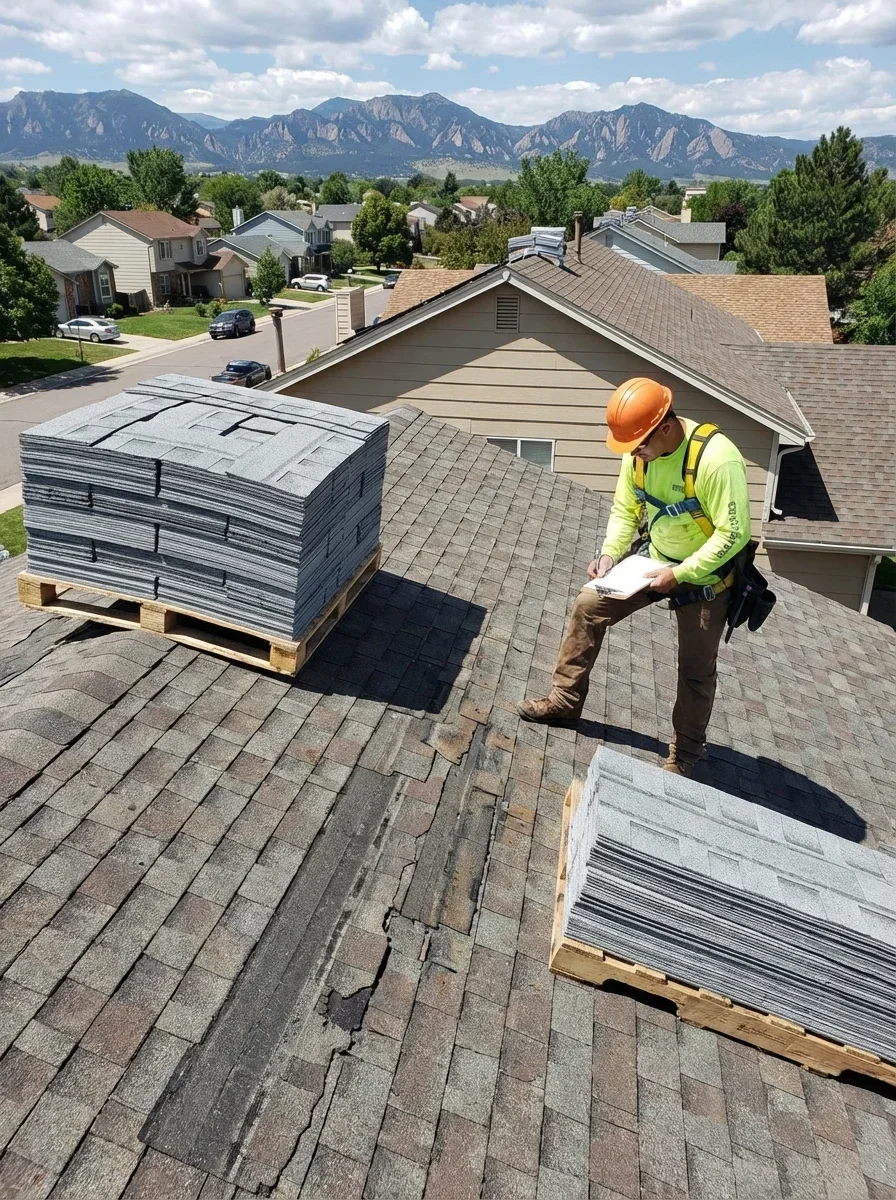
Colorado's climate isn't just harsh — it's a multi-vector assault on roofing materials. You're not paying for generic shingles and labor. You're paying for systems engineered to survive conditions that age materials 25-30% faster than manufacturers' lifespan estimates.[2]
Altitude and UV Degradation
Denver sits at 5,280 feet, where UV radiation is 50% more intense than at sea level. Asphalt shingles rated for 25 years on the coast might give you 18-20 years before granule loss and brittleness force a replacement. Metal roofing fares better, but you'll need UV-resistant coatings to prevent color fade — Colorado's 300+ days of sunshine will turn a dark charcoal panel into washed-out gray within a decade without proper finish.
Mountain communities above 8,000 feet face even steeper UV exposure. Installation seasons shrink to May-October, material transport costs climb, and contractors charge premiums for high-altitude work. A replacement that costs $12,000 in Littleton might hit $18,000-$22,000 in Breckenridge for the same square footage and material.
Hail Frequency and Impact-Resistant Materials
The Front Range corridor is the hail capital of the United States, averaging seven significant hail events per year. That frequency drives 50%+ of roofing industry revenue through insurance restoration work. After major storms, contractors book six months out, and material prices spike as suppliers struggle to meet demand surges.
Class 4 impact-resistant shingles aren't optional anymore — they're the standard if you want competitive insurance rates. A standard shingle roof might cost $8,000, but upgrading to Class 4 shingles adds $2,000-$4,000. The insurance discount (15-28% on premiums) recovers that cost in 5-8 years, assuming you don't file a claim in the meantime. If you do file, the deductible difference between a non-rated and a Class 4 roof can cover the upgrade cost in a single event.
Temperature Swings and Freeze-Thaw Cycles
Colorado's daily temperature swings — 60°F drops between afternoon and midnight aren't rare in winter — cause rapid freeze-thaw cycling. Water seeps into micro-cracks during the day, freezes overnight, expands, and cracks seals wider. Flashing loosens, valley seams separate, and shingle granules break off faster than in climates with stable temperatures.
This isn't theoretical. You'll see it in older neighborhoods where 15-year-old roofs look like 25-year roofs. Contractors account for this when pricing tear-offs — they assume more decking damage, more flashing replacement, and more time spent on repairs that wouldn't be necessary in, say, Phoenix or Atlanta.
Expansive Clay Soil and Foundation Movement
If you're on the Front Range, you're likely sitting on bentonite clay — expansive soil that swells when wet and shrinks when dry. Foundation movement is constant and subtle. Your roofline shifts a fraction of an inch, but that's enough to break flashing seals and crack valley metal.
Contractors price in extra flashing work and longer warranties on seals because they know the soil will test every connection point within five years. Homes built pre-1990 often show visible signs of foundation shift — doors that stick seasonally, cracked drywall, and roof edges that no longer align with fascia boards. A roof replacement on a shifting foundation requires engineering-level attention to flexible flashing and expansion joints, which adds labor cost.
Material Choices and Lifespan in Colorado's Climate
You can't pick roofing materials based on aesthetics or national lifespan ratings. Colorado's climate weeds out materials that work fine in gentler regions.
Asphalt shingles are the cheapest upfront ($4.00-$9.00 per square foot) but wear faster here. Expect 18-22 years from architectural shingles, less if you're at higher altitude or on a south-facing slope that bakes in summer UV. Basic three-tab shingles are a false economy — they'll fail in 12-15 years and cost you another replacement sooner.
Metal roofing ($7.00-$14.00 per square foot) is growing rapidly in mountain communities and high-hail zones. Standing seam panels last 40-70 years, shed snow cleanly, and handle hail better than any shingle. The upfront cost is double asphalt, but the lifespan and insurance discounts close the gap. UV-resistant Kynar finishes are non-negotiable — budget for quality coatings or plan on repainting in 15 years.
Tile and slate ($15.00+ per square foot) are rare in Colorado outside of high-end custom homes. The weight requires structural reinforcement, and snow loads at elevation make engineering reviews expensive. Both materials handle UV and hail well, but installation expertise is thin — you'll pay a premium for contractors experienced with heavy roofing in snow country.
Cedar shake used to be popular in mountain towns, but fire regulations have killed demand. The Marshall Fire changed building codes across wildfire-interface zones. Class A fire-rated materials are now mandatory in most foothill communities, and cedar doesn't qualify without expensive chemical treatments. Synthetic shake products mimic the look while meeting fire codes, but they're still niche — most homeowners default to metal or impact-resistant shingles.
Roof Size, Pitch, and Complexity
Square footage is the starting point, but it's not the whole story. A 2,000 square foot ranch with a simple 4/12 pitch and no penetrations costs far less than a 2,000 square foot two-story with dormers, valleys, and a skylight array.
Roof pitch drives labor cost directly. A 4/12 or 5/12 pitch is walkable — crews work fast and safely. Once you hit 7/12 or steeper, contractors need fall protection systems, scaffolding, and extra time for every task. Steep Victorian roofs in Denver's older neighborhoods can add 20-30% to labor costs compared to suburban ranches.
Valleys, dormers, chimneys, and skylights all multiply complexity. Every penetration is a potential leak point that requires custom flashing. Valleys channel water and debris, wearing materials faster and requiring premium underlayment. Contractors price complexity by counting these features — a roof with four valleys, two chimneys, and three skylights will cost $3,000-$5,000 more than a simple gable roof of the same square footage.
If your home is older than 1990, budget for decking repairs. Colorado's building codes prevent more than two layers of shingles on any roof,[3] so contractors tear off down to bare wood. They'll find rot around chimneys, soft spots where ice dams sat for weeks, and wind-damaged edges. Decking replacement runs $2.00-$4.00 per square foot, and you won't know how much you need until the old roof is off.
Permitting and Code Compliance Costs
Colorado doesn't require a state-level roofing contractor license, which surprises many homeowners. Licensing is handled at the municipal level, and requirements vary wildly. Denver, Colorado Springs, Aurora, Boulder, Fort Collins, and Lakewood all have their own rules. Most require contractor registration, proof of liability insurance, and workers' compensation coverage. You can verify Colorado-licensed businesses at the Department of Regulatory Agencies (https://www.colorado.gov/dora), but for roofing-specific credentials, you'll need to check with your city or county directly.
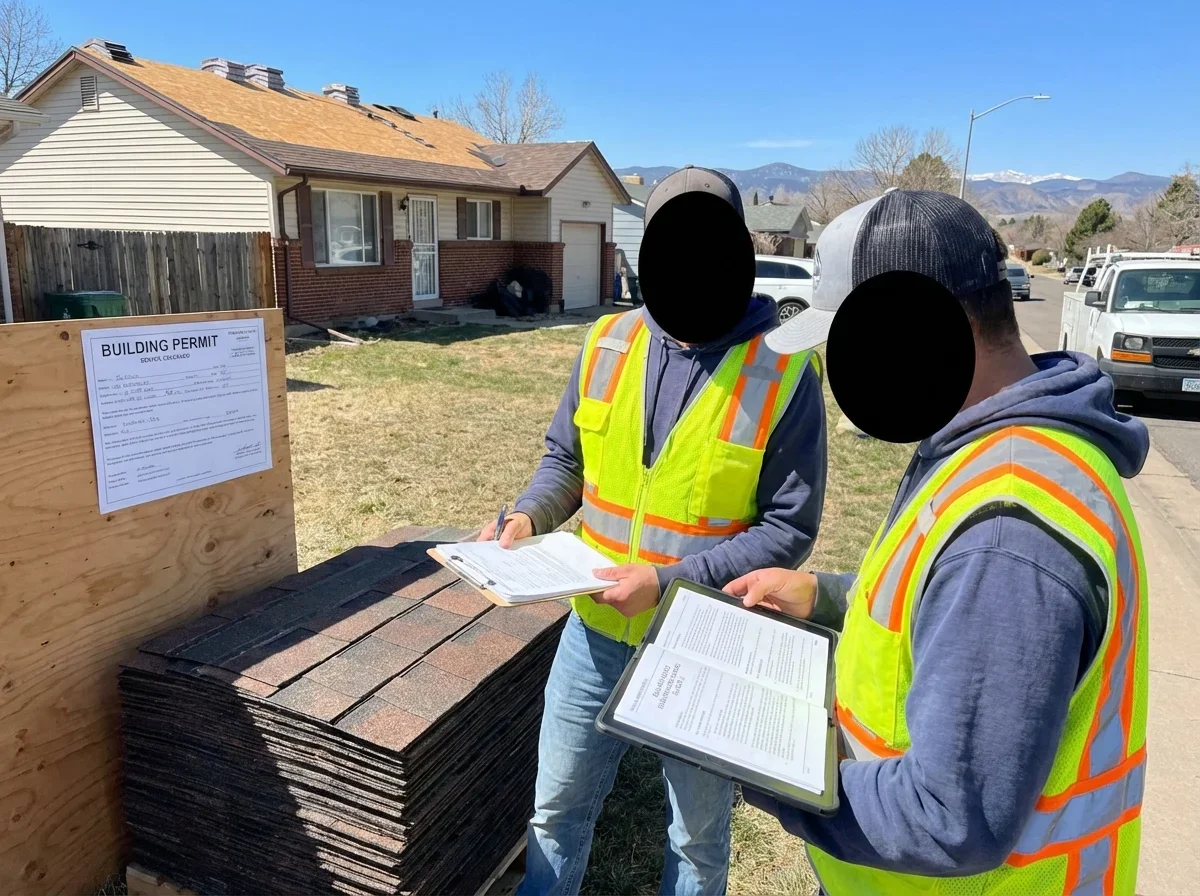
Permits are required for most roof replacements. Denver permits typically cost $150-$400, while larger jurisdictions like Colorado Springs may charge $400-$600. These fees cover plan review and inspections to verify compliance with building codes.[3] Some municipalities allow permit-exempt minor repairs under a dollar threshold (often $2,500-$5,000), but full replacements never qualify.
Skipping permits is tempting when a storm chaser offers a cash discount, but it's a trap. Unpermitted work voids manufacturer warranties, complicates insurance claims, and becomes a disclosure nightmare when you sell. Buyers' inspectors flag unpermitted roofs, and lenders balk at financing homes with code violations. The $500 you save on permits can cost you $10,000 in negotiation leverage or force you to re-roof entirely to close escrow.
Colorado's International Building Code (IBC) and International Residential Code (IRC) amendments dictate snow load calculations, fire ratings, and wind uplift resistance. If you're in a wildfire-risk zone (WUI areas along the foothills), Class A fire-rated materials are mandatory. Mountain communities have specific snow load requirements — a Conifer home needs engineering for 50+ pounds per square foot live load, far exceeding Denver's requirements.
Regional Price Variations Across Colorado
Front Range prices are the baseline. Denver metro roof replacements run $4.00-$11.00 per square foot, with most full projects landing between $12,000 and $28,000.[6] Suburbs like Highlands Ranch, Broomfield, and Castle Rock track close to metro pricing — contractor competition keeps rates reasonable, and material suppliers are nearby.
Colorado Springs sits slightly lower, with typical projects running $9,000-$16,000 for mid-size homes. Older homes in southwest Colorado Springs with larger roofs can push $15,000+, especially if you're replacing multiple valleys and repairing decking.[4] The city's sprawl means some properties are 30+ minutes from suppliers, adding fuel surcharges to material delivery.
Mountain communities (Vail, Aspen, Breckenridge, Steamboat Springs) face the steepest costs. Material transport, high-altitude labor premiums, and shortened installation seasons add 30-50% to base prices. A $14,000 job in Arvada becomes a $20,000-$25,000 job in Frisco. Contractors book summer slots months in advance, and emergency winter repairs cost double due to weather risk and access challenges.
Western Slope communities (Grand Junction, Montrose, Durango) have lower labor costs but higher material transport fees. Expect prices 10-20% below Front Range averages for basic projects, but complex jobs requiring specialized materials or experienced crews can match metro pricing if contractors have to travel from Denver or Colorado Springs.
Eastern Plains towns (Sterling, Fort Morgan, Lamar) see the lowest costs — $7,000-$12,000 for standard homes. Contractor availability is thinner, though, so scheduling flexibility matters. If you're replacing after hail damage and competing with a dozen neighbors, expect delays.
Hidden Costs and Budget Padding
Tear-off and disposal aren't included in per-square-foot material quotes. Removing old shingles costs $1.00-$2.00 per square foot, and dumpster fees add $300-$800 depending on roof size and landfill access. Mountain properties sometimes face higher disposal costs due to hauling distance.
Decking repairs are the biggest wildcard. You won't know the scope until the old roof is off. Contractors quote assuming 10-15% replacement on average homes, but if you've had persistent leaks or ice dam issues, that percentage climbs. OSB or plywood replacement runs $2.00-$4.00 per square foot installed.
Gutter replacement often coincides with roofing work. If your gutters are original to a 30-year-old roof, they're done. New seamless aluminum gutters cost $5.00-$12.00 per linear foot installed. Upgrading to 6-inch gutters (recommended for Colorado's heavy snowmelt and summer downpours) adds $2.00-$3.00 per foot but prevents overflow that rots fascia and decking.
Ventilation upgrades are common when replacing older roofs. Ridge vents, soffit vents, and attic fans improve energy efficiency and extend shingle lifespan by reducing heat buildup. Budget $300-$1,500 for ventilation improvements, more if you're converting from static vents to a powered system.
Flashing replacement around chimneys, skylights, and roof-wall intersections is mandatory during a full replacement. Quality step flashing and counterflashing cost $200-$600 per chimney, depending on size and complexity. Cheap contractors reuse old flashing — that's where leaks start within two years.
Insurance Claims and Hail Damage Replacement
If you're replacing due to hail damage, your insurance deductible becomes the primary cost driver. Most Colorado homeowners now carry 1-2% of home value deductibles for wind/hail coverage. On a $550,000 home (the state median), that's $5,500-$11,000 out of pocket before insurance pays a dime.
Class 4 impact-resistant shingles qualify for premium discounts that offset deductibles over time. A 20% discount on a $2,000 annual premium saves $400/year — over the 30-year lifespan of the shingles, that's $12,000 in reduced premiums, more than covering the upgrade cost and typical deductible.
Insurance claim assistance from experienced contractors is worth the coordination fee (usually built into project costs). Contractors who specialize in insurance work document damage with photos, drone footage, and moisture readings that adjusters respect. They'll argue for code upgrades, ventilation improvements, and full valley replacements instead of patch jobs.
Storm chaser contractors flood the market after major hail events. They knock doors, promise to "handle everything," and disappear after collecting deposits. The Colorado Roofing Association warns against out-of-state contractors with no local presence. If you can't visit their office or verify their registration with your municipality, walk away. Post-storm backlogs are real — six-month waits are common after Front Range hailstorms — but working with a licensed local contractor protects you when callbacks and warranty work become necessary.
How to Get Accurate Quotes
Don't accept phone estimates based on Google Earth measurements. Reputable contractors schedule in-person inspections to measure pitch, count penetrations, assess decking condition from the attic, and identify ventilation issues. An accurate quote requires eyes on the property.
Get three quotes minimum, and compare line items — not just totals. One contractor might bid $14,000 using Class 3 shingles, basic underlayment, and reused flashing. Another bids $16,500 with Class 4 shingles, synthetic underlayment, and new flashing. The second quote is the better value even though it costs more.
Ask about material brands and warranties. "Architectural shingles" is vague — GAF Timberline HDZ, Owens Corning Duration, and CertainTeed Landmark are all architectural shingles with different performance specs and warranty coverage. Contractors affiliated with manufacturer certification programs (GAF Master Elite, Owens Corning Platinum Preferred) offer enhanced warranties that cover labor, not just materials.
Verify contractor credentials before signing. Check municipal licensing databases, confirm liability insurance and workers' compensation coverage, and read reviews on platforms that verify customer identity (not just anonymous Google reviews, which storm chasers game ruthlessly). The Colorado Division of Insurance (https://www.colorado.gov/dora) handles disputes, but prevention beats arbitration.
Get payment schedules in writing. Colorado law caps contractor deposits at 50% of project cost or $1,000, whichever is less, for projects under $6,000. For larger projects, standard practice is 10-30% deposit, 40-50% at material delivery, and final payment upon completion and inspection approval. If a contractor demands 75% upfront, they're either undercapitalized or planning to vanish.
When to Replace vs Repair
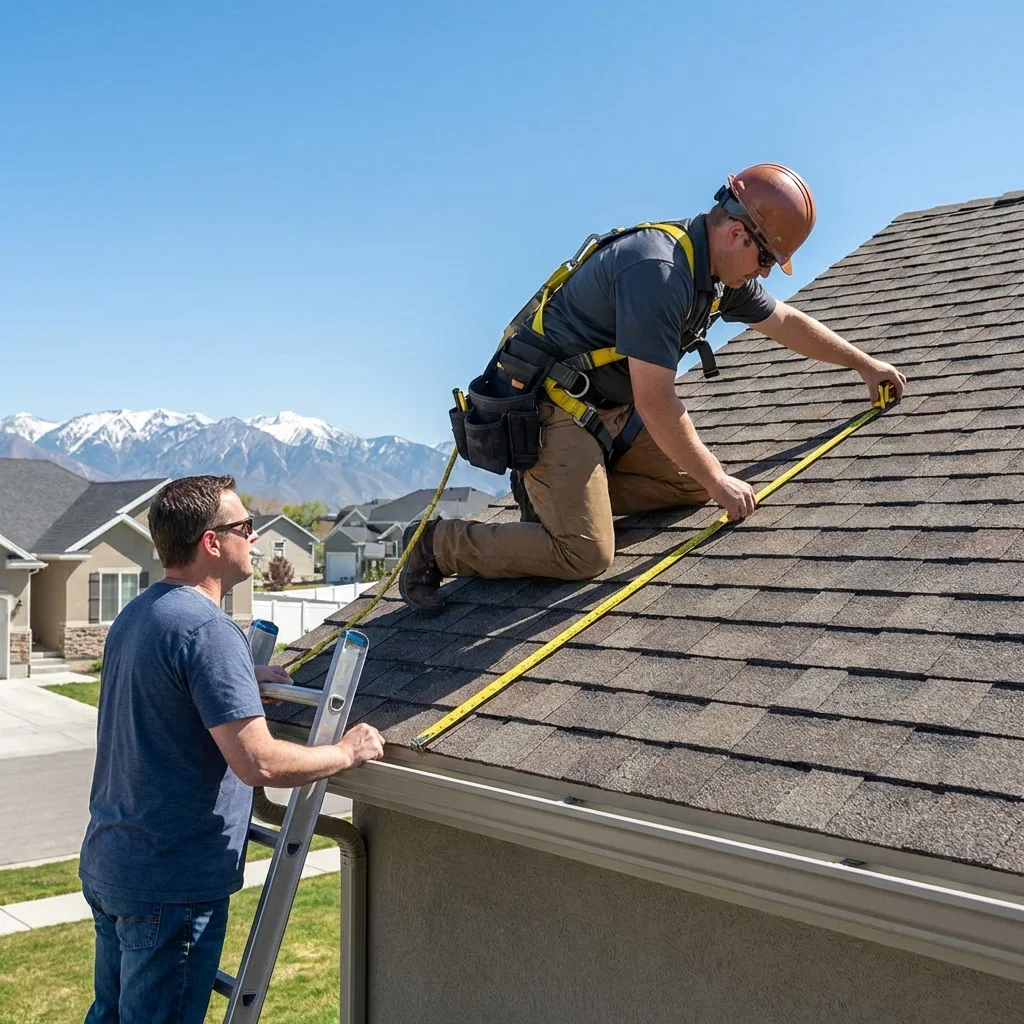
Age isn't the only factor. A 15-year-old roof with widespread hail damage needs replacement, while a 25-year-old roof with isolated wind damage might only need shingle repair and flashing work. Contractors assess based on damage extent, remaining lifespan, and insurance claim viability.
If damage covers more than 30% of roof area, replacement is usually more cost-effective than patching. Insurance adjusters use similar thresholds — they'll approve full replacements when repair costs exceed 60-70% of replacement costs.
Colorado's two-layer rule means if you already have two shingle layers, replacement is mandatory — no exceptions.[3] Inspectors flag it, and you'll be forced to tear off before any repair work gets permitted.
Energy efficiency upgrades justify replacement even on functional roofs. If you're sitting on 20-year-old shingles with minimal ventilation and no radiant barrier, a replacement with modern materials (cool-roof shingles, synthetic underlayment, ridge vents) can cut cooling costs 15-25% and extend HVAC lifespan by reducing attic heat.
Storm damage assessments from licensed contractors are free in most cases — they're hoping to earn your replacement business. Schedule inspections after hail or wind events even if you don't see obvious damage. Hail bruising on shingles isn't always visible from the ground, but it accelerates granule loss and shortens lifespan. An inspection documents damage for insurance claims and gives you a repair-vs-replace recommendation based on current condition and projected lifespan.
DIY vs Professional Installation
DIY roof replacement is legal in Colorado if you own the property, but it's a bad idea for anything beyond minor repairs. Permitting still applies — you'll submit plans, pass inspections, and certify compliance with snow load and wind uplift calculations. Most homeowners lack the engineering knowledge to complete permit applications correctly.
Fall risk is real. Colorado's steep pitches, high altitudes, and unpredictable weather make roofing one of the deadliest construction trades. OSHA mandates fall protection systems for any work above six feet. Homeowners who skip safety equipment and fall face medical bills that dwarf contractor labor costs.
Manufacturer warranties require professional installation. GAF, Owens Corning, and CertainTeed void material warranties if shingles aren't installed by certified contractors following their spec sheets. You'll save $5,000-$8,000 in labor but lose $3,000-$10,000 in warranty coverage — and you're betting your work is flawless for 20+ years.
Insurance claims for DIY work fail routinely. Adjusters deny claims if installation doesn't meet code, and they'll argue that DIY errors — not wind or hail — caused the damage. You're also personally liable if someone gets hurt on your property during DIY work. Contractors carry liability and workers' comp; you don't.
If budget is tight, focus on getting multiple quotes and negotiating payment terms rather than going DIY. Some contractors offer financing at 0% APR for 12-18 months through third-party lenders. Others discount projects scheduled during slow seasons (late fall, early spring) when crews need work.
Maintenance and Lifespan Extension
Colorado's climate demands active maintenance. Annual roof inspections catch small issues before they become $5,000 problems. Inspectors check flashing seals, clear debris from valleys, verify shingle adhesion, and assess granule loss. Expect to pay $150-$400 for a thorough inspection — some contractors offer free inspections if you're an existing customer or sign up for a maintenance program.
Gutter cleaning twice yearly (spring and fall) prevents ice dams and overflow that rots fascia. Colorado's cottonwood trees dump debris that clogs gutters fast. Gutter guards reduce cleaning frequency but don't eliminate it — you'll still need annual checks to clear accumulated grit and inspect fasteners.
Trim tree branches within six feet of the roof. Branches scrape shingles during wind events, accelerating granule loss and creating entry points for water. Overhanging branches also drop leaves and pine needles that trap moisture and grow moss in shaded areas.
Attic ventilation monitoring prevents heat buildup that ages shingles from below. Ridge vents and soffit vents should move air freely — blocked soffits or undersized ridge vents create hot spots that warp decking and blister shingles. Infrared inspections ($200-$400) identify ventilation failures before you see interior damage.
Ice dam prevention is critical for mountain and north-facing roofs. Heat cables along eaves, improved attic insulation, and sealed ceiling penetrations prevent the freeze-thaw cycles that create dams. Removing snow buildup after major storms (12+ inches) reduces load stress and dam formation. Professional snow removal costs $200-$600 depending on roof size and access, far less than repairing ice dam damage.
Frequently Asked Questions
- Colorado Roofing Association. "Commercial Roof Replacement Facts - Colorado Roofing Association." https://www.coloradoroofing.org/news/you-need-a-commercial-roof-replacement-heres-everything-you-need-to-know. Accessed April 08, 2026.
- This Old House. "How Much Does a Roof Replacement Cost in Colorado?." https://www.thisoldhouse.com/roofing/roof-replacement-cost-colorado. Accessed April 08, 2026.
- Red Diamond Roofing. "Residential Roof Replacement Cost in Colorado [2026 Guide]." https://reddiamondroof.com/blog/what-does-residential-roof-replacement-cost-in-colorado-2026-guide/. Accessed April 08, 2026.
- Stone Creek Roofing. "Roof Replacement Cost in Colorado (2025 Guide)." https://stonecreekroofing.com/blog/roofing_cost_2025. Accessed April 08, 2026.
- Weatherguard Construction. "Colorado Roof Replacement Cost Guide - Weatherguard Construction." https://wgccinc.com/roof-replacement-cost-colorado. Accessed April 08, 2026.
- Road Home Exteriors. "Denver Roof Cost Calculator | 2026 Roof Replacement Cost Guide." https://roadhomeexteriors.com/services/roofing/cost-guide/. Accessed April 08, 2026.