
What Colorado Law Says About Insurance Claim Deadlines
Colorado doesn't impose a statutory deadline for filing property damage claims. Your homeowner's policy controls the timeline, and most carriers require written notice within one year of the damage date[1].
That's not one year from when you noticed the problem. It's one year from when the hail hit or the wind tore off your shingles.
The Colorado Division of Insurance regulates claim disputes, but they enforce policy terms, not override them. If your policy says 365 days and you file on day 400, you're likely out of luck unless you can prove the damage occurred more recently than the storm you're blaming.
Some policies include "reasonable notice" clauses that give adjusters wiggle room to accept late claims if you can show you had no way to discover the damage earlier. Attic leaks hidden by insulation or slow-developing problems from compromised flashing might qualify.
But that's the exception, not the rule.
How Insurers Determine the Date of Loss
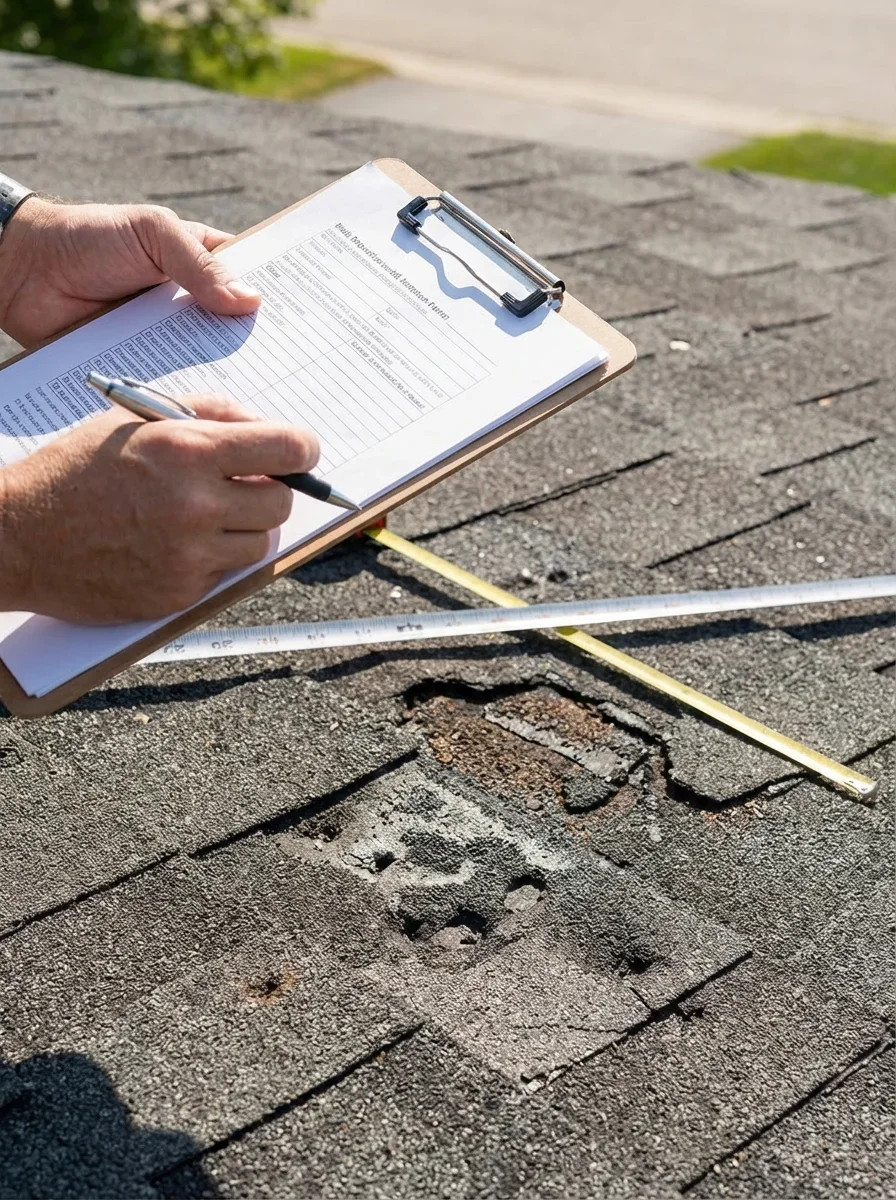
Insurance companies don't just take your word for when damage happened. They cross-reference National Weather Service hail reports, NEXRAD radar archives, and local storm logs to pinpoint exact dates. Colorado's Front Range gets 7+ significant hail events per year, so adjusters have decades of data to work with.
If you claim damage from a 2024 storm but the adjuster finds evidence of wear consistent with 2019 conditions, expect denial.
They'll look for:
- Weathering patterns on exposed granules — hail dents age differently than UV degradation
- Shingle seals that lifted from wind but show multiple seasons of thermal cycling
- Oxidation layers on exposed metal flashing that take years to develop
- Algae growth or discoloration timelines that contradict your claimed loss date
The burden of proof shifts to you on late claims. Fresh damage shows clean edges and bright substrate. Two-year-old dents show mineral deposit buildup and faded impact zones.
Pro Tip: Take dated photos of your roof after every major storm, even if you see no visible damage. These "baseline" images become critical evidence when you need to prove damage occurred during a specific weather event rather than from gradual aging.
Why Documentation Windows Matter More Than Legal Deadlines
Even if you file within your policy's deadline, late claims face higher scrutiny. Adjusters know Colorado's 60°F daily temperature swings and 300+ days of sunshine accelerate aging. A roof that looked fine six months ago might show legitimate new damage, but proving causation gets exponentially harder.
This is where storm date documentation becomes critical.
Did you take photos after the June 2024 hailstorm showing an intact roof? That evidence proves damage visible in 2026 happened after your last inspection. Without it, you're arguing against a paper trail the insurer will build from weather records and degradation timelines.
Common Scenarios Where Late Claims Work
You can file years after a storm and succeed, but only in narrow situations. The damage has to be genuinely undiscoverable through reasonable homeowner diligence.
Hidden Leak Damage That Develops Over Time
A cracked valley flashing from 2023 hail might not leak until 2026 when ice damming forces water through the compromised seal. If you can show the initial damage occurred during a documented event, the subsequent leak remains part of that loss — even if you didn't file until the water showed up.
Your policy's "storm damage repair" coverage should extend to consequential damage if the chain of causation holds. But you'll need a licensed roof inspection that ties the leak directly to storm damage, not routine maintenance failure.
Damage Discovered During a Roof Replacement
When contractors strip off your existing roof during a planned replacement, they sometimes find hail damage on decking or underlayment that wasn't visible from below. If that damage lines up with a documented storm date and you have no prior knowledge, insurers sometimes accept the claim.
The key phrase: no prior knowledge.
If you had a free hail damage assessment after the storm and declined to file, you can't "discover" the same damage later during demolition and expect coverage.
Newly Purchased Homes With Undisclosed Damage
You bought a house in 2025. In 2026, you notice granule loss and soft spots consistent with 2023 hail damage the seller never disclosed.
Some policies allow new owners to file under the previous owner's loss date if they can prove they had no reasonable way to detect the damage during inspection.
This almost always requires a professional assessment that documents the age and origin of the damage. A roofer's statement that "this is consistent with the May 2023 hailstorm" won't cut it. You need impact analysis showing dent depths, spatter patterns, and material degradation timelines that rule out more recent events.
Why Most Late Claims Get Denied
Adjusters see delayed claims every week, especially in Colorado's hail belt. They know the patterns that indicate opportunistic filing.
The "Coincidental Discovery" Problem
You ignored granules in your gutters for two years. Then your neighbor files a successful claim and suddenly you "notice" matching damage.
Insurers flag these claims immediately.
The neighbor's approval doesn't extend to your property unless you can prove independent discovery. Colorado's insurance market has seen enough post-storm filing surges that carriers now map claim patterns geographically. If 40 homes on your block filed in July 2024 after a documented event and you file in March 2026 with no new storm history, expect questions.
Routine Wear Masquerading as Storm Damage
Denver sits at 5,280 feet, where UV radiation runs 50% higher than sea level. That exposure degrades asphalt shingles 25-30% faster than manufacturer estimates. A 15-year roof might show significant weathering at year 10, and it's tempting to blame a storm.
But adjusters see the difference.
Hail creates circular or oval impact craters with sharp edges. UV aging causes even granule loss across the entire surface. If your damage doesn't match documented storm size and trajectory data, they'll call it maintenance.
Missing the One-Year Window With No Excuse
If you knew about potential damage, got a contractor assessment, and just didn't file because you thought you'd "wait and see," you're done. Colorado's insurance market doesn't reward procrastination, especially when Class 4 impact-resistant shingles now come standard on most policies with clear damage reporting requirements.
The "I was too busy" excuse fails. Filing a claim takes one phone call.
Everything after that — documentation, inspection, approval — is the insurer's timeline, not yours.
What Happens If You Miss Your Policy Deadline
Your insurer sends a denial letter citing policy section X, paragraph Y that required notice within 365 days of the loss date.
You have three options, none of them great.
You can request an internal appeal if you believe you have grounds for late acceptance under a policy exception. Bring documentation that proves impossibility of earlier discovery — structural assessments, expert opinions, photographic timelines. Most appeals fail.
You can file a complaint with the Colorado Division of Insurance if you believe the denial violates state regulations or misinterprets policy language. The Division mediates disputes but won't override clear policy terms you agreed to when you bought coverage[1].
Or you can pay for repairs yourself.
Given that roof replacement in Colorado runs $8,000-$25,000 depending on size and material, this hurts. But it's sometimes the only path forward if you genuinely missed the window through your own inaction.
| Filing Timeline | Approval Rate | Primary Documentation Needed | Typical Challenge |
|---|---|---|---|
| 0-90 days after storm | 70-85% | Weather reports, photos, contractor assessment | Proving damage severity meets deductible |
| 90 days-1 year | 40-60% | Expert analysis, proof of delayed discovery | Demonstrating why filing was delayed |
| 1-2 years | 20-30% | Professional damage dating, evidence of impossibility of earlier discovery | Overcoming presumption of late filing |
| 2+ years | <10% | Extraordinary evidence of hidden damage | Nearly impossible without new storm event |
Why "Storm Chaser" Promises Often Backfire
After major Colorado hail events, out-of-state contractors flood affected areas offering "free inspections" and "guaranteed claim approval." Many promise they can get claims approved even years after a storm.
This is either ignorance or fraud.
No contractor can override your policy's filing deadline. They can help document damage and navigate the claims process, but if you're outside your notice window, their involvement doesn't change that. Worse, some storm chasers file inflated or fraudulent claims that poison your relationship with your insurer and risk policy cancellation.
Stick with verified local contractors who understand Colorado Division of Insurance requirements and won't make promises they can't keep. If someone guarantees they'll get your late claim approved, walk away.
How to Maximize Success on a Delayed Claim
If you're filing late but still within your policy window (or believe you have legitimate grounds for an exception), every detail matters.
Gather a Complete Storm History for Your Address
Pull weather records from the National Weather Service for every significant event in the past three years. Colorado's Front Range hail corridor has extensive radar coverage.
Match storm paths to your property location and document every date when 1-inch or larger hail fell within a two-mile radius.
This timeline becomes your foundation. When the adjuster asks why you're claiming 2023 damage in 2026, you can point to a pattern: "We had minor visible damage that seemed cosmetic, but discovered structural issues during a routine roof inspection that traces to this documented event."
Get a Professional Damage Assessment Before Filing
Don't file and hope. Hire a roofer experienced in insurance claim assistance to assess your damage and provide a written opinion on its origin and age.
That assessment should include:
- Exact measurements of hail impact crater depths and diameters
- UV degradation analysis showing damage inconsistent with aging alone
- Flashing and seal failure documentation tied to temperature cycling after initial impacts
- Photographic evidence with metadata showing discovery date
This report goes to your insurer with your claim filing. It shifts the conversation from "Can you prove this?" to "Here's the proof — now dispute it."
Document Why You Couldn't File Earlier
If you're claiming an exception to the deadline, written evidence of impossibility matters more than verbal explanations.
Bring:
- Home inspection reports from your purchase that show no visible damage
- Contractor invoices for work unrelated to roofing that confirm no one flagged problems
- Photos you took during routine maintenance showing no obvious issues
- Communication logs (emails, texts) showing you contacted insurers or contractors as soon as you noticed something wrong
The narrative has to be: "I exercised reasonable diligence and filed promptly upon discovery." Not: "I ignored this for two years and now want coverage."
Special Considerations for Colorado Homeowners
Colorado's insurance environment creates unique pressures that affect late claim dynamics.
Separate Roof Deductibles and Rising Thresholds
Many Colorado policies now carry separate wind/hail deductibles equal to 1-2% of your home value[1]. On a $550,000 home (Colorado's 2026 median), that's $5,500-$11,000 out of pocket before insurance covers anything.
This math changes the filing calculus.
If your damage estimate falls below your deductible, filing late becomes moot — you're paying for repairs regardless. But if you're well above the threshold, every month you delay risks losing coverage entirely.
Class 4 Shingle Requirements and Replacement Costs
If your damaged roof predates Colorado's push toward impact-resistant shingles, replacement might require an upgrade to meet current standards. That cost differential (Class 4 materials run 15-25% more than standard shingles) usually falls on you, not the insurer.
Late claims can trigger depreciation adjustments that reduce your payout even if approved.
The adjuster calculates actual cash value based on the roof's age at the time of damage, not when you file. A 10-year-old roof with 50% depreciation might net you half the replacement cost — and if that's below your deductible, you're paying the full upgrade out of pocket.
Municipal Permit Records and Claim Verification
Colorado municipalities require permits for most roof replacement work. Adjusters check permit databases to verify no recent work occurred that the homeowner is now blaming on older storm damage.
If you replaced sections of your roof without permits and later file a claim for adjacent damage, expect questions.
This is another reason to work through proper channels. Unpermitted work doesn't just risk code violations — it creates documentation gaps that undermine legitimate claims.
When to Walk Away From a Late Claim
Sometimes filing isn't worth the fight, even if you technically have grounds.
If your estimated damage is within 15% of your deductible, file only if you're certain about approval. A denied claim goes on your CLUE report (Comprehensive Loss Underwriting Exchange) and can affect future coverage eligibility and premiums.
Insurers see denied claims as risk signals.
If you have no documentation, no professional assessment, and no clear tie to a documented weather event, you're gambling. The insurer will likely deny, you'll waste weeks in appeals, and you'll still pay for repairs.
If contractors tell you the damage is borderline between storm loss and routine aging, expect an adjuster to land on "aging." Colorado's extreme UV exposure and temperature swings give adjusters plenty of ammunition to blame maintenance rather than weather.
What to Do Right Now If You Have Undocumented Damage
You can't undo delays, but you can stop making them worse.
Immediate Action Checklist:
- Call your insurer today — starting the claim clock preserves your filing date even if inspection comes later
- Schedule a professional assessment within 72 hours with a local, verified contractor
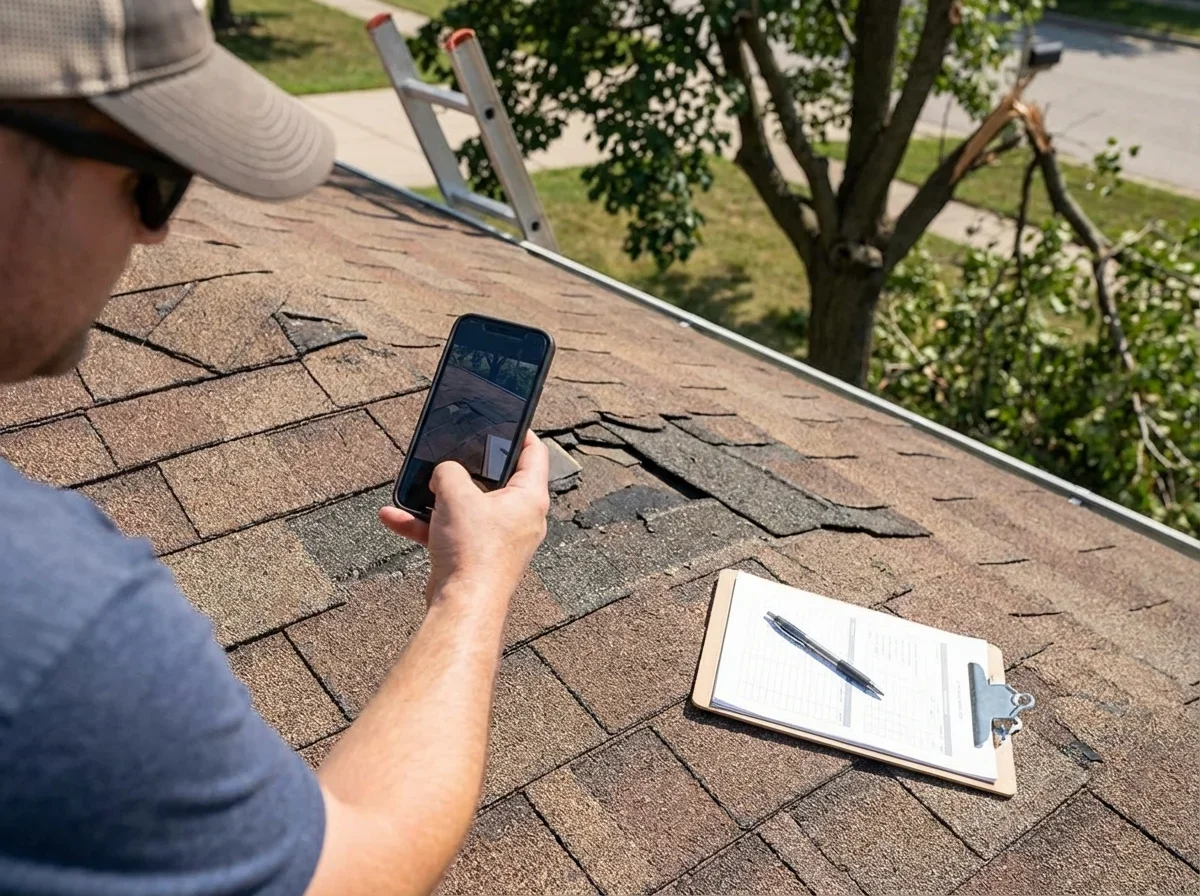
- Photograph all visible damage from multiple angles with today's date
- Request weather records from NOAA for your ZIP code covering the past 24 months
- Document your maintenance history — receipts, inspection reports, gutter cleaning records
- Avoid any DIY repairs until after adjuster inspection (temporary tarping is acceptable)
Call your insurer today and report potential storm damage. Even if you're unsure about the origin or timing, starting the clock on your claim puts documentation in motion. The insurer will schedule an inspection. If the adjuster finds damage, you've preserved your filing date.
If they don't, you've lost nothing.
Hire a local roofing contractor (not a storm chaser) to assess your roof independently. Colorado requires no state roofing license, so verify municipal registration and insurance coverage through local verification tools. A credible assessment arms you with facts before the insurance adjuster arrives.
Document everything from this point forward. Photograph damage from multiple angles with datestamped images. Save all communications with contractors and insurers.
If the adjuster disputes your timeline, contemporaneous evidence beats memory.
Understanding Adjuster Timelines and Approval Odds
Once you file, Colorado insurers have specific response timelines. They must acknowledge your claim within a reasonable period (usually 10-15 days) and schedule an inspection within 30 days of acknowledgment.
For late claims, expect slower service — adjusters prioritize recent losses with clear causation.
Your approval odds correlate directly to documentation quality. Claims filed within 90 days of a documented storm event with professional assessments and clear photographic evidence succeed 70-85% of the time. Claims filed 12-24 months later with circumstantial evidence drop to 20-30% approval rates.
Claims beyond 24 months with no new storm activity almost never succeed.
If your claim gets denied, the appeal window is typically 30-60 days depending on your policy. Use that time to gather additional expert opinions and weather correlation data, not to argue about policy interpretation.
Facts change minds; complaints don't.
How Expansive Clay Soil Complicates Damage Dating
Colorado's Front Range sits on bentonite clay that swells when wet and shrinks when dry. This movement shifts foundation walls, which torques rooflines and breaks flashing seals that were intact after a storm.
Adjusters know this soil behavior creates damage that looks storm-related but stems from soil mechanics.
If your valley flashing separated from decking two years after a hailstorm, the insurer might argue the hail didn't cause the separation — soil movement did. Proving otherwise requires geotechnical analysis beyond most homeowners' reach.
This is where storm damage claims get murky. The hail might have cracked the flashing, but soil movement finished the job. Under Colorado policy language, that's often classified as "earth movement" (excluded) rather than "storm damage" (covered).
Late filing gives insurers more time to build this argument.
The Role of HOA Requirements in Claim Timing
Many Colorado HOAs mandate specific roofing materials or colors. If storm damage requires replacement and your original material is discontinued (common with T-lock shingles from the 1980s-90s), you might face upgrade costs to meet HOA standards.
Filing late can mean the insurer covers the roof but not the HOA-required upgrade.
A 2023 storm that damaged your standard shingles might have qualified for full replacement at that time. Filing in 2026 means the insurer pays depreciated actual cash value, and you cover the difference to meet current HOA architectural standards.
Review your HOA covenants before filing any claim. Know what replacement will require and whether your policy's coverage limits account for those specifications.
Final Considerations Before Filing
You get one shot at a claim for each loss event. If you file for 2023 hail damage and the adjuster approves partial repairs, you can't file again in 2026 claiming you "missed" other damage from the same storm.
The claim closes the loop on that event.
This finality means you want complete documentation before filing. If you're uncertain about the full extent of damage, delay filing until you have a comprehensive assessment. The difference between filing at 11 months with all facts versus filing at 9 months with partial information can be thousands of dollars in coverage.
Colorado's insurance market rewards preparedness.
Homeowners who maintain inspection records, photograph their roofs seasonally, and document every significant storm event in their area can file confidently even months later. Those who ignore their roofs until problems become obvious lose leverage and coverage.
If you're reading this because you think you missed your window, get a professional assessment this week. Even if you're outside your policy deadline, knowing the facts helps you budget for repairs and avoid throwing money at a claim that was never going to succeed.
Frequently Asked Questions
- Credit Union of Colorado. "Dealing with Hail and Flood Damage in Colorado: What You Need to Know." https://www.cuofco.org/resources/dealing-hail-and-flood-damage-colorado-what-you-need-know. Accessed April 08, 2026.