
Why Colorado's Licensing System Makes Verification Your Job
Colorado doesn't require a statewide roofing contractor license. Period.[1]
There's no central database, no single agency to call, and no uniform standard that applies from the Wyoming border to New Mexico. Instead, licensing authority falls to individual municipalities — and each jurisdiction writes its own rules.
Denver requires contractor license applicants to hold a supervisor certificate or employ someone who does before they can pull permits.[2] Larimer County demands proof of a passing grade on an applicable license from another Colorado jurisdiction or documentation of two years of roofing trade experience.[3] The Pikes Peak region mandates ICC exam passage and active license maintenance before any permits issue.[4]
This fragmented system creates verification gaps that opportunistic contractors exploit.
Storm chasers who follow hail events across the Front Range often operate without proper local licensing, betting homeowners won't check. They're right more often than they should be. Many homeowners assume any contractor working in Colorado must be "licensed," not realizing that term means nothing without a specific municipality attached to it.
The Real Cost of Skipping Verification
Hiring an unlicensed or improperly licensed contractor doesn't just risk shoddy work. It voids most manufacturer warranties, complicates insurance claims, and can halt real estate transactions cold when title companies discover unpermitted roofing work during closing inspections.
Colorado's 300+ days of sunshine and extreme UV radiation at altitude already shorten roof lifespans by 25-30% compared to sea-level estimates. Adding installation defects from unqualified contractors accelerates failure timelines even further.
What You Risk With an Unverified Contractor:
- Voided manufacturer warranties (up to 50 years of coverage lost)
- Insurance claim complications and potential claim denials
- Real estate transaction delays costing $500-$2,000+ in holding costs
- 25-30% shorter roof lifespan than properly installed systems
- Personal liability for worker injuries (six-figure medical claims possible)
- No legal recourse through licensing boards when disputes arise
Check Municipal Contractor Registration First
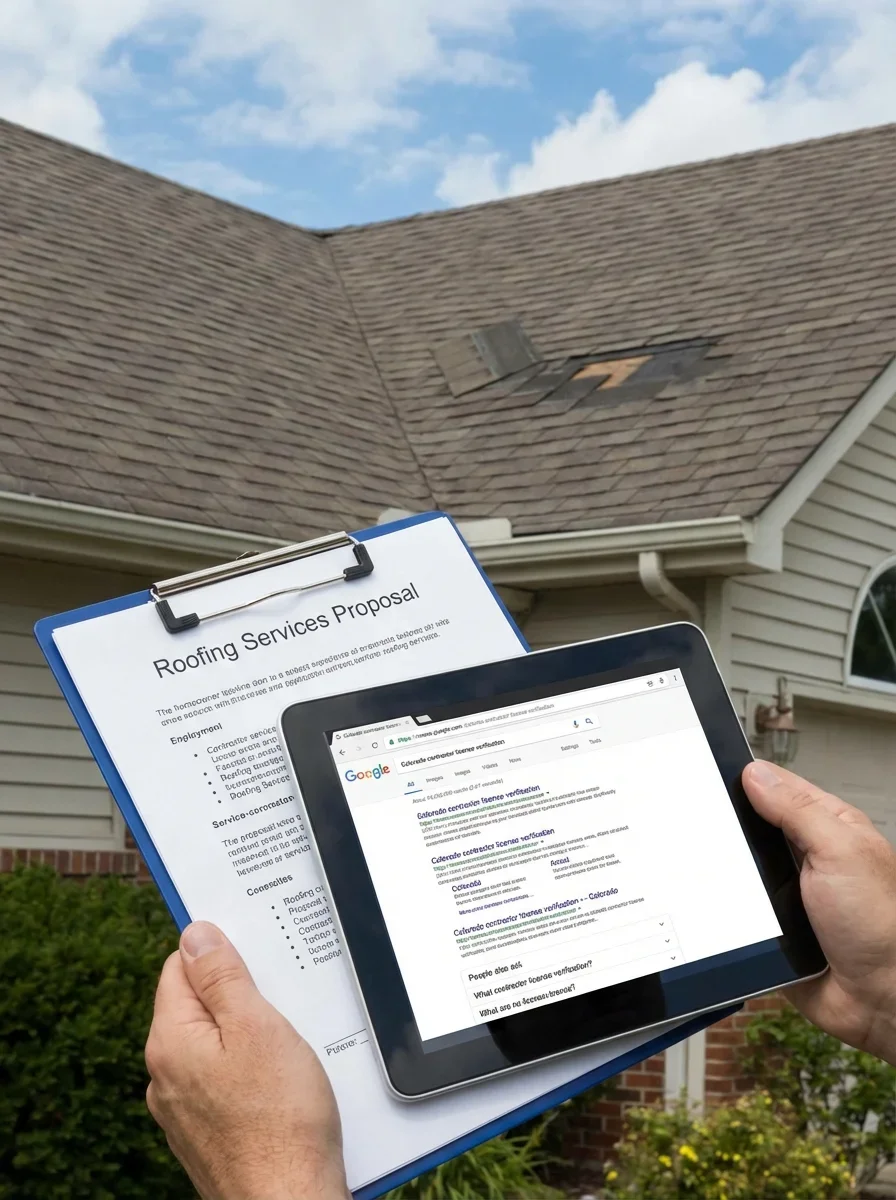
Start verification at the municipal level where the work will be performed. This is your foundation check.
Everything else builds on it.
Denver: Online License Lookup
Denver's Community Planning and Development department maintains an online contractor license lookup at denvergov.org/CPD. Search by business name or license number. Active licenses display the contractor's supervisor certificate holder, expiration date, and any disciplinary actions on file.
Denver also requires contractors to carry general liability insurance and workers' compensation coverage before licensing approval. The online system shows insurance carrier names but not policy details — you'll verify those separately in the next section.
Colorado Springs and Pikes Peak Region: ICC Certification
The Pikes Peak Regional Building Department requires roofing contractors to pass an International Code Council (ICC) exam before issuing licenses.[4] Verify credentials at pprbd.org by searching the contractor database. Look for active license status and exam passage dates.
This region treats advertising or contracting for roofing work without proper licensing as a violation of the Pikes Peak Regional Building Code.[4]
That means unlicensed contractors face fines and stop-work orders — and you're left with a half-finished roof and no legal recourse through the licensing board.
Smaller Jurisdictions: Call the Building Department
Not every Colorado municipality maintains online lookup tools. For towns like Castle Rock, Highlands Ranch (unincorporated Douglas County), or mountain communities, call the local building department directly with the contractor's business name.
Ask three specific questions:
- Is this contractor registered or licensed to perform roofing work in this jurisdiction?
- When does their registration or license expire?
- Are there any open complaints, violations, or stop-work orders on file?
Building inspectors field these calls daily. They'll tell you whether the contractor can legally pull permits — and if they've had previous issues.
Verify Insurance Coverage and Bond Status
Colorado requires contractors with employees to carry workers' compensation insurance. General liability insurance isn't state-mandated, but virtually every municipality and homeowners association requires it before work begins.[5]
Request Certificates of Insurance Directly from Carriers
Don't accept a contractor's photocopy of an insurance certificate. Those documents are easy to forge and frequently outdated.
Instead, ask for the insurance carrier's name and policy number, then call the carrier directly to verify:
- Current coverage status (active, not expired or canceled)
- Policy limits ($1 million general liability minimum, $500,000 workers' comp minimum)
- Named insured (must match the contractor's business name exactly)
- Certificate holder (should be "homeowner" or left blank for direct residential work)
Legitimate contractors provide this information without hesitation. Resistance or excuses — "Our agent is out of town," "The policy just renewed and we don't have the new number yet" — are red flags.
Workers' Compensation: Non-Negotiable for Crews
If a contractor employs anyone beyond the owner, Colorado law requires workers' compensation coverage. When uninsured workers get hurt on your property, you become liable for medical bills and lost wages.
One fall from a second-story roof can generate six-figure claims.
Ask contractors: "Do you carry workers' compensation insurance, and can I verify it with your carrier?" One-person operations legitimately don't need coverage for the owner alone. Crews of two or more must be covered.
Mountain communities above 8,000 feet — where installation seasons compress into May-October windows and snow load requirements increase fall risks — see higher workers' compensation premiums. That cost pressure tempts some contractors to skip coverage. Verify before work starts.
Search Business Registrations and Complaint Records
Even if a contractor holds a local license, check their broader business standing. Colorado's Secretary of State database and consumer protection records reveal patterns municipal licensing boards might miss.
Colorado Secretary of State Business Entity Search
Search at sos.state.co.us/biz/BusinessEntityCriteria.do. Enter the contractor's business name to verify:
- Entity type (LLC, corporation, sole proprietorship)
- Registration date and current status (good standing vs. delinquent)
- Registered agent and principal address
- Trade names or DBAs on file
Contractors operating under multiple business names — especially if they've filed new entities in the last 12 months — sometimes do so to escape complaint histories or failed projects tied to previous company names.
A string of dissolved or delinquent entities raises questions worth asking directly.
Better Business Bureau and Google Reviews with Context
BBB profiles and Google reviews provide consumer feedback, but interpret them carefully. Roofing contractors working insurance claim assistance deals see inflated complaint volumes during hail season simply due to project volume and insurance adjuster delays outside their control.
Look for patterns, not isolated incidents.
Repeated complaints about contractors disappearing mid-project, refusing to honor warranties, or filing liens against homeowners signal real problems. One-off disputes about color mismatches or scheduling delays happen to even top-rated contractors during the June-August hail damage repair peak.
Front Range homeowners frequently mention storm chasers flooding neighborhoods after major wind events. Local contractors with established Google My Business profiles, office addresses within the metro area, and review histories spanning multiple years offer more accountability than out-of-state operations with fresh 5-star reviews all posted within the same week.
| Verification Factor | Local Established Contractor | Storm Chaser/Out-of-State |
|---|---|---|
| Physical Office | Permanent metro area address | Hotel, temporary address, or PO box |
| Review History | 2+ years, steady volume | All recent (same month), high volume |
| License Location | Multiple CO municipalities | Single or no local license |
| Response Time | Returns calls within 24 hours | Difficult to reach after contract signed |
| References | Recent local projects, specific addresses | Vague locations or out-of-state only |
| Permit History | Dozens filed in your municipality | Zero or minimal local permits |
Confirm Permit History and Building Code Compliance
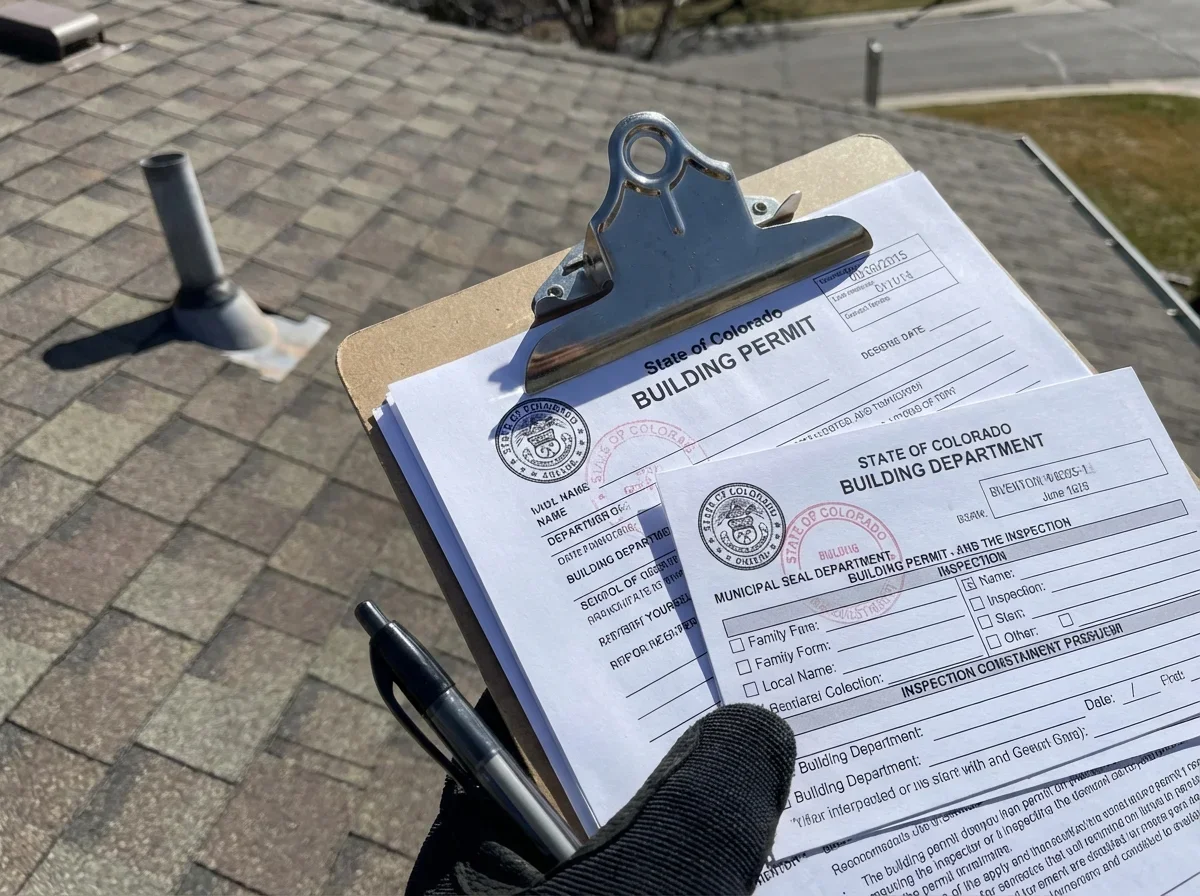
Most roofing work in Colorado requires permits, especially full replacements. Unpermitted work voids manufacturer warranties and creates complications when you file insurance claims or sell your home.[1]
Check Past Permit Records
Municipal building departments maintain permit records. Search by contractor name or business address to see their permit history in that jurisdiction.
High permit volumes indicate established local presence and compliance with inspection requirements.
Zero permits filed despite years in business suggests the contractor operates outside proper channels — or primarily works in other jurisdictions and is unfamiliar with local requirements. Either scenario raises questions before you hire them.
Ask About Specific Code Compliance Plans
Colorado adopts the International Building Code (IBC) and International Residential Code (IRC) with state amendments. But local jurisdictions layer additional requirements.
Ask contractors: "How do you handle permit applications in [your municipality]?"
Legitimate contractors outline their process: filing applications, scheduling inspections, coordinating inspector access. Vague answers or suggestions that permits aren't necessary for "simple" replacements indicate unfamiliarity with local requirements.
Ask specifically about Class 4 impact-resistant shingle requirements if you're replacing after hail damage. These impact-resistant shingles are becoming the de facto standard across the Front Range, driven by insurance discounts of 15-28%. Contractors who don't proactively discuss Class 4 options aren't staying current with Colorado's evolving roofing landscape.
Verify Professional Certifications and Manufacturer Credentials
Licensing covers legal compliance. Certifications demonstrate technical expertise and access to extended warranties homeowners can't get otherwise.
GAF Master Elite and CertainTeed SELECT ShingleMaster
Manufacturers like GAF and CertainTeed offer tiered contractor certifications. Master Elite and SELECT ShingleMaster designations require proof of licensing, insurance, business longevity, and customer satisfaction scores. These contractors can offer extended warranties (up to 50 years) that standard installers cannot.
Verify credentials directly at manufacturer websites — gaf.com for Master Elite status, certainteed.com for SELECT ShingleMaster.
Don't trust contractor-printed certificates without online confirmation.
Colorado Roofing Association (CRA) Membership
The Colorado Roofing Association doesn't license contractors, but membership indicates commitment to industry standards and continuing education. CRA members agree to a code of ethics and gain access to technical training on Colorado-specific challenges like hail damage assessment and high-altitude installation techniques.
Search the member directory at coloradoroofing.org. Membership alone doesn't guarantee quality, but it signals investment in professional development beyond minimum licensing requirements.
Pro Tip: GAF Master Elite certification requires contractors to maintain a 3% or lower consumer complaint ratio. This means for every 100 jobs completed, fewer than 3 result in unresolved complaints. Standard installers face no such accountability metric — making certification status one of your strongest quality indicators.
Red Flags That Should Stop Negotiations Immediately
Some warning signs are dealbreakers. Walk away if you encounter:
Door-to-door solicitations after storms, especially with out-of-state plates. Legitimate local contractors don't need to canvas neighborhoods cold. Their phones ring off the hook after hail events from existing customer referrals and insurance claim volumes.
Requests for large upfront deposits. Colorado custom limits contractor deposits to one-third of the total contract value. Requests for 50% or more upfront often fund other projects or operating expenses — not materials for your roof.
Pressure to sign insurance checks over to the contractor. Your insurance check is written to you (sometimes you and your mortgage lender as co-payees). Contractors who demand you sign checks over "for materials ordering" sometimes deposit those funds and disappear. Pay contractors according to completion milestones outlined in your contract, not upfront lump sums.
Offers to waive insurance deductibles. This is insurance fraud. Contractors who offer to "cover your deductible" or "work with your deductible amount" are violating Colorado law and your insurance policy terms. When insurers discover this — and they audit claims regularly — they can deny coverage and pursue fraud charges.
Refusal to provide references from recent projects. Established contractors gladly share references from jobs completed in the last 12 months in similar neighborhoods. Excuses about "privacy concerns" or only offering references from years-old projects signal potential problems with recent work quality.
How to Verify Everything in 30 Minutes
Here's the fastest path through complete verification:
Minutes 0-10: Search your municipal building department website or call directly. Verify active contractor registration or license. Note expiration date.
Minutes 10-15: Call the contractor's insurance carrier (general liability) to confirm active coverage, policy limits, and named insured matches exactly.
Minutes 15-20: Search Colorado Secretary of State business entity database. Verify good standing, note entity age and any dissolved previous entities under similar names.
Minutes 20-25: Check manufacturer certifications online (GAF, CertainTeed, Owens Corning). Verify current status.
Minutes 25-30: Search permit history in your municipality's building department records. Look for established local presence and compliance patterns.
This half-hour process eliminates 90% of problematic contractors.
The remaining verification — reference calls, detailed contract review, warranty documentation — happens only with contractors who pass these initial checks.
What to Document Before Work Starts
Verification doesn't end when you select a contractor. Protect yourself with documentation before installation begins.
Written Contract Specifics
Colorado doesn't mandate specific contract language for roofing work, but your agreement should include:
- Detailed scope of work (tear-off specifications, material brands and grades, installation methods)
- Total project cost broken down by materials, labor, and permits
- Payment schedule tied to completion milestones, not calendar dates
- Start and completion dates (with weather delay provisions)
- Warranty terms from both manufacturer and contractor
- Lien waiver process and mechanic's lien notifications
- Cleanup and disposal responsibilities
Contracts shorter than two pages for a full roof replacement omit too much.
Detailed agreements protect both parties when disputes arise.
Pre-Project Photo Documentation
Before any work begins, photograph your entire roof from ground level and capture close-ups of existing damage you've discussed with the contractor. Date-stamp these images.
Colorado's expansive clay soil along the Front Range causes foundation movement that can shift rooflines and break flashing seals. If post-installation problems develop and the contractor claims pre-existing damage, your dated photos establish baseline conditions.
Permit Copy and Inspection Schedule
Request a copy of the building permit once filed. It should list the contractor's license number, scope of work, and inspection requirements. Note required inspection dates — typically after tear-off/deck repair and again after final installation.
Ask when inspectors will visit.
You have the right to be present during inspections, and being there when inspectors note deficiencies ensures you hear corrections directly rather than filtered through the contractor.
After-Work Verification: Final Inspections and Warranty Registration
Your verification responsibilities don't end when the last shingle goes down.
Municipal Final Inspection Sign-Off
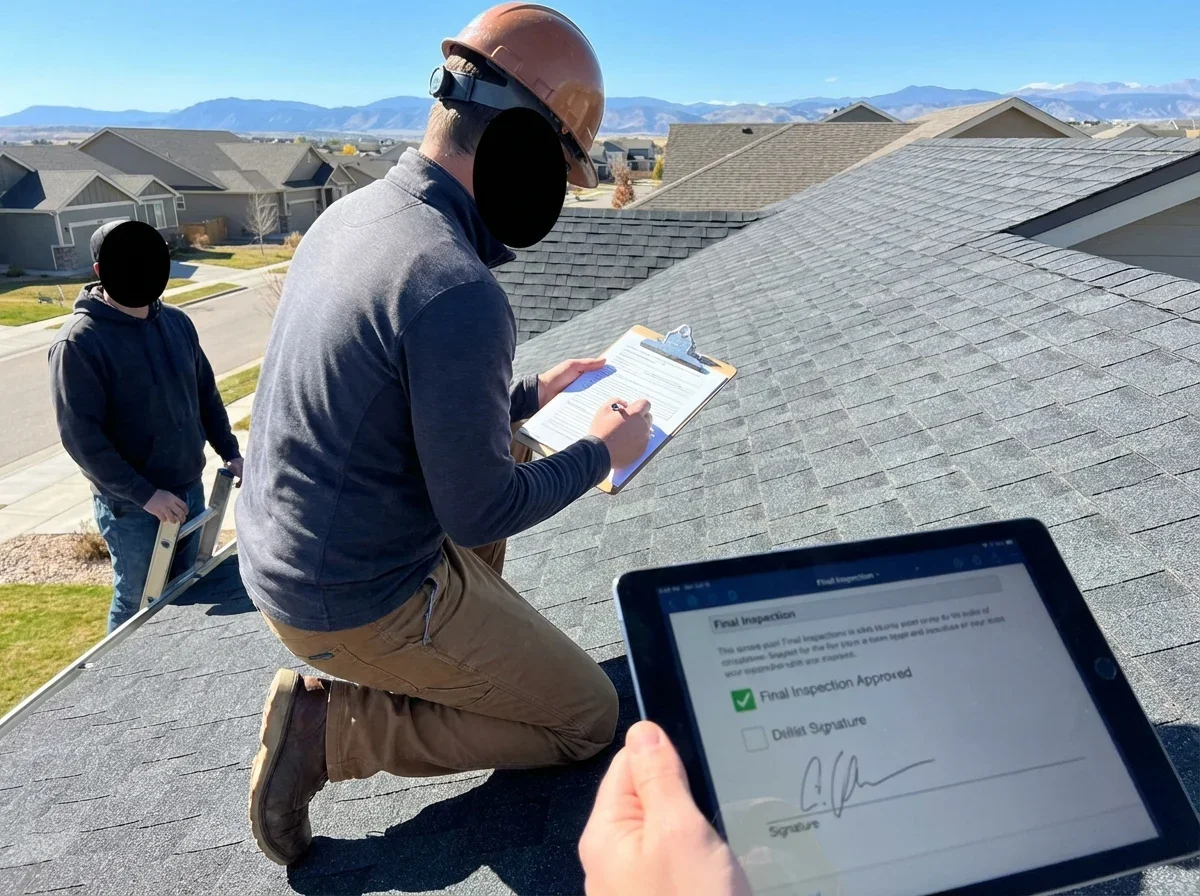
Don't make final payment until the building department issues a final inspection approval. This document confirms the work meets code and passed all required inspections. Without it, you have no municipal record that work was completed legally.
Title companies routinely request proof of final inspection during real estate transactions. Missing documentation can delay closings or force you to hire another contractor to bring the work up to code before sale — at your expense.
Manufacturer Warranty Registration
Most manufacturer warranties require registration within a specific window after installation (typically 30-90 days). Your contractor should handle this, but verify it happened.
Log into the manufacturer's warranty portal with your account information and confirm:
- Registration date and product details match your installation
- Warranty coverage tier (standard vs. extended for certified contractors)
- Coverage duration and transferability terms
Unregistered warranties often provide only basic material defect coverage (10-15 years) instead of the extended coverage (25-50 years) you paid for with a certified installer.
Lien Waivers from All Parties
Request signed lien waivers from the contractor and all subcontractors or material suppliers involved in your project. Colorado's mechanic's lien law allows unpaid suppliers to file liens against your property even if you paid the contractor in full.
Lien waivers confirm each party received payment and waives their right to file future claims.
Collect these before final payment. If the contractor can't produce them, question where your payments actually went.
Special Verification for Insurance Restoration Work
Hail damage repairs through insurance claims add verification layers because contractors act as intermediaries between you and your insurance company.
Public Adjuster License Check
Some roofing contractors also hold public adjuster licenses, allowing them to negotiate directly with your insurance carrier. Others work with separate public adjusters.
Verify any public adjuster license at Colorado's Division of Insurance website (dora.colorado.gov/division-insurance).
Unlicensed individuals negotiating insurance claims on your behalf violate Colorado law and can jeopardize your claim if the insurer discovers it.
Supplement and Depreciation Recovery Promises
Contractors experienced in insurance claim assistance often mention filing supplements (additional payment requests for damage discovered during tear-off) and recovering depreciation (withheld funds released after work completion).
Ask specifically: "What's your supplement approval rate with major carriers in the last 12 months?"
Established restoration contractors track these metrics. They'll quote figures like "78% supplement approval rate with State Farm" because they file frequently enough to measure outcomes.
Vague promises that "we always get supplements approved" without data suggest inexperience with the claims process — which often surfaces mid-project when they discover damage they can't get paid to fix.
When Municipal Records Show Red Flags
Background checks sometimes surface problems. Here's how to interpret common findings:
Expired licenses: Contractors occasionally let municipal licenses lapse between projects, especially in jurisdictions where they work infrequently. If the license expired recently (within 60 days) and the contractor commits to renewal before your project starts, that's usually resolved easily. Licenses expired 6+ months suggest the contractor stopped working in that area — question their current familiarity with local inspection requirements.
Resolved complaints: One or two resolved complaints over a five-year period aren't unusual for high-volume contractors. Focus on resolution: did the contractor fix the problem, or did the homeowner have to pursue legal action? Patterns of unresolved complaints or multiple complaints describing similar issues signal systemic problems.
Permit violations: Occasional permit violations — missed inspections, working outside approved hours — happen to even conscientious contractors during busy seasons. Multiple violations for unpermitted work or failing required inspections indicate willingness to cut corners on compliance.
The 15-Minute Phone Verification Call
Once you've completed online and database checks, call the contractor directly with these specific questions. Their answers reveal as much as official records.
"What's your municipal contractor license number in [your city]?" They should answer immediately with the exact number, not promise to "look it up and call you back."
"Who's your general liability insurance carrier and what are your policy limits?" Immediate answer with carrier name (not agent's name) and specific dollar figures.
"How many projects have you completed in [your neighborhood] in the last 12 months?" Local contractors reference specific streets or subdivisions and approximate project counts. Out-of-state contractors hesitate or deflect.
"What's your typical timeline from permit application to final inspection approval in [your municipality]?" Contractors who work regularly in your jurisdiction quote specific timeframes (e.g., "Denver typically approves within 48 hours, inspection scheduling runs 7-10 days out in summer"). Unfamiliarity with local timelines suggests limited experience in that jurisdiction.
"Can you describe how you handle [specific local challenge]?" Insert something relevant to your area — ice dam prevention in mountain communities, Class 4 shingle selection for hail zones, wildfire-rated materials along the foothills. Knowledgeable contractors discuss technical details and cite specific products or techniques. Generic answers indicate they're learning your region's requirements on the fly.
Why This Level of Verification Matters in Colorado
Colorado's lack of statewide roofing oversight transfers all verification responsibility to you. Unlike states where contractor licensing boards investigate complaints and enforce standards, Colorado municipalities handle discipline inconsistently — and many lack resources for thorough enforcement.
The Front Range's status as the hail capital of the US amplifies these risks.
When seven significant hail events per year create constant demand for storm damage repair, contractors can book 6-18 months out after major storms simply by showing up. That demand pressure attracts opportunistic operators who disappear once insurance checks clear.
Thorough verification protects your single largest home investment. The median Colorado home value hit $550,000 in 2026. Your roof represents 30-40% of that property's weather protection system. Cutting corners on contractor verification to save a few hundred dollars risks tens of thousands in repairs when installations fail.
Climate stressors unique to Colorado — extreme UV at altitude, 60°F daily temperature swings, freeze-thaw cycling, expansive clay soil movement — already challenge even properly installed roofs.
Adding installation defects from unqualified contractors to these environmental factors virtually guarantees premature failure.
Legitimate local contractors welcome verification. They've invested in proper licensing, insurance, certifications, and local relationships because they plan to operate in your community for decades. The 30 minutes you spend verifying credentials protects both parties — you get quality work from qualified professionals, and they get informed clients who understand the value of proper compliance.
Contractors who resist verification or pressure you to skip "unnecessary bureaucracy" are telling you exactly who they are.
Believe them, and find someone else.
- Colorado Roofing Association. "Colorado Roofing License: Everything You Need to Know." https://www.coloradoroofing.org/news/colorado-roofing-license-everything-you-need-to-know. Accessed April 08, 2026.
- City and County of Denver, Community Planning and Development. "Apply for a Contractor's License." https://denvergov.org/Government/Agencies-Departments-Offices/Agencies-Departments-Offices-Directory/Agencies-Departments-Offices-Directory/Community-Planning-and-Development/Contractor-Licensing/Contractor-Licenses/Apply-for-a-Contractor-License. Accessed April 08, 2026.
- Larimer County Government. "Roofing Contractor Licensing Application." https://www.larimer.gov/sites/default/files/uploads/2022/contractor_license_-_roofing.pdf. Accessed April 08, 2026.
- Pikes Peak Regional Building Code. "Roofing Contractors: Common Licensing Questions." https://www.pprbd.org/File/ByAlias/RoofingContractors. Accessed April 08, 2026.
- Colorado Roofing Association. "Getting Started on Your Colorado Roofing Contractor Business." https://www.coloradoroofing.org/news/getting-started-on-your-colorado-roofing-contractor-business. Accessed April 08, 2026.