
Emergency roof repair services provide critical protection when Colorado storms, fallen trees, or sudden failures compromise your home's weather barrier. Fast response with quality temporary repairs prevents water damage while permanent solutions are planned. Connect with Colorado roofing contractors offering 24/7 emergency response, emergency tarping services, and the ability to mobilize quickly during severe weather events.
Featured Contractors
View all →


What Counts as a Roofing Emergency in Colorado?
Not every roof issue requires a 2 AM phone call. True emergencies involve active water intrusion or immediate structural risk — situations where waiting until morning causes exponential damage.
Active Leaks and Water Intrusion
Water pouring through your ceiling during a storm qualifies as an emergency.
Colorado's intense afternoon thunderstorms can dump 2+ inches in an hour. Once water breaches your roof deck, it saturates insulation, shorts electrical systems, and promotes mold growth within 24-48 hours. You'll see water stains spreading across ceilings, dripping from light fixtures, or pooling on floors.
Storm Damage and Missing Materials
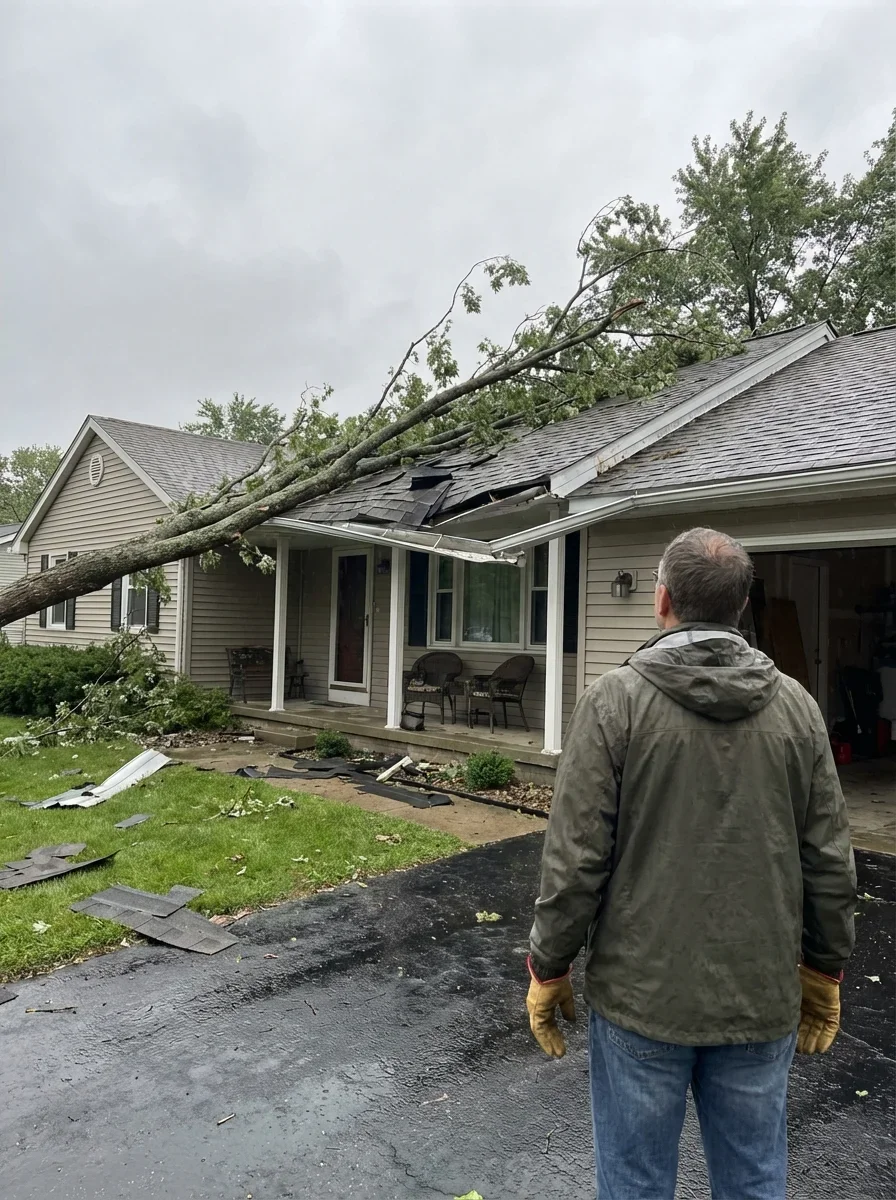
Hail events across Denver, Aurora, and the Front Range corridor frequently strip shingles, crack flashings, and puncture roof penetrations. If you can see exposed underlayment or roof deck from the ground after a storm, that's an emergency. The next rain event will penetrate directly into your attic.
Wind damage that peels back entire sections of roofing material exposes structural elements to moisture immediately.
Structural Compromise
Heavy wet snow loads (Colorado's famous spring storms) can stress roof framing beyond design limits. Sagging ridge lines, cracked rafters, or visible deflection in roof planes indicate structural failure in progress.
In mountain communities like Boulder and Fort Collins, winter snow accumulation combined with ice dams can exceed 40 pounds per square foot. That's well beyond typical residential roof design loads.
Waiting costs more than calling. Every hour water flows into your home adds $500-$2,000 in secondary damage to insulation, drywall, and framing — costs most insurance policies won't fully cover if you delayed emergency mitigation.
If the damage isn't actively threatening your home's interior or structure, schedule a standard inspection during business hours instead.
What Does Emergency Roof Repair Cost in Colorado?
Emergency roof work carries premium pricing because of after-hours mobilization, immediate material sourcing, and elevated risk working in active weather conditions.
| Service Type | Typical Cost Range | What It Includes |
|---|---|---|
| Emergency Tarping | $500 - $1,200 | Materials, labor, 2-4 hour response, basic documentation |
| Temporary Patch Repairs | $800 - $2,500 | Small section repairs, flashing fixes, shingle replacement (under 100 sq ft) |
| Permanent Emergency Repairs | $1,500 - $5,000 | Deck replacement, substantial shingle/material replacement, permits |
| Extensive Storm Damage | $5,000 - $15,000+ | Multiple penetrations, structural work, complex repairs requiring engineering |
Emergency Tarping and Temporary Repairs
Emergency tarping costs $500-$1,200 for most residential situations, covering a 200-400 square foot area. Prices increase with roof pitch (steep roofs over 8/12 pitch add 25-40%), height (three-story homes cost more), and accessibility. Mountain properties in Pueblo or Grand Junction with limited road access during storms cost more.
Temporary patch repairs — replacing a few courses of damaged shingles, sealing minor flashing leaks, or addressing isolated penetrations — range from $800-$2,500.
These aren't permanent solutions but buy you 6-12 months before full replacement becomes necessary.
Permanent Repair Pricing
Permanent emergency repairs addressing localized damage cost $1,500-$5,000 depending on materials and extent. Replacing 200-400 square feet of decking and asphalt shingles runs $2,000-$3,500.
Upgrading to Class 4 impact-resistant shingles adds 15-20% but qualifies you for insurance premium reductions of 15-28%. Run the numbers with your insurer.
Hail damage requiring multiple penetration repairs, flashing replacement, and ridge work pushes costs toward $4,000-$8,000. If damage exceeds 40% of your roof surface, most insurance adjusters recommend full replacement rather than patching — see our roof replacement cost guide for Colorado pricing specifics.
Insurance Coverage Considerations
Colorado homeowners insurance typically covers sudden storm damage (hail, wind, falling trees) as a covered peril. Emergency tarping costs are almost always covered as "emergency mitigation" — you're required to prevent further damage once the initial event occurs.
Keep every receipt. Document everything. Photograph the tarped roof from multiple angles.
Most insurers reimburse emergency tarping within the claim settlement, but you'll pay upfront. For guidance navigating the claims process, review our Colorado roof insurance claims guide or work with contractors offering insurance claim assistance.
Deductibles apply to the permanent repair portion. If your roof sustained $8,000 in hail damage and you carry a $2,500 deductible, you'll pay $2,500 and insurance covers $5,500.
Colorado's hail frequency makes this a common scenario. Front Range homeowners file roof claims every 7-10 years on average.
The Emergency Roof Repair Process
Emergency roof work follows a three-phase protocol: stop the immediate damage, document everything for insurance, then plan permanent repairs. Legitimate contractors execute this systematically, even at 3 AM.
Initial Contact and Damage Assessment
When you call an emergency roofing contractor, expect these questions: Is water actively entering? Where is the damage located? When did the storm occur?
Reputable Colorado contractors arrive within 2-4 hours for genuine emergencies in metro areas (Denver, Colorado Springs, Lakewood). Mountain locations during active weather take longer.
The initial assessment identifies leak sources, extent of exterior damage, and whether temporary measures will hold until permanent repairs. The contractor should photograph everything — roof damage, interior water damage, and surrounding context.
This documentation becomes your insurance claim foundation.[1]
Temporary Stabilization (Tarping)
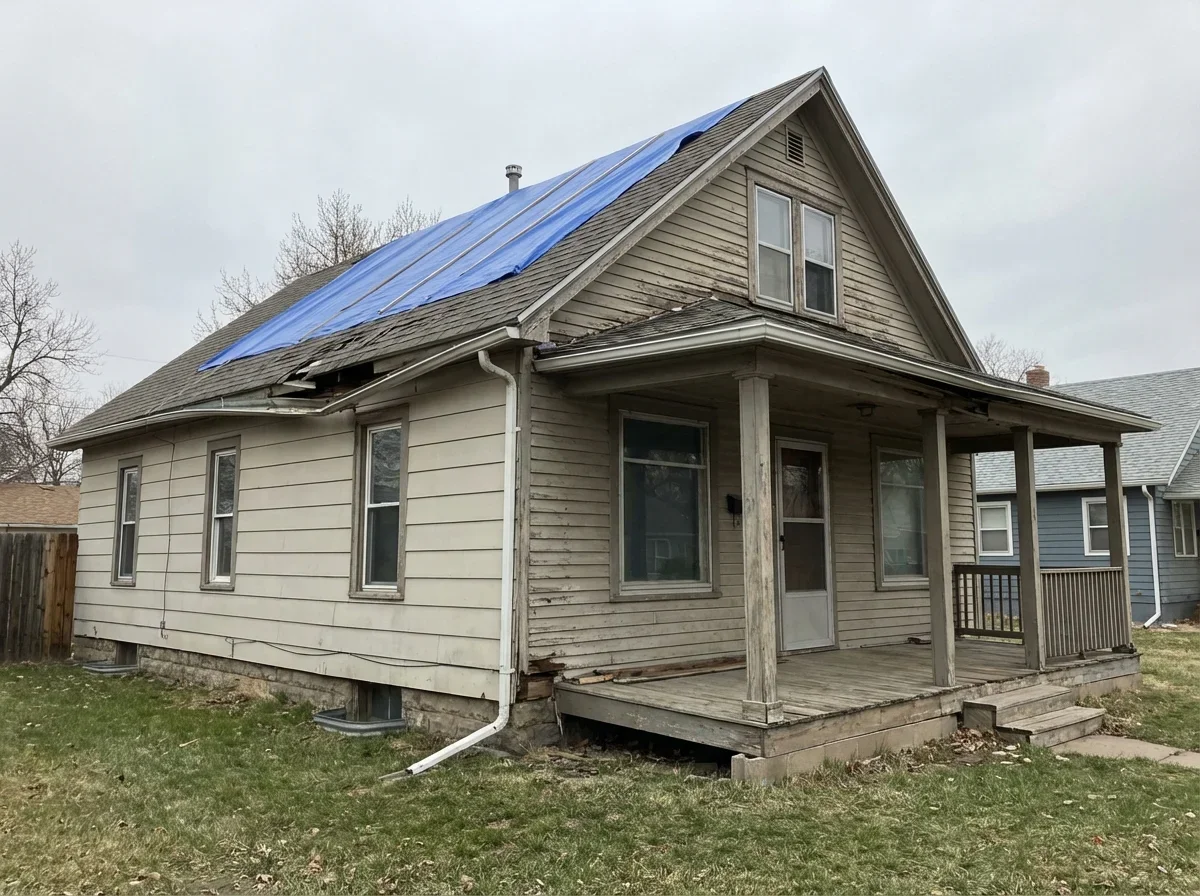
Professional tarping isn't throwing a blue tarp over a hole.
Contractors anchor heavy-duty reinforced tarps using wood battens screwed through intact shingles, creating a weathertight seal that withstands Colorado's 40+ mph winds. Tarps typically cover 10×10 to 20×20 areas, extending well beyond damaged sections to ensure proper overlap.
Quality emergency tarping lasts 30-90 days depending on UV exposure and wind events. That's enough time to file insurance claims and schedule permanent repairs. Expect tarping to cost $500-$1,200 depending on roof pitch, accessibility, and tarp size.
Permanent Repair Planning
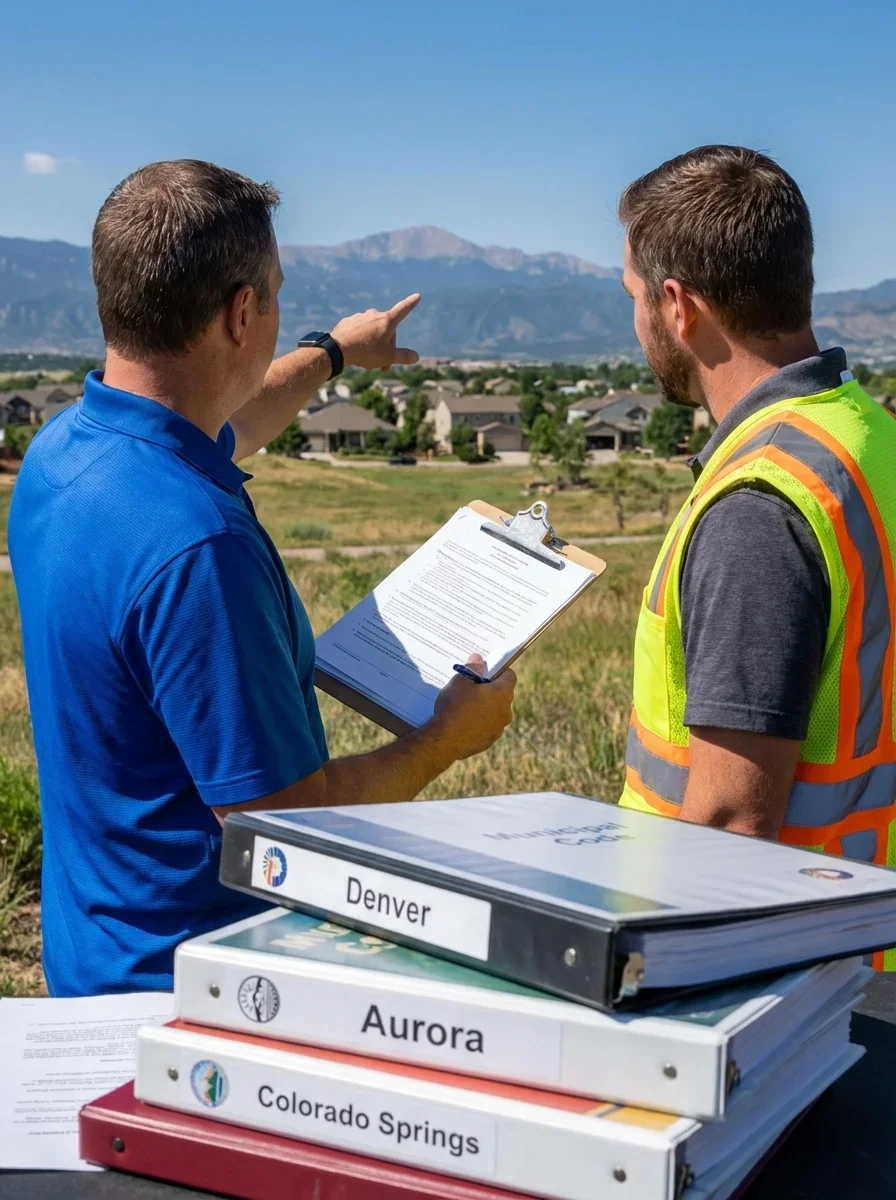
Once the immediate crisis is stabilized, contractors assess whether repairs meet local permit thresholds. In Longmont, repairs exceeding 100 square feet require permits and may trigger full roof replacement requirements.[2]
For commercial properties, Centennial requires mid-roof inspections during all repair work to verify proper tear-off and underlayment installation.[3]
The contractor provides a detailed scope of work, material specifications (often Class 4 impact-resistant shingles for insurance premium discounts), and timeline. Most emergency repairs transition to permanent fixes within 1-3 weeks, weather permitting.
Related issues often surface during this process. Consider scheduling a comprehensive roof inspection to identify hidden hail damage or aging materials beyond the emergency area.
How to Choose an Emergency Roofing Contractor
Storm damage brings unlicensed "storm chasers" flooding into Colorado neighborhoods within hours. Choosing poorly during a crisis costs you thousands in shoddy work and insurance headaches.
Use this checklist even when you're stressed.
Questions to Ask Before They Touch Your Roof
- "What's your Denver/local license number?" — Denver requires Specialty Class D Certificates for roofing contractors.[1] Verify active licenses through city websites (Denver, Aurora, Thornton all maintain online databases). Colorado has no statewide roofing license, so municipal credentials matter.
- "How quickly can you respond and what's your tarping process?" — Legitimate 24/7 contractors arrive within 2-4 hours metro-wide, with systematic tarping protocols (not just throwing material on your roof).
- "Will you provide insurance documentation?" — You need itemized invoices, scope-of-work details, and damage photos formatted for insurance submission. Contractors experienced with Colorado storm claims know exactly what adjusters require.
- "Are you Colorado Roofing Association (CRA) members?" — CRA membership signals industry credibility in a state without licensing requirements. Check their member directory.
- "What's included in your emergency service fee?" — Get tarping costs, inspection fees, and documentation services broken out separately before agreeing to anything.
- "Can you provide local references from recent emergency work?" — Ask for 3-5 homeowners they've helped in the past 6 months in your area (Fort Collins, Greeley, Longmont).
Red Flags: Avoid These Contractors
- Cash-only or "discount for no insurance claim" — legitimate contractors work transparently with insurers
- Pressure to sign contracts immediately — even in emergencies, you have time to verify credentials
- No physical Colorado address — storm chasers operate from out-of-state, disappearing after deposits
- Offering to "eat your deductible" — this is insurance fraud and puts you at legal risk
Colorado's post-storm contractor influx means choices, but verification matters. Start comparing licensed, CRA-member contractors in our directory to find qualified emergency responders before the next hail event hits.
Frequently Asked Questions
- City and County of Denver. "Specialty Class D Certificates." https://denvergov.org/Government/Agencies-Departments-Offices/Agencies-Departments-Offices-Directory/Community-Planning-and-Development/Contractor-Licensing/Supervisor-Certificates/Specialty-Class-D-Certificates. Accessed April 08, 2026.
- City of Longmont. "Roofing Guidelines for Commercial and Residential Projects." https://longmontcolorado.gov/building-inspection/roofing-guidelines-for-commercial-and-residential-projects-1/. Accessed April 08, 2026.
- City of Centennial. "Commercial Roof Repairs and Reroofing." https://www.centennialco.gov/Government/Departments/Building/Commercial-Roof-Repairs-and-Reroofing. Accessed April 08, 2026.
Related Articles
Need Help With Your Project?
Join 500+ homeowners we've helped