
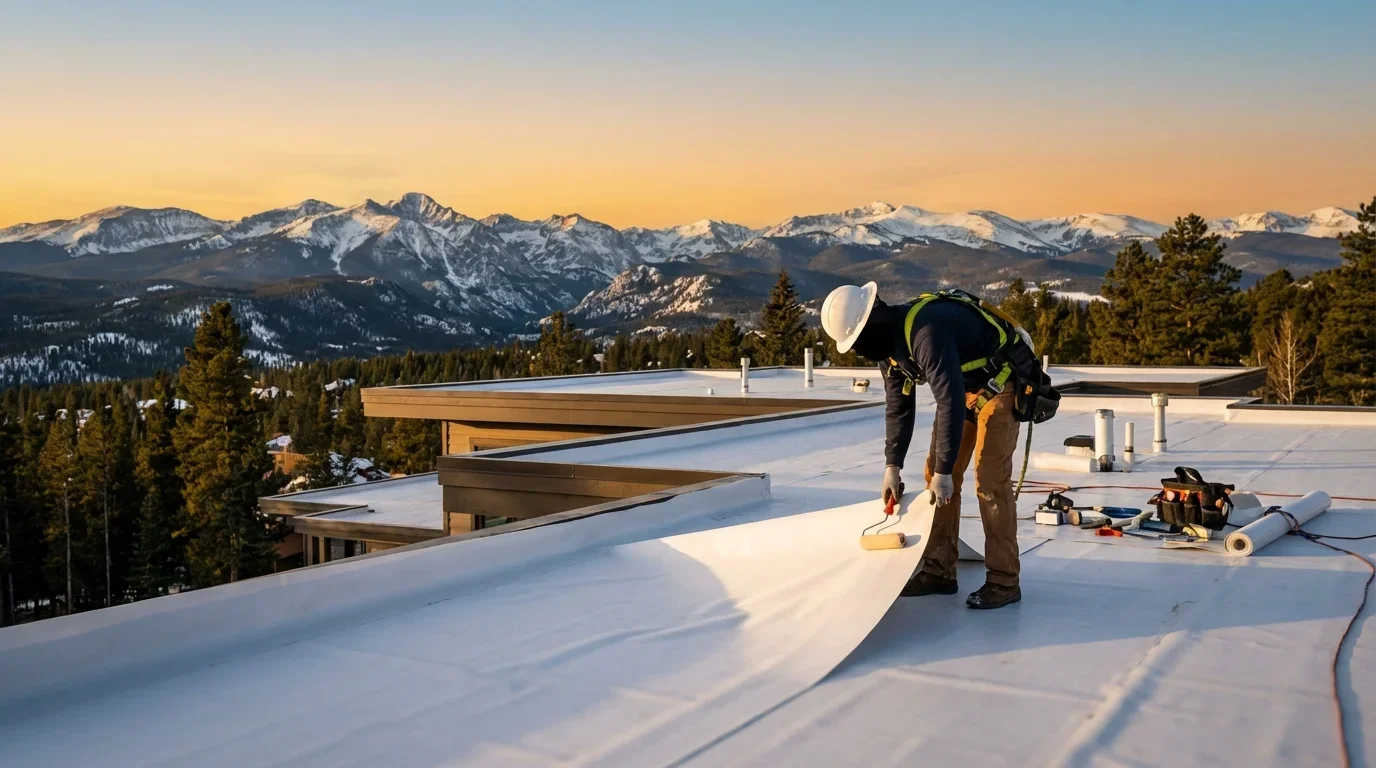
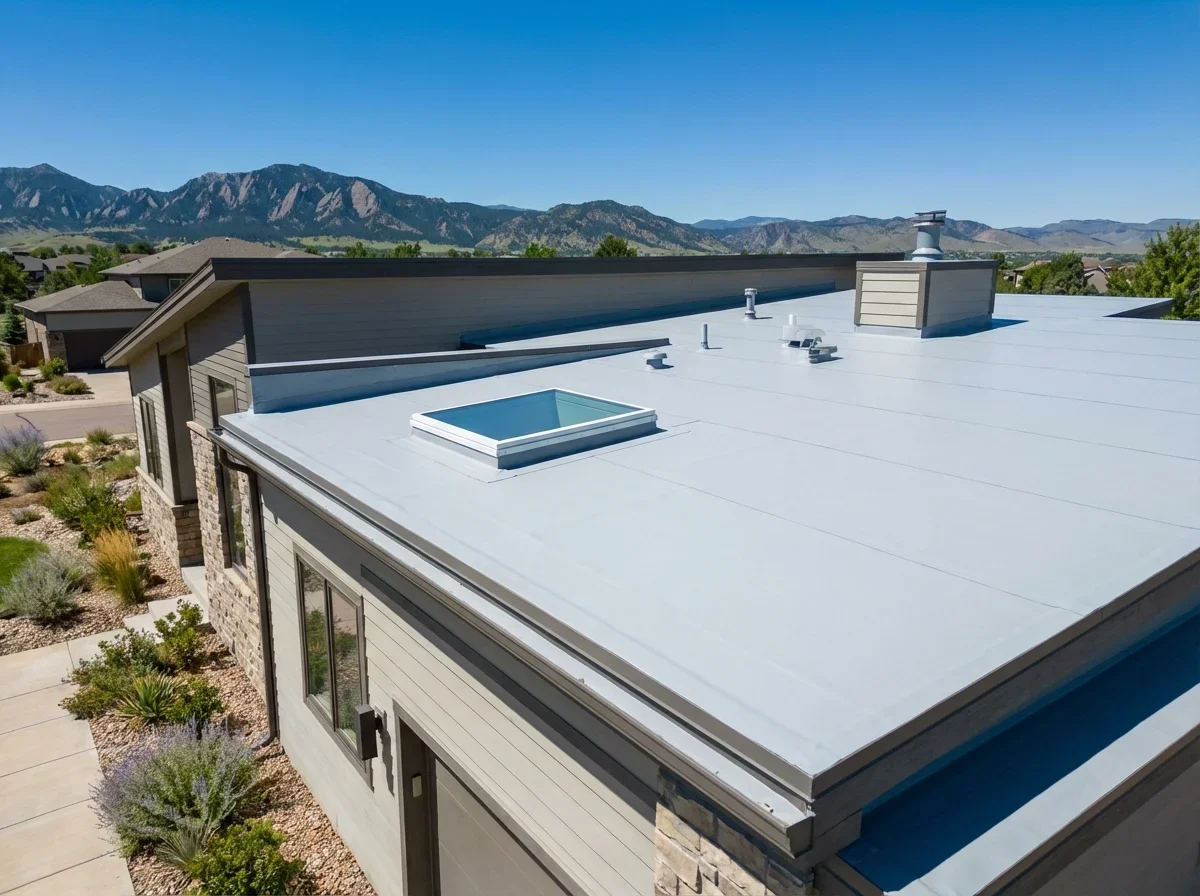
Flat and low-slope roofing systems are essential for Colorado commercial buildings and modern residential designs, requiring specialized materials and installation expertise. TPO, EPDM, and modified bitumen systems each offer distinct advantages for Colorado's temperature extremes and UV exposure. Find experienced flat roof installation contractors who understand proper drainage design and can recommend the best membrane system for your building's specific requirements.
Featured Contractors
View all →

When Your Facility Needs a New Flat Roof
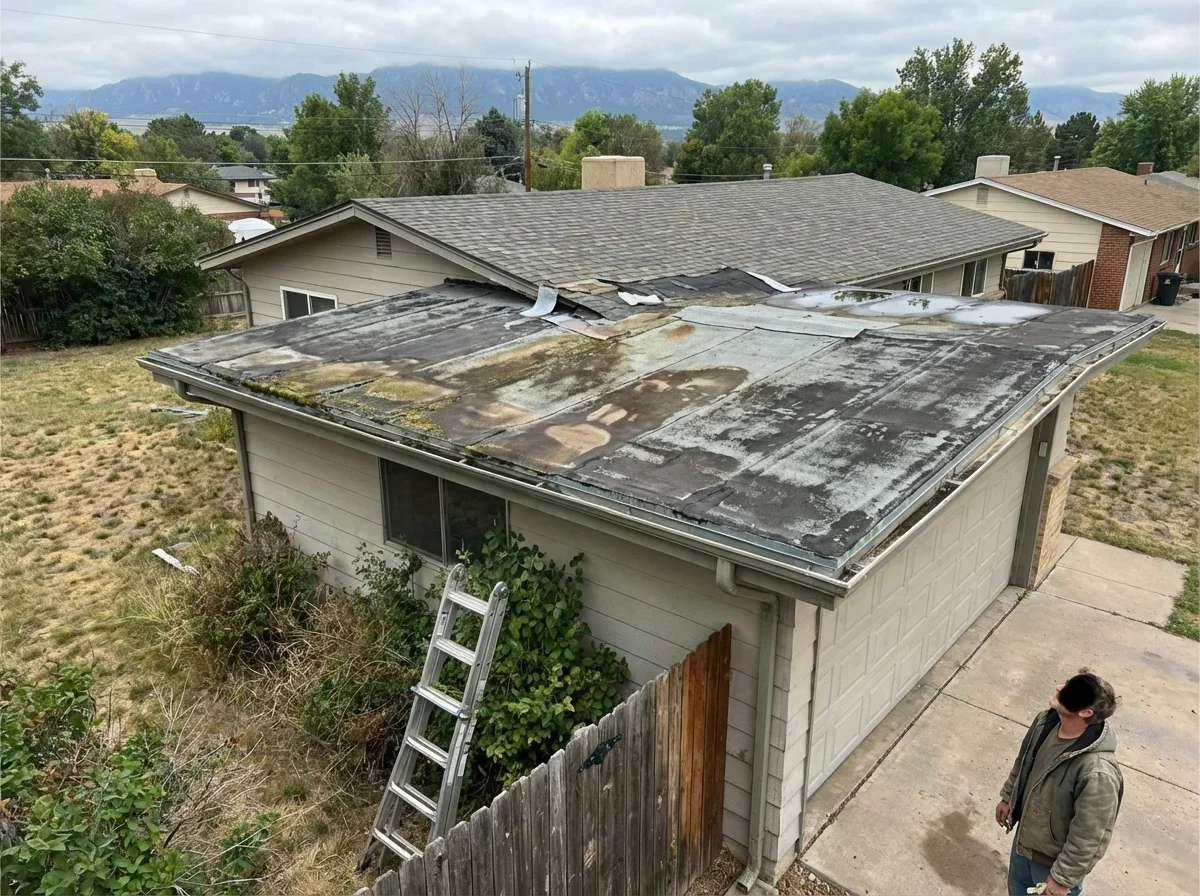
Your existing flat roof tells you when it's failing. Ponding water that lingers 48+ hours after rain signals drainage issues that accelerate membrane breakdown. Blistering or bubbling across the surface means trapped moisture is destroying adhesion from beneath.
Visible seam separation at membrane overlaps — especially after Colorado's thermal cycling — indicates your roof is past its effective lifespan. You'll see this most on older EPDM systems in Denver and Aurora where daily temperature swings exceed 60°F during spring and fall.
Commercial flat roofs in Colorado average 15-25 years depending on membrane type and installation quality. Buildings at altitude face accelerated UV degradation. Granule loss on modified bitumen happens 25-30% faster here than at sea level.[1]
Waiting costs more than acting. A failing membrane that allows water intrusion damages roof deck, insulation, and interior systems — turning a $45,000 re-roof into a $75,000+ structural repair project.
Interior water stains near HVAC penetrations or along parapet walls mean flashing has failed.
In Colorado Springs and Fort Collins, freeze-thaw cycling cracks improperly detailed flashings within 3-5 years of installation.
What Does Flat Roof Installation Cost in Colorado?
Commercial flat roof pricing in Colorado ranges $5.50-$12.00 per square foot installed depending on membrane type, building complexity, and existing roof removal requirements.
Material Cost Breakdown by Membrane Type
| Membrane System | Installed Cost/sqft | Expected Lifespan | Colorado Climate Rating |
|---|---|---|---|
| EPDM (rubber) | $5.50 - $7.50 | 20-25 years | Good (requires UV coating) |
| TPO (thermoplastic) | $6.50 - $9.00 | 15-20 years | Excellent (reflective, UV-resistant) |
| Modified Bitumen | $7.00 - $10.00 | 15-20 years | Good (multi-ply durability) |
| PVC | $8.50 - $12.00 | 20-30 years | Excellent (chemical/UV resistant) |
TPO dominates Colorado commercial installations. Its white reflective surface reduces cooling loads and resists high-altitude UV degradation better than darker EPDM. Energy savings average 15-20% in Pueblo and Grand Junction where summer roof surface temperatures exceed 160°F.
Labor, Removal, and Building-Specific Factors
Your total project cost includes:
- Existing roof tear-off: $1.50-$3.00/sqft (increases with multiple layers or asbestos abatement)
- Structural repairs: $15-$45/sqft for damaged deck sections
- Insulation upgrades: $1.75-$4.00/sqft depending on R-value requirements
- Penetration details: $150-$600 per HVAC curb, drain, or skylight
- Parapet/edge metal: $18-$35 per linear foot
Building height affects costs. Three-story facilities in Denver require additional safety equipment and access staging that adds 15-25% to labor.
A typical 10,000 sqft commercial building averages $65,000-$95,000 for complete TPO installation including tear-off, insulation, and flashing details.
Larger facilities benefit from economies of scale. Projects over 50,000 sqft often fall toward the lower end of per-sqft pricing.
Most commercial warranties require regular maintenance inspections. Budget $800-$1,500 annually for professional cleaning, seam checks, and minor repairs to preserve coverage.
The Commercial Flat Roof Installation Process
Pre-Installation Assessment and Drainage Planning
Your contractor starts with structural load analysis. Colorado's IBC requirements mandate flat roofs handle ground snow loads ranging from 20 psf in lower elevations to 60+ psf in mountain communities like Boulder.[2] The existing deck gets evaluated for capacity before membrane selection.
Drainage design comes next.
Proper slope (minimum 1/4" per foot) prevents ponding that voids warranties. Scuppers, drains, and overflow systems get sized for Colorado's intense summer cloudbursts. The Front Range sees rainfall rates exceeding 2" per hour during monsoon season.
Membrane Installation and Insulation Requirements
The process unfolds in stages:
- Tear-off and deck preparation — existing membrane removal, deck inspection/repair, surface cleaning
- Insulation installation — rigid foam boards (polyiso or XPS) meet Colorado energy code R-values, mechanically fastened or adhered
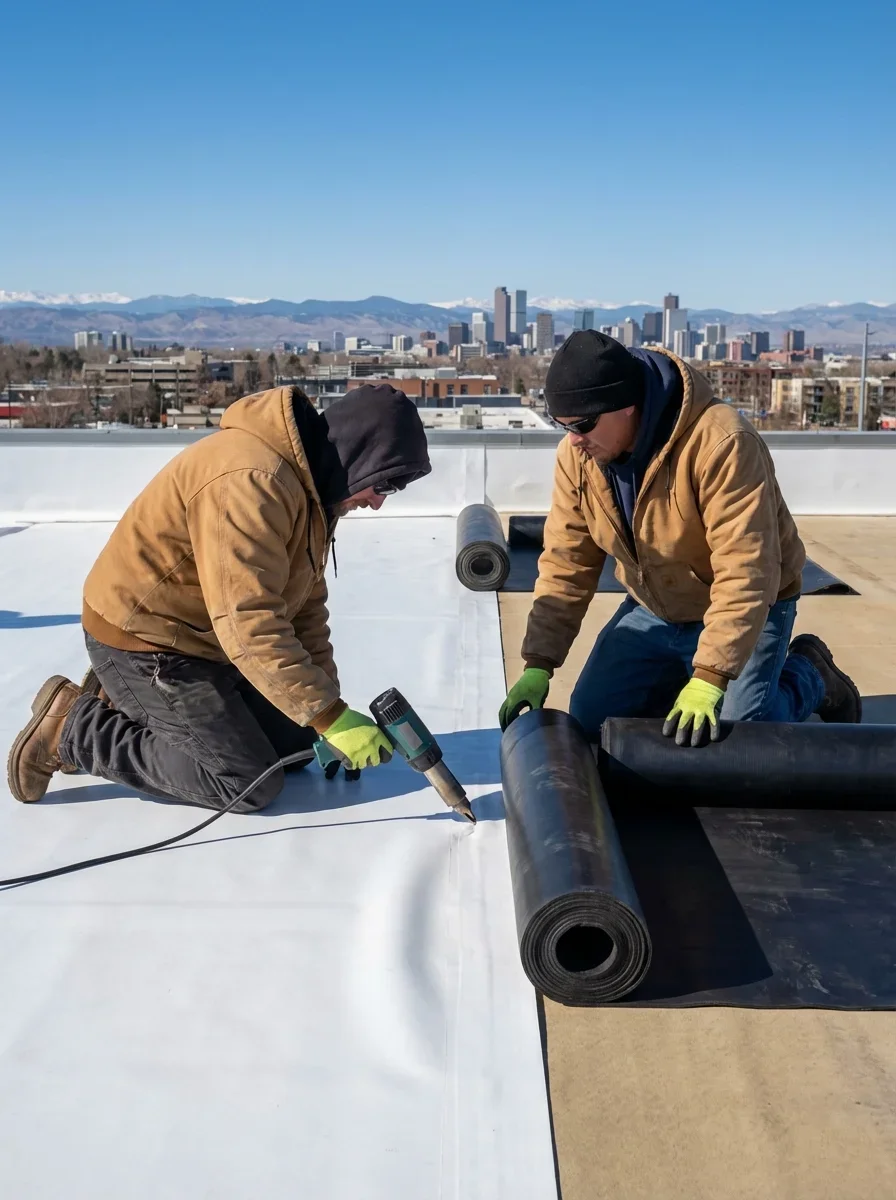
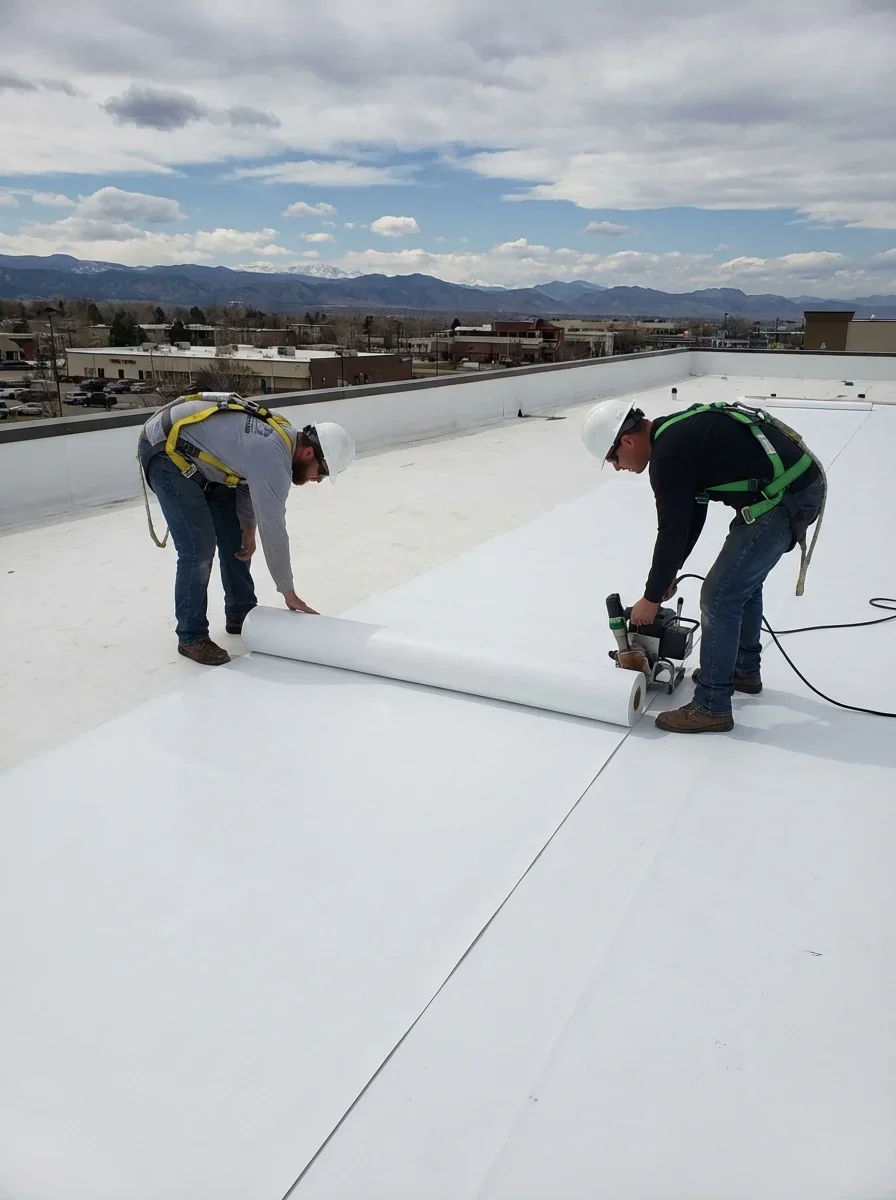
- Membrane application — TPO/EPDM installed via fully-adhered, mechanically-attached, or ballasted systems depending on building height and wind exposure
- Seam welding — hot-air welding for TPO creates watertight bonds that withstand thermal movement
- Quality testing — seam integrity testing via probe or pull tests before final inspection
Most commercial installations in Lakewood and Thornton take 3-7 days depending on building size and complexity.
Work happens during dry weather. May through October offers the most reliable installation windows.
Flashing and Penetration Details
Colorado's freeze-thaw cycling demands robust flashing systems. Parapet walls get multi-ply termination bars. HVAC curbs receive factory-fabricated pitch pans. Pipe penetrations use two-part EPDM boots that flex with thermal movement without cracking.
Every penetration becomes a potential leak point in Colorado's climate.
Quality contractors detail each one to outlast the membrane itself.
How to Choose a Flat Roof Contractor in Colorado
Licensing and Manufacturer Certifications
Colorado has no state roofing license, but municipal requirements vary. Denver requires contractors hold a Supervisor Certificate for commercial work. Verify your city's specific licensing through the local building department before signing contracts.
Manufacturer certifications matter more than generic licensing. Look for:
- GAF, Carlisle, or Versico certified installers — factory training on proper membrane installation
- Certified Thermoplastic Welders — documented training for TPO/PVC seam welding
- System-specific warranties — only certified contractors can offer 15-20 year manufacturer material warranties
Questions to Ask Commercial Roofing Contractors
- What membrane systems do you install most frequently in Colorado and why? (TPO should dominate their commercial work)
- Show me photos of commercial projects with similar building characteristics to mine (parapet walls, HVAC density, access challenges)
- How do you handle snow load calculations and structural assessment? (must reference IBC Chapter 16 requirements)
- What warranty options exist beyond the base manufacturer coverage? (workmanship guarantees, maintenance plans)
- Provide detailed drainage analysis for my specific roof geometry (should include slope survey and drain sizing calculations)
- What's your protocol for working around occupied facilities? (dust containment, noise management, access coordination)
Red Flags That Should Stop You
- Pushing ballasted systems without structural load analysis (many older Colorado buildings can't support ballast weight)
- Quoting over the phone without roof inspection and measurement verification
- Offering only one membrane option regardless of building use or budget
- Can't provide manufacturer certification documents or installer credentials
- Avoids discussing warranty maintenance requirements (membranes require periodic inspections to maintain coverage)
Insurance and Warranty Coverage
Commercial roofing contractors need $2 million+ general liability coverage and workers' compensation insurance. Request certificates before work starts. Your facility could face liability if uninsured workers are injured on your property.
Understand warranty structures:
- Manufacturer material warranties (15-30 years, often prorated after 10-15 years)
- Contractor workmanship warranties (typically 2-10 years depending on installer)
- System warranties (NDL non-prorated coverage available through certified installers)
Compare local contractors who specialize in commercial flat roofing through our directory. Look for Colorado Roofing Association membership and verified manufacturer certifications. For facilities needing immediate attention alongside new installation planning, review our guide on common flat roof problems to understand what your contractor should address during pre-installation assessment.
Frequently Asked Questions
- International Code Council. "International Building Code (IBC) 2021." https://codes.iccsafe.org/content/IBC2021P3. Accessed April 08, 2026.
- International Code Council (adopted by Colorado). "Building Codes and Standards - Roofing." https://up.codes/codes/colorado. Accessed April 08, 2026.
Related Articles
Need Help With Your Project?
Join 500+ homeowners we've helped