
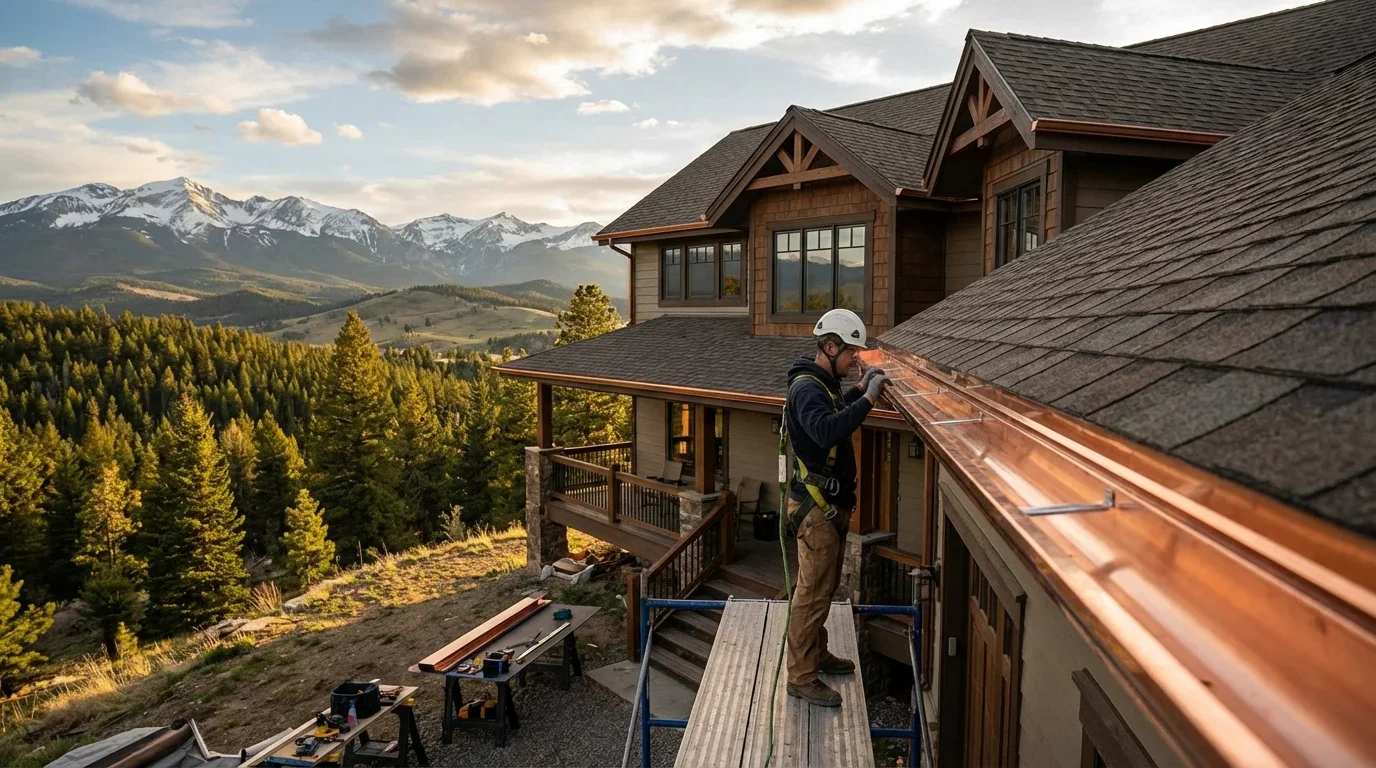
Gutter installation protects your Colorado home's foundation, landscaping, and siding by managing roof runoff from snow melt and rainstorms. Properly sized and positioned gutters with adequate downspouts prevent ice dams, erosion, and basement water intrusion. Find experienced Colorado gutter installation contractors who recommend appropriate materials, understand local precipitation patterns, and integrate seamlessly with your roofing system.
Featured Contractors
View all →



When Do You Need New Gutters?
You need new gutters when your current system can no longer handle Colorado's weather extremes—or when you're installing a roof and the old gutters won't survive removal.
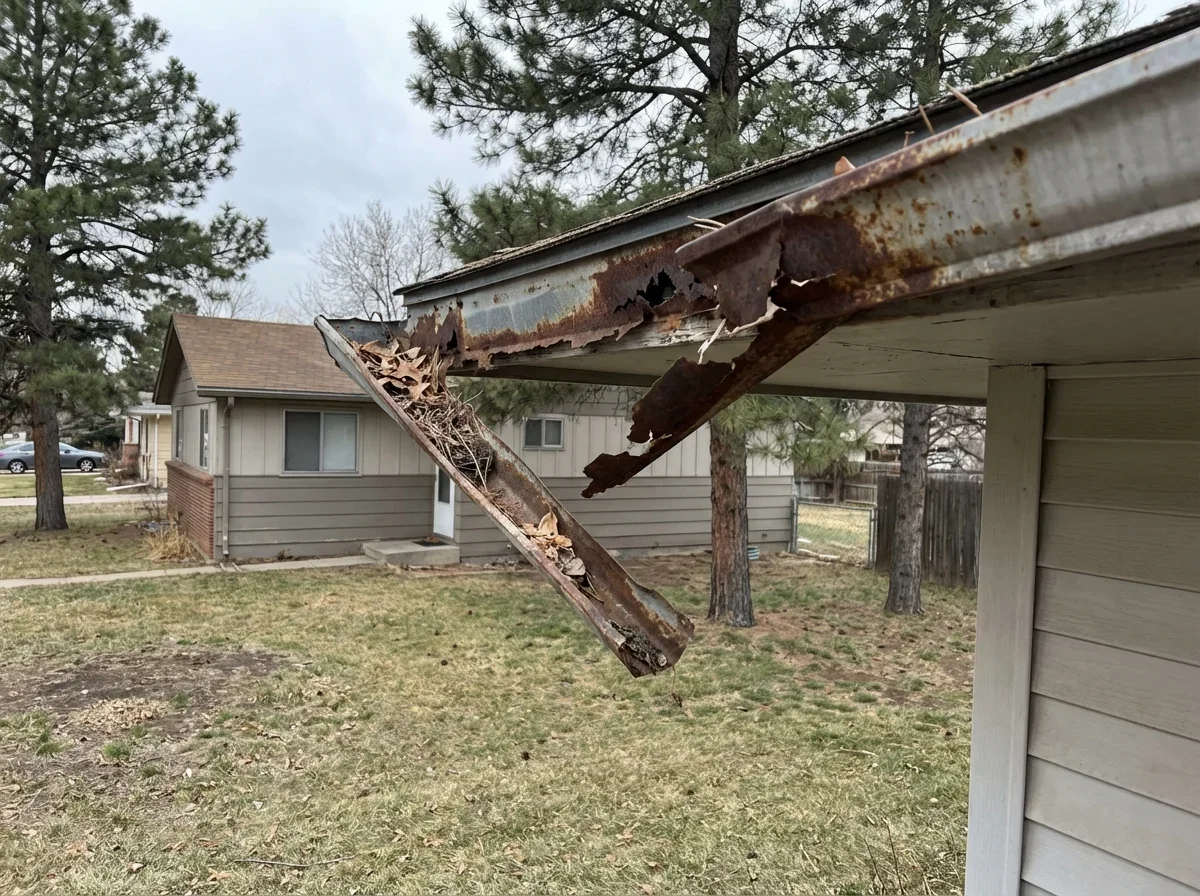
Visible separation from the fascia is the clearest warning sign. If you see daylight between the gutter and roofline, water is already running behind the system and soaking wood. Sagging sections indicate failed hangers—common after heavy snow loads in Boulder or Fort Collins. Rust-through on steel gutters typically appears after 15-20 years of freeze-thaw cycles, especially on north-facing runs that stay wet longer.
Timing matters for combined projects. If you're replacing your roof, install new gutters at the same time—old systems rarely survive the tear-off process, and you'll save on mobilization costs.[3]
Water pooling within 3 feet of your foundation signals trouble. So does basement seepage during storms or erosion trenches below downspouts. Colorado's clay-heavy soils along the Front Range expand dramatically when saturated.
Proper drainage isn't optional. It's structural protection.
Home additions and roof expansions change water volume calculations. Your existing 5-inch gutters may have handled the original roof area but overwhelm quickly when square footage increases.
What Does Gutter Installation Cost in Colorado?
Gutter installation in Colorado runs $6-$20 per linear foot installed, depending on material, home height, and regional labor rates.[3]
| Material | Cost Per Linear Foot | Lifespan in CO Climate |
|---|---|---|
| Seamless Aluminum (standard) | $6-$10 | 20-30 years |
| Heavy-Gauge Aluminum (.032") | $9-$13 | 25-35 years |
| Seamless Copper | $15-$20 | 50+ years |
| Galvanized Steel | $8-$12 | 15-25 years (rust risk) |
A typical 2,000-square-foot home in Aurora or Colorado Springs requires 150-200 linear feet of gutter. That totals $1,200-$2,000 for standard aluminum or $2,400-$4,000 for copper. Two-story homes add $1-$2 per foot for staging and safety equipment.
Material Costs: Aluminum, Copper, and Steel
Aluminum dominates Colorado installations because it won't rust in freeze-thaw cycles, handles UV exposure at 5,280 feet elevation without degrading, and costs 40% less than copper. Heavier .032-inch gauge aluminum resists denting from hail and ladder contact.
Worth the upgrade in Greeley or Pueblo where large hail is routine.
Copper gutters develop a protective patina and outlast all alternatives. Common in Boulder's historic districts and upscale Thornton neighborhoods. Steel gutters are rare in new construction—they rust through at seams within 20 years despite protective coatings.
Labor and Complexity Factors
Single-story ranch homes with simple rooflines install fastest. Multi-level homes, tile or slate roofs requiring specialized flashing, and properties with limited truck access increase labor costs 30-50%. Mountain properties in Summit or Eagle counties add travel premiums.
Gutter guard installation adds $4-$8 per linear foot. Recommended in pine-heavy areas, but evaluate carefully against annual cleaning costs.
Regional Cost Variations
Metro Denver, Boulder, and Fort Collins command higher rates ($8-$12/foot for aluminum) due to demand and cost of living. Grand Junction and Pueblo run 15-20% lower.
Mountain resort towns carry premium pricing. Breckenridge, Vail—access challenges and seasonal labor shortages drive costs up.
The Gutter Installation Process
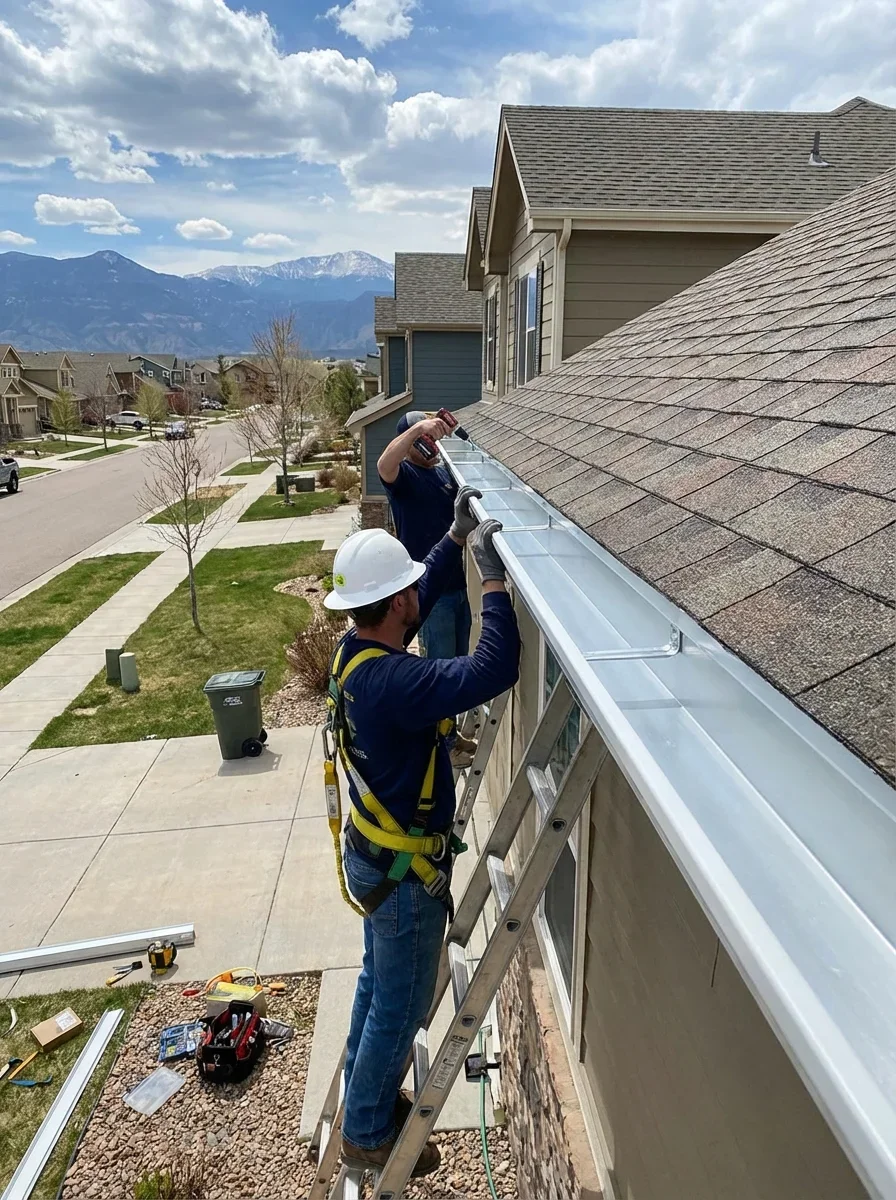
Professional gutter installation in Colorado takes one full day for most single-family homes. Complex rooflines or custom copper work take longer.
Pre-Installation Assessment and Fascia Inspection
Your contractor inspects fascia boards for rot, measures roof pitch and square footage, and calculates proper gutter sizing based on Colorado's rainfall intensity zones. The International Plumbing Code requires 6-inch K-style gutters for roofs exceeding 2,000 square feet in high-intensity precipitation areas.[2]
That includes most of the Front Range where summer storms dump 2-4 inches per hour. Mountain properties face different calculations factoring snow load and melt rates.
Fascia condition determines whether installation can proceed. Rotted boards must be replaced first—you can't anchor a gutter system to compromised wood.
Seamless Gutter Fabrication and Installation
For seamless systems, the contractor fabricates gutters on-site using a truck-mounted machine. Each run is cut to exact length with no joints except corners. Aluminum is formed, end caps sealed, and hangers spaced 24 inches apart for standard installations.
In mountain zones where snow loads exceed 30 pounds per square foot, hangers go 16 inches apart.[3]
Pitch is critical: ¼ inch drop per 10 feet of run ensures water flows to downspouts rather than pooling and freezing. Contractors use laser levels to maintain consistent slope.
Downspout Placement and Drainage Solutions
Downspouts are positioned to direct water at least 6 feet from foundations. Non-negotiable in Denver, Lakewood, and other clay-soil areas where expansive soils cause foundation movement.
Underground drains or extended splash blocks complete the system, preventing erosion and basement infiltration.
How to Choose a Gutter Contractor in Colorado
Ask these questions before signing a contract:
- Do you hold a valid Colorado contractor license? Many municipalities require licensing—Denver mandates a municipal contractor license, and work exceeding certain dollar thresholds requires state contractor registration through DORA.[1]
- What hanger spacing do you use for snow load? Standard 24-inch spacing fails in mountain zones. Look for 16-inch spacing or hidden hangers rated for heavy snow.
- How do you calculate gutter sizing? Contractors should reference roof square footage, pitch, and local rainfall intensity—not just default to 5-inch gutters.
- What's your fascia inspection process? Reputable contractors photograph rot and provide repair estimates before installation.
- Do you provide underground drainage or just splash blocks? Critical for foundation protection in clay soils.
- What's the warranty on materials and labor? Aluminum should carry 20+ year material warranties; labor warranties vary but expect 2-5 years minimum.
Red Flags
- Quotes without a site visit or roof measurement
- Pressure to buy gutter guards as a package (evaluate separately)
- No proof of liability insurance or workers' compensation
- Unwillingness to explain hanger spacing or pitch calculations
Colorado doesn't require a specialized roofing license, but reputable contractors carry general liability insurance and workers' compensation. Verify licenses through DORA's online database before signing.[1]
Compare at least three local contractors familiar with your region's snow loads and drainage challenges. Mountain properties need different engineering than metro homes.
Experience with your specific climate zone matters.
Learn more about vetting contractors in our guide, or browse gutter specialists who understand Colorado's unique requirements.
Frequently Asked Questions
- Colorado Department of Regulatory Agencies (DORA), Division of Professions and Occupations. "Contractor License Search." https://dpo.colorado.gov/ContractorLicenseSearch. Accessed April 08, 2026.
- . "International Plumbing Code." https://codes.iccsafe.org/content/IPC2021P1/chapter-11-storm-drainage. Accessed April 08, 2026.
- Colorado State Energy Office (part of Governor's Energy Office). "Residential Code Compliance Guide." https://cca.colorado.gov/residential-code-compliance-guide. Accessed April 08, 2026.
Related Articles
Need Help With Your Project?
Join 500+ homeowners we've helped