
Professional roof inspections identify current problems and assess remaining lifespan, helping Colorado homeowners make informed maintenance and replacement decisions. Annual inspections are especially valuable after severe weather events and before buying or selling a home. Find qualified Colorado roofing inspectors who provide detailed reports with photos, honest assessments, and clear recommendations without high-pressure sales tactics.
Featured Contractors
View all →

When Do You Need a Roof Inspection?
Colorado's extreme weather makes regular inspections essential, not optional. The Front Range averages 7+ significant hail events annually, and UV radiation at 5,280 feet degrades shingles 25-30% faster than at sea level.
You need an inspection when buying or selling a home. Lenders require it, and it prevents post-closing disputes over hidden damage.
After any hail storm, even minor events. Impact fractures may not leak immediately but they compromise long-term integrity. Before filing an insurance claim, too, since proper documentation determines whether damage qualifies as a covered event or pre-existing wear.
Annual maintenance inspections catch small problems early. Missing shingles in Boulder's high winds. Flashing separation from Denver's 60°F daily temperature swings. Granule loss accelerated by altitude. These escalate quickly in Colorado's climate.
Timing determines coverage. Insurance carriers in Colorado often deny claims when policyholders can't prove damage occurred during a specific weather event versus gradual deterioration.
If your roof is 12+ years old, schedule an inspection before minor issues become emergency roof leak repairs.
Proactive assessment costs $300-400. Reactive emergency repairs start at $800 and climb fast.
What Does a Roof Inspection Cost in Colorado?
Expect to pay $250-600 for residential inspections, with pricing driven by roof size, complexity, and inspection purpose. Commercial and multi-unit properties run $500-$1,500+ depending on square footage and accessibility.
| Inspection Type | Typical Cost Range | Typical Timeline |
|---|---|---|
| Standard residential (1,500-2,500 sq ft) | $300 - $450 | Same-day to 48 hours |
| Large or complex residential (3,000+ sq ft) | $450 - $600 | 2-4 days for report |
| Pre-purchase with detailed report | $350 - $500 | 3-5 days (transaction driven) |
| Post-storm/hail damage assessment | $250 - $400 | 24-48 hours (often free with insurance claim assistance) |
| Commercial flat roof inspection | $500 - $1,500+ | 5-7 days depending on size |
Insurance vs. Pre-Purchase Inspections
Insurance-focused inspections in Thornton or Aurora concentrate on recent damage documentation. Many contractors offering insurance claim assistance provide these at no cost.
Pre-purchase inspections deliver comprehensive condition assessments for real estate transactions. They evaluate remaining useful life and deferred maintenance, which is key for negotiating repair credits or sale prices.
Key Cost Factors
- Roof size and pitch — steeper slopes require additional safety equipment and time
- Accessibility — multi-story homes or difficult access in mountain areas increase costs
- Inspection purpose — detailed pre-listing reports with thermal imaging cost more than basic maintenance checks
- Certification level — HAAG-certified engineers charge premium rates but provide court-admissible documentation for disputed claims
Many free roof inspection services exist in Colorado's hail belt. Verify the inspector's credentials and understand whether the "free" inspection commits you to using that contractor for repairs.
Independent certified inspectors eliminate conflicts of interest.
The Roof Inspection Process
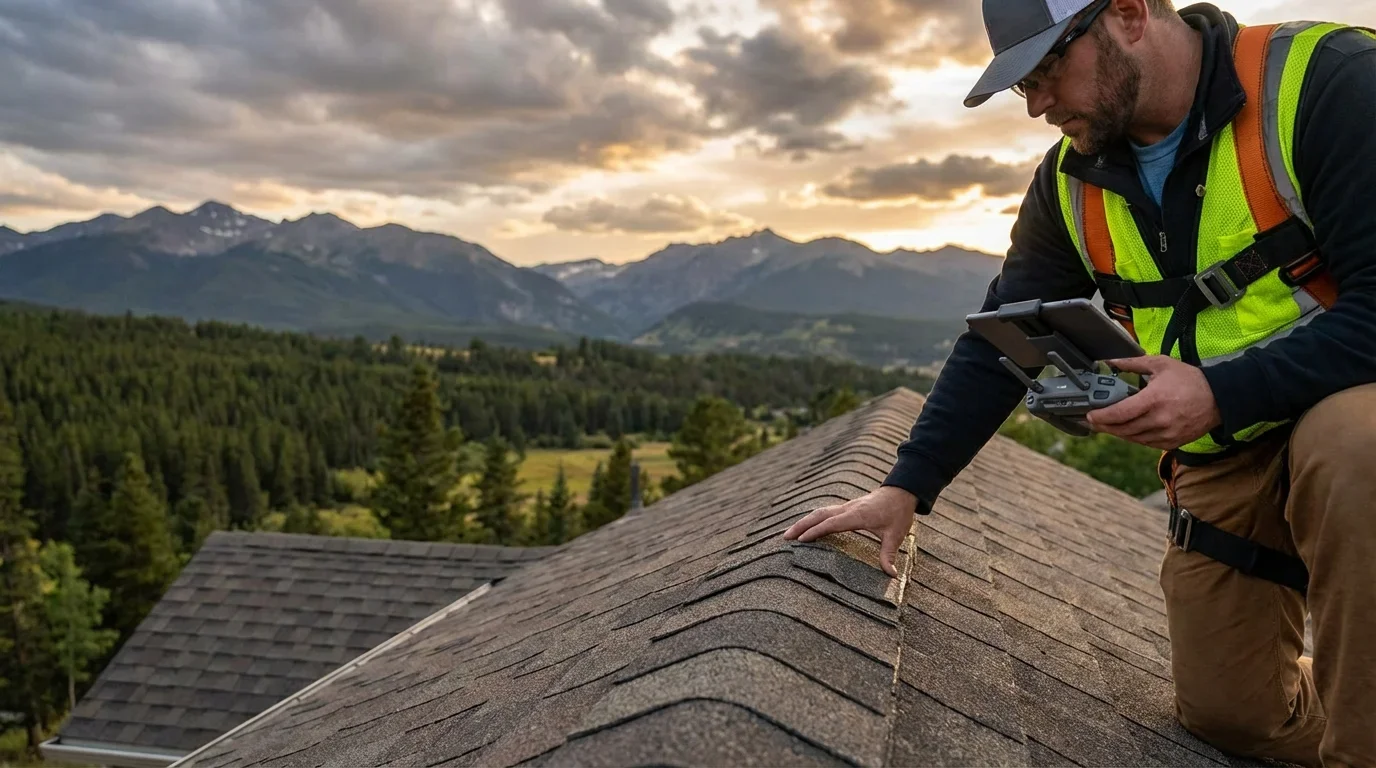
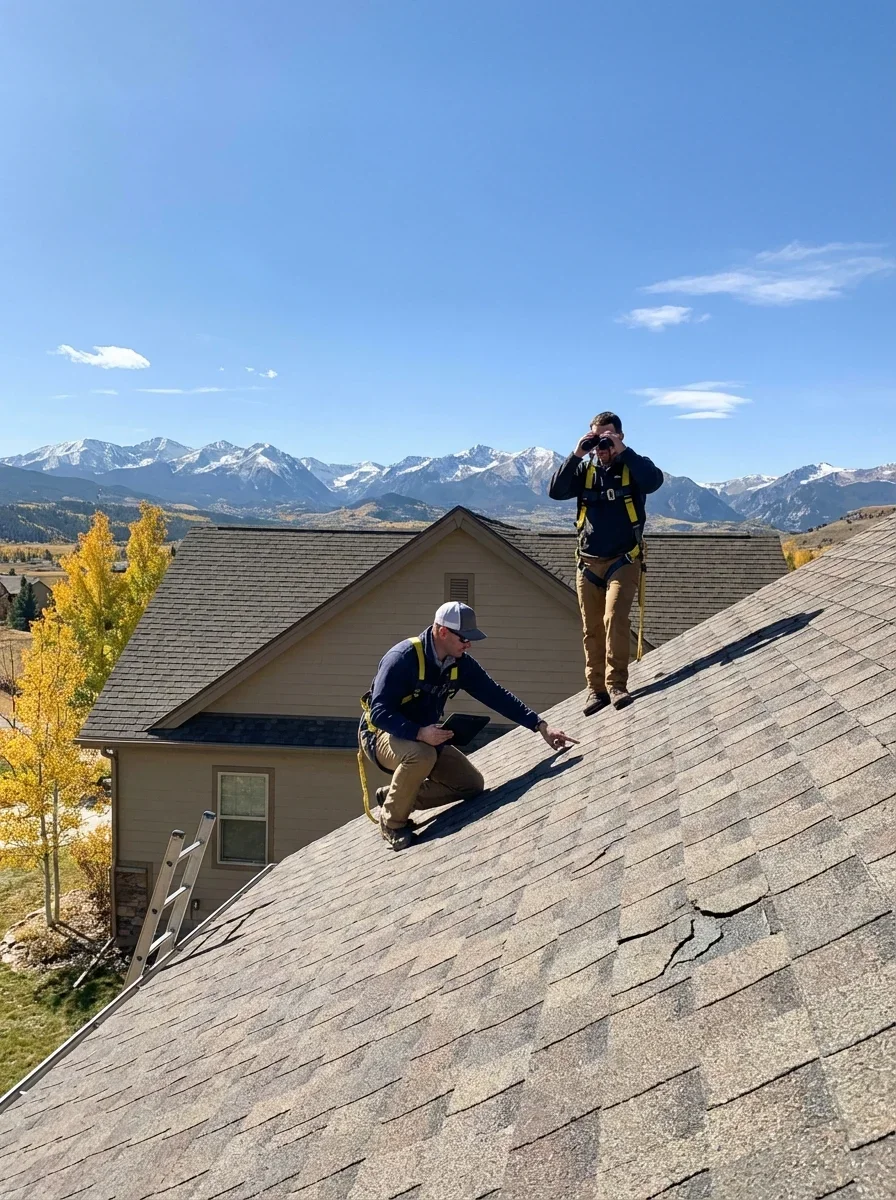
Professional inspectors use two primary methods: physical roof access and drone technology.
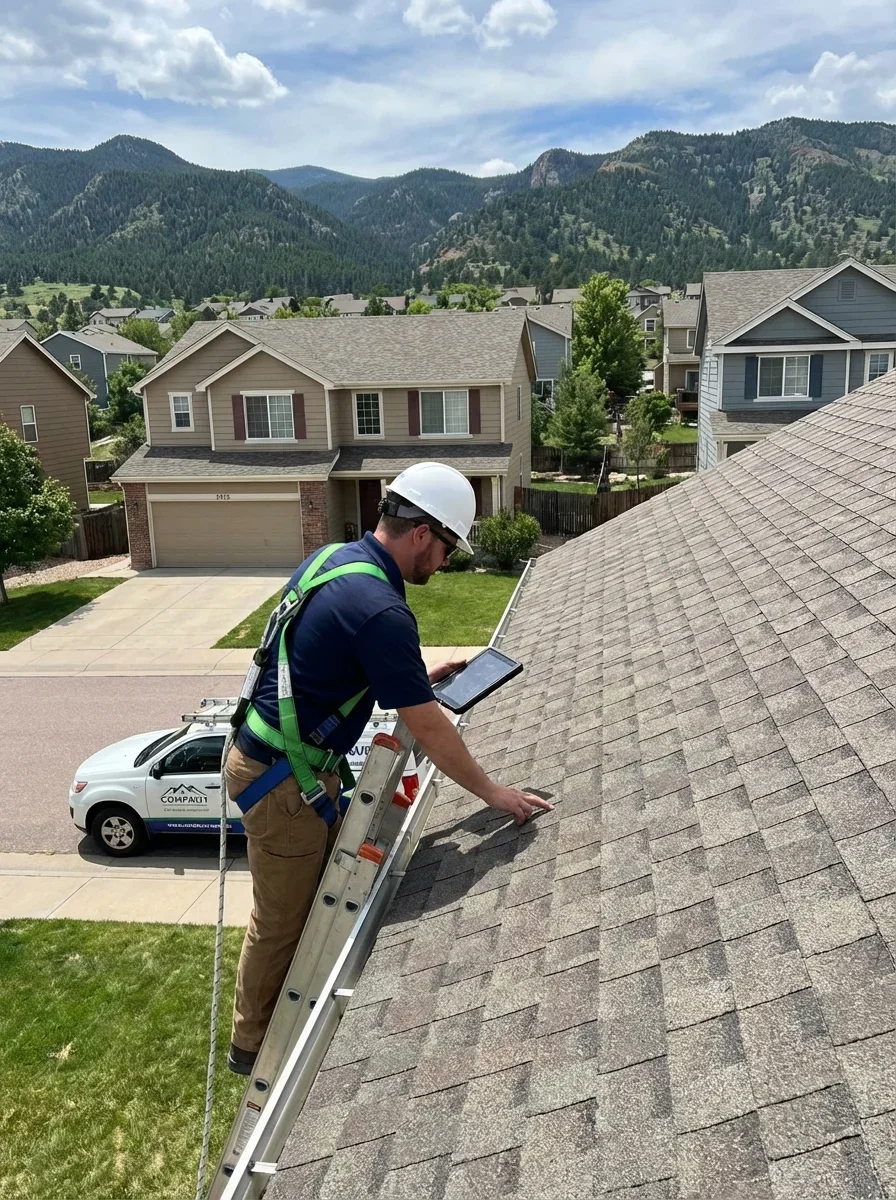
Physical inspections remain the gold standard for detecting subtle hail bruising, seal integrity, and fastener issues that aerial photography can miss. Drone inspections work well for steep-pitch or high-elevation roofs in mountain communities, but require FAA Part 107 commercial certification for legal use in Colorado.
Exterior Assessment Points
Inspectors evaluate every component systematically:
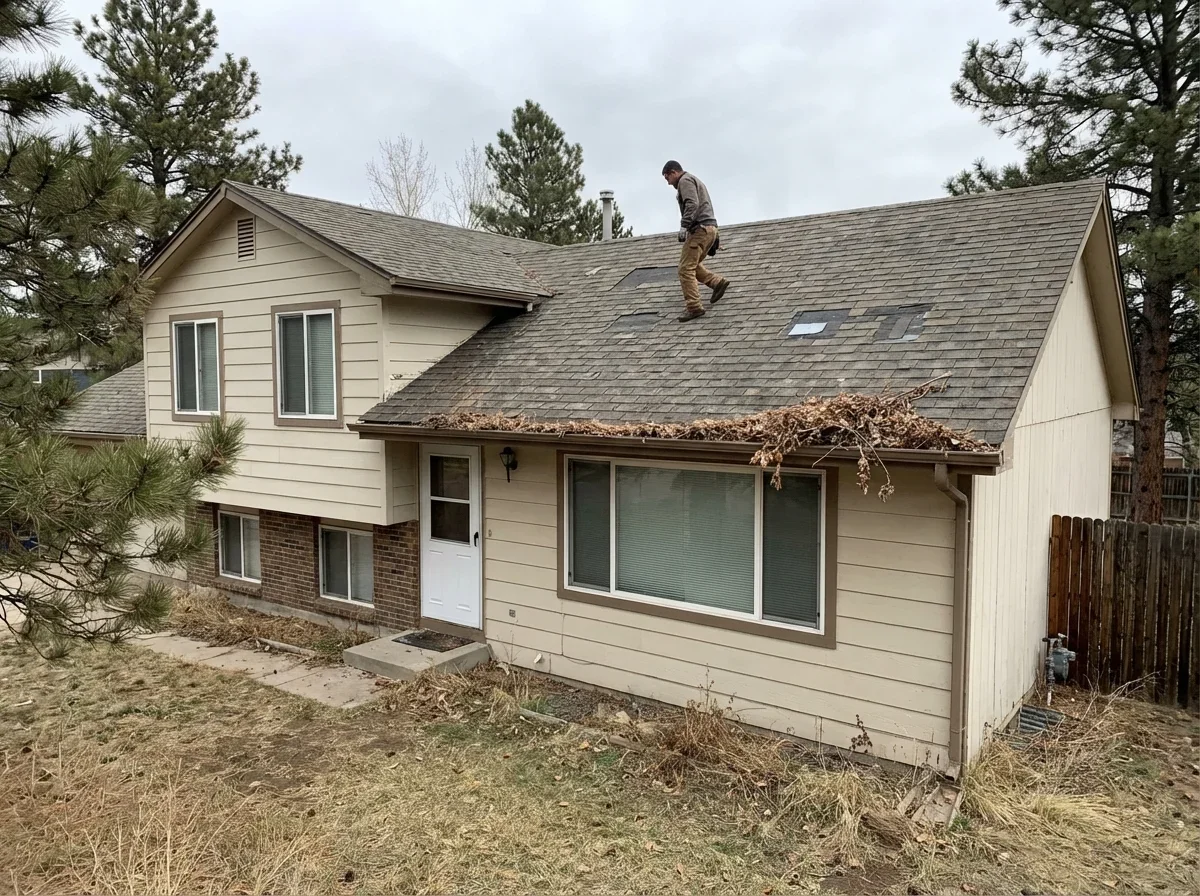
- Shingle condition — impact fractures, missing granules, curling edges, thermal cracking
- Flashing integrity — around chimneys, skylights, vents, and valley joints where Colorado's freeze-thaw cycles cause separation
- Drainage systems — gutters, downspouts, and scuppers that handle spring snowmelt runoff
- Penetrations — pipe boots, vent caps, and exhaust fans for seal degradation
- Structural elements — soffits, fascia, and exposed decking for rot or damage
Interior and Attic Evaluation
Inside your home, inspectors check for water stains on ceilings indicating active or past leaks. They assess attic ventilation adequacy, which is critical in Colorado where temperature extremes stress roofing materials. They examine insulation condition and moisture presence. And they check roof deck integrity from below for sagging, staining, or mold growth.
Most residential inspections in Colorado Springs or Fort Collins take 45-90 minutes. Larger homes or complex rooflines extend this to 2-3 hours.
Documentation and Reporting
Certified inspectors provide detailed reports with photographic evidence, measurements of damage density (impacts per 10×10 section for hail claims), and repair or replacement recommendations aligned with 2021 International Building Code standards adopted statewide[1].
These reports determine insurance claim outcomes and guide repair scoping for storm damage repairs.
How to Choose a Roof Inspector in Colorado
Look beyond general contractor licenses. Colorado requires no state roofing license, making third-party certifications your primary quality filter. Municipal requirements vary, but professional certifications signal expertise in Colorado's unique climate challenges.
Certifications and Training to Verify
- HAAG Certified Inspector — industry gold standard for hail damage assessment, recognized by all major insurers
- NRCIA Roof Inspector Certification — comprehensive training on inspection methodology and reporting standards
- InterNACHI Certified Roof Inspector — strong foundation in structural evaluation and material assessment
- Colorado Roofing Association (CRA) membership — demonstrates commitment to local industry standards and continuing education
Questions to Ask Before Scheduling
- What specific certifications do you hold for roof inspection (not just general contracting)?
- Do you provide written reports with photographic documentation and damage density measurements?
- Are you affiliated with any roofing contractors, or do you operate as an independent inspector?
- How do you document hail damage for insurance claims filed in Colorado?
- Can you identify Class 4 impact-resistant shingles and verify installation compliance for insurance discounts?
- What's your turnaround time for inspection reports needed for real estate closings?
Red Flags to Avoid
- "Free inspections" bundled with pressure to sign repair contracts immediately
- Inspectors who lack specific roof training beyond general home inspection credentials
- Anyone unwilling to provide sample reports or certification documentation
- Contractors claiming they can guarantee insurance claim approval (adjusters make coverage decisions, not contractors)
Compare multiple inspectors in Lakewood or Greeley through credentialed directory listings. Verify certifications independently. HAAG and NRCIA maintain public databases.
For high-stakes situations like disputed insurance claims or complex commercial properties, independent certified inspectors provide unbiased assessments that protect your interests whether repairing, replacing, or documenting for legal proceedings.
Frequently Asked Questions
- International Code Council (adopted by State of Colorado). "2021 International Building Code." https://up.codes/viewer/colorado/ibc-2021. Accessed April 08, 2026.
- Colorado Department of Public Safety - Division of Fire Prevention and Control. "Building and Fire Code." https://bca.colorado.gov/building-and-fire-code. Accessed April 08, 2026.
- National Roofing Contractors Association (NRCA). "Asphalt Shingles Hail Resistance Guide." https://www.noria.com/topics/hail-damage/. Accessed April 08, 2026.
Related Articles
Need Help With Your Project?
Join 500+ homeowners we've helped