
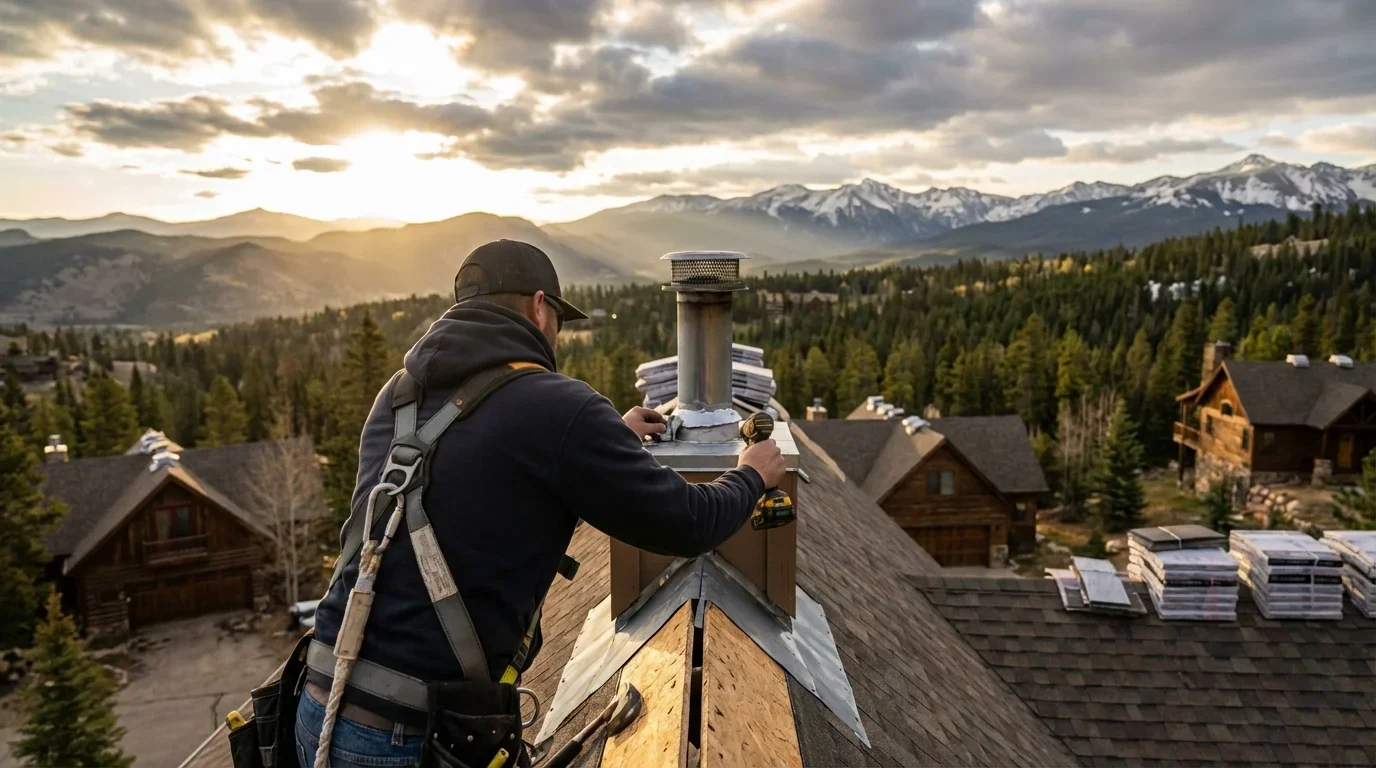
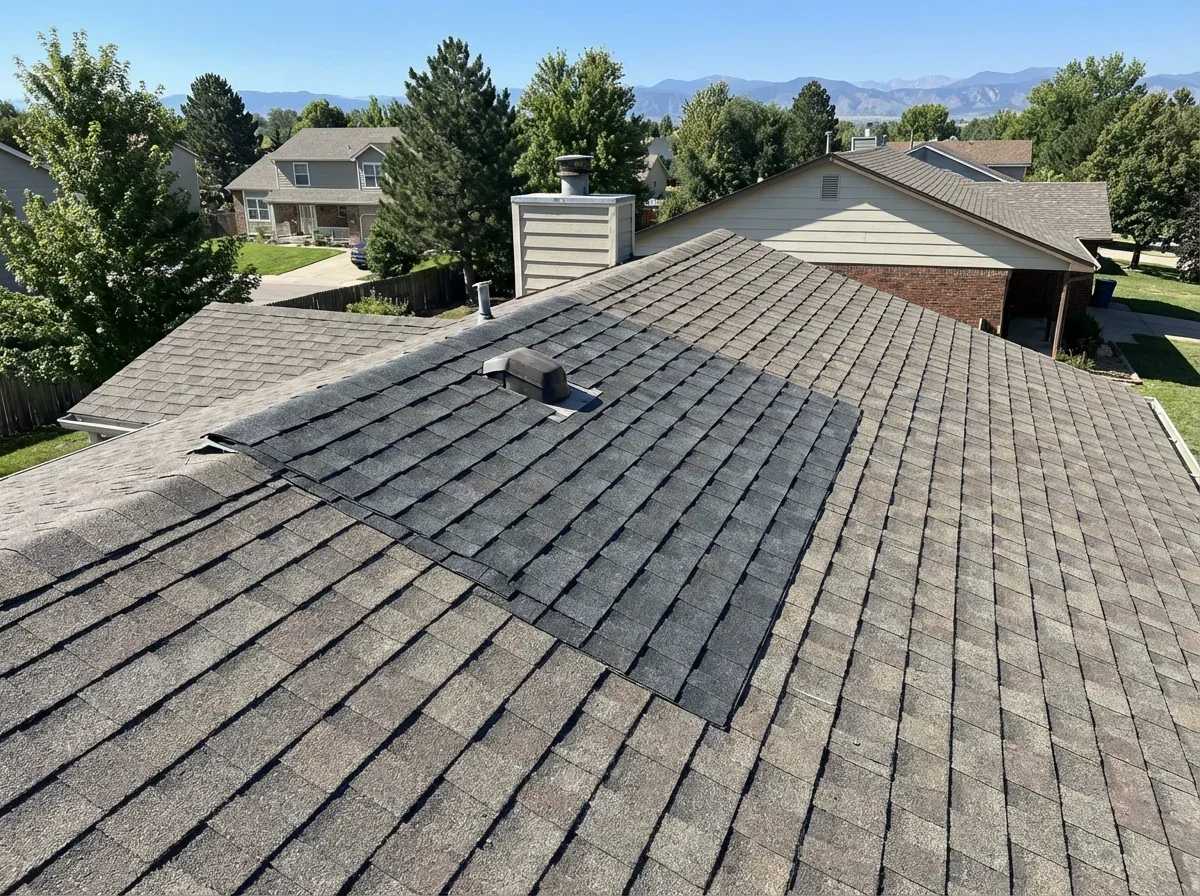
Roof leaks require immediate attention to prevent water damage, mold growth, and structural deterioration in Colorado homes. From damaged flashing around chimneys to wind-lifted shingles and ice dam leaks, professional diagnosis ensures proper repair. Connect with experienced Colorado roof leak repair specialists who offer emergency response, pinpoint leak sources, and provide lasting solutions backed by warranties.
Featured Contractors
View all →



Signs You Need Immediate Roof Leak Repair
Water stains on ceilings or walls are the most obvious warning. Yellow or brown discoloration that grows after rain or snowmelt.
In Colorado's high-altitude environment, UV radiation degrades shingles 25-30% faster than at sea level, creating invisible weak points that fail during spring runoff or summer hail.[1]
Check your attic after storms. Daylight visible through roof decking, wet insulation, or water trails along rafters confirm active intrusion. Front Range homes in Denver and Aurora average 7+ significant hail events per year. Each one potentially cracks sealant around flashing and penetrations.
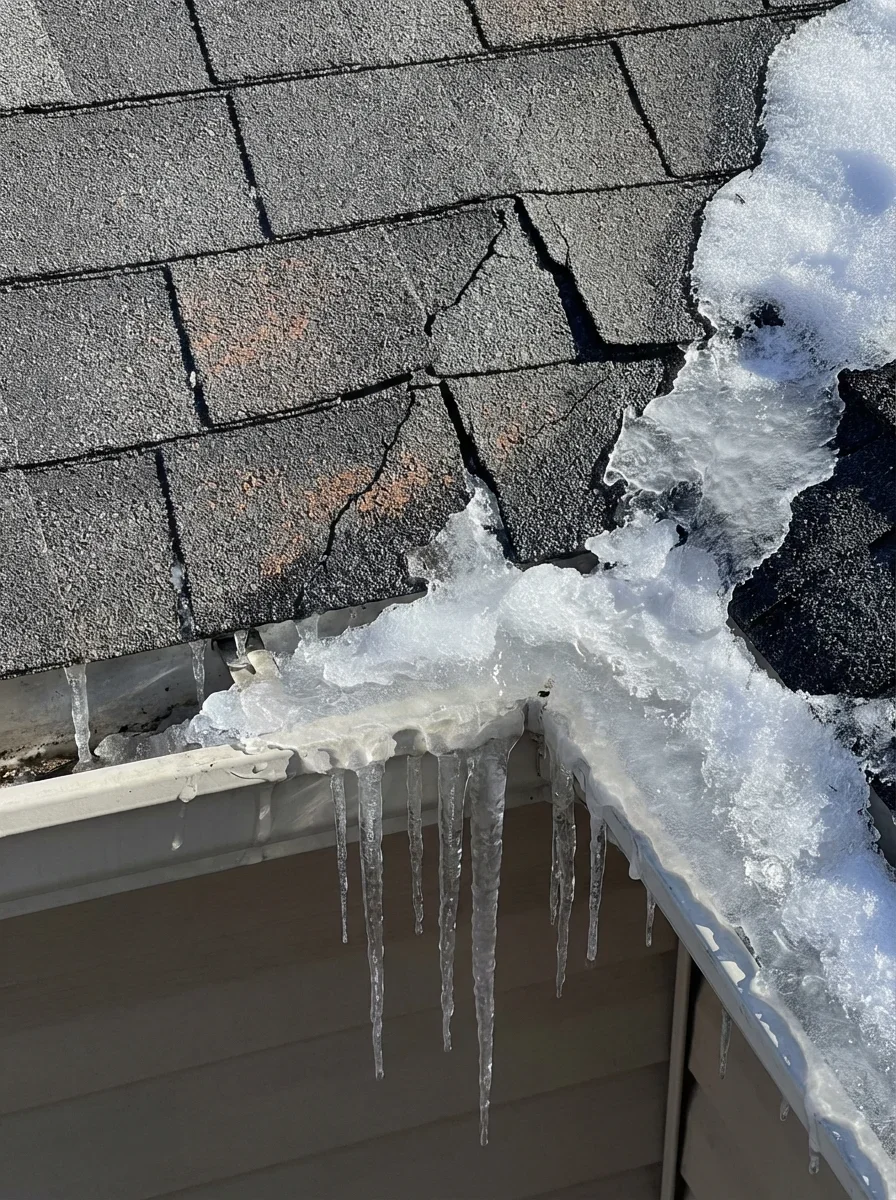
Ice dams are Colorado-specific culprits. When snow melts during the day and refreezes at night, ice builds at roof edges and forces water under shingles.[3] You'll see icicles along gutters, ice ridges at eaves, or interior leaks below roof valleys. This happens even in Fort Collins and Boulder during mild winters with daily temperature swings of 40-60°F.
Catching it early matters. A $400 flashing repair becomes a $3,500 deck replacement plus interior restoration when water sits for 2-3 weeks.
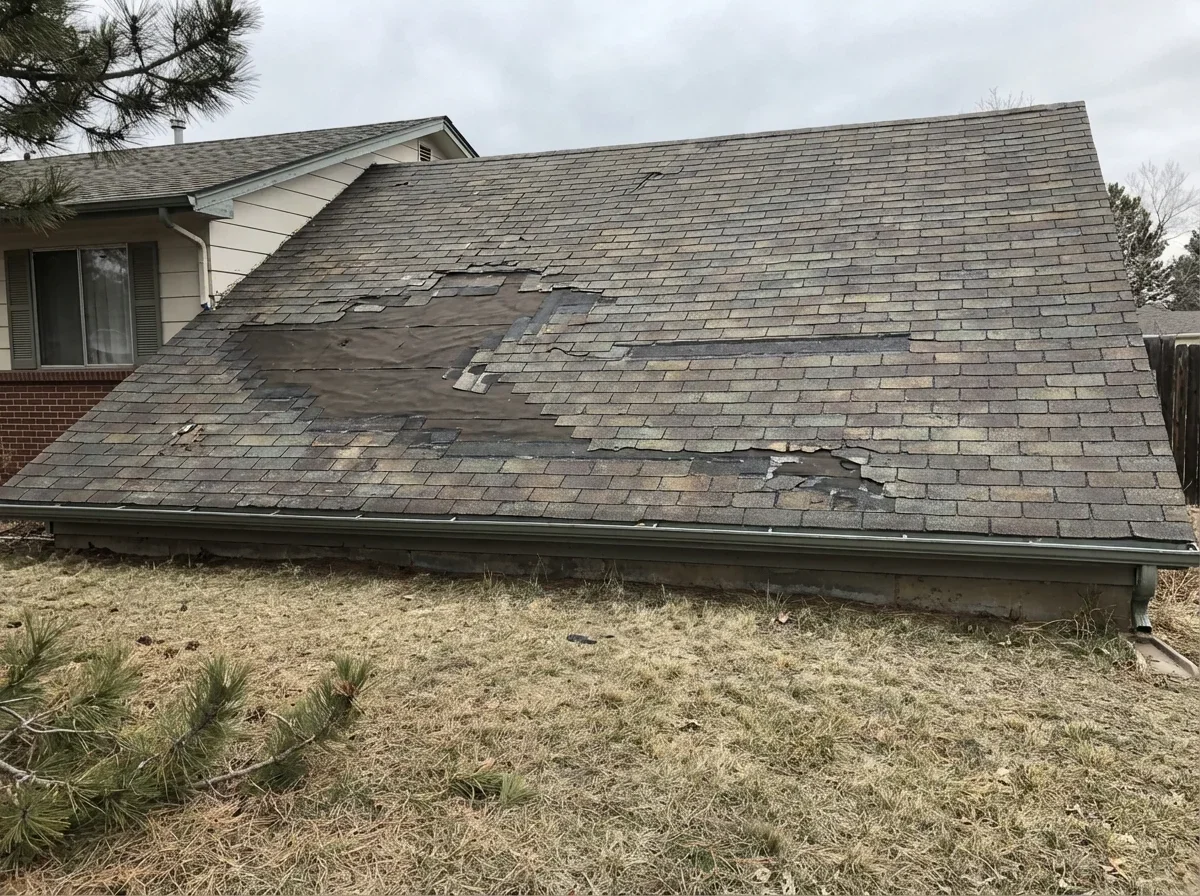
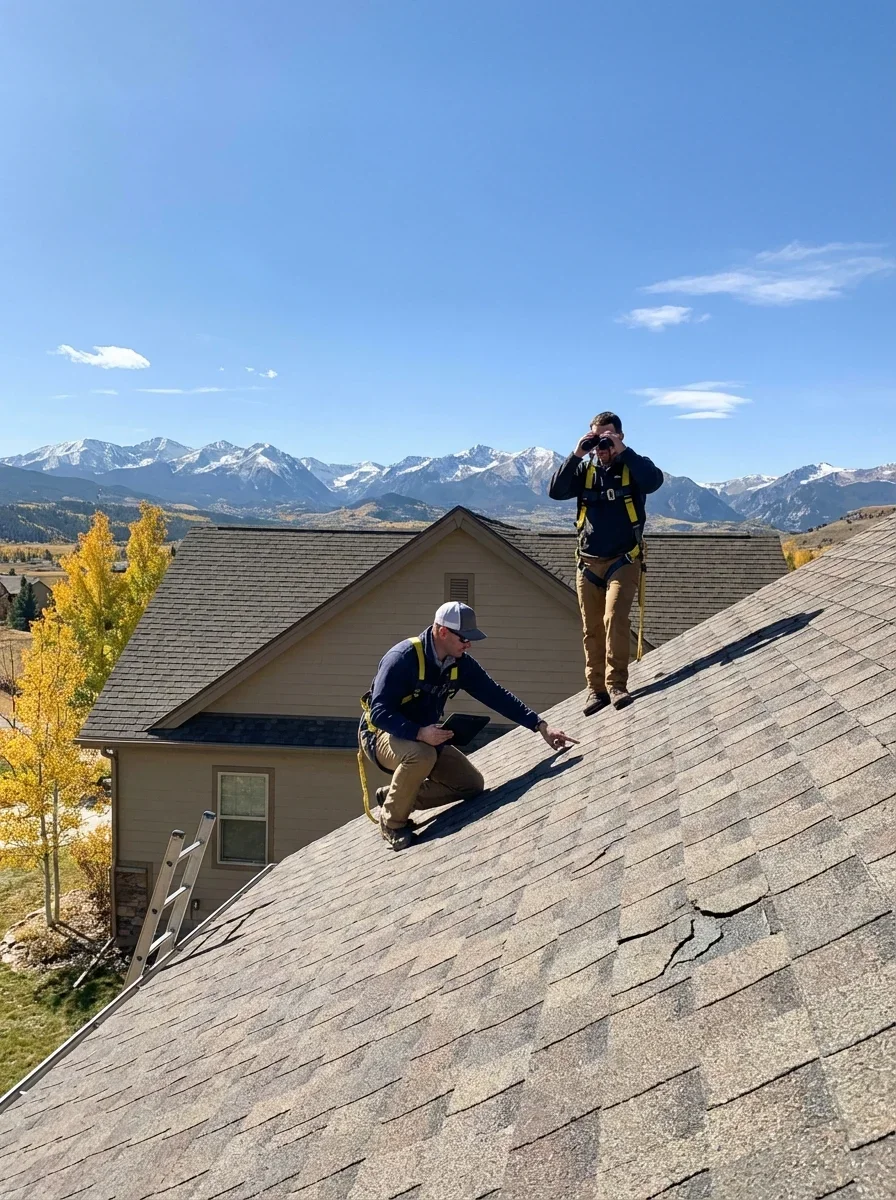
Exterior warning signs: missing or curled shingles, exposed nail heads, cracked pipe boots, separated step flashing around chimneys. Colorado's 300+ days of sunshine accelerate granule loss. Bare spots mean the waterproof asphalt layer is exposed and failing.
What Does Roof Leak Repair Cost in Colorado?
Roof leak repair pricing varies by damage extent, accessibility, and service urgency. Colorado's hail-driven market means storm damage repairs dominate. Expect higher demand (and pricing) May through September.
| Repair Scope | Typical Cost Range | |---|---|---| | Minor shingle replacement (5-20 shingles) | $300 - $750 | | Flashing repair (single penetration) | $400 - $1,200 | | Valley or chimney flashing replacement | $800 - $2,000 | | Multiple penetrations or complex leak | $1,000 - $3,000 | | Extensive storm damage (multiple areas) | $2,500 - $7,000 | | Emergency service premium (nights/weekends) | Add 50-100% |
Key cost factors:
Roof pitch and accessibility — Steep roofs (8/12 pitch or greater, common in Colorado Springs and mountain communities) require additional safety equipment and labor. Flat roofs cost less per square foot but leak detection takes longer.
Material matching — Discontinued shingle colors or specialty tiles (clay, slate) increase costs by 30-50% due to special ordering. Asphalt shingle matching is easiest for homes built in the last 10 years.
Underlying damage — If roof decking is rotted (common when leaks go unnoticed through winter), add $300-$800 per 4x8 sheet for plywood replacement plus labor.
Timing and urgency — Scheduled repairs during contractor off-season (November-March) can run 15-20% below peak rates. Emergency calls during active storms command premium pricing but prevent compounding water damage.
Insurance coverage: Most homeowner policies cover sudden storm damage (hail, wind-driven rain) but exclude wear-and-tear or maintenance issues. Colorado's Senate Bill 38 requires roofing contracts over $1,000 to include insurance contact information.[1] Hail damage claims in the Front Range frequently cover full repairs when documented properly. See our insurance claim assistance guide for specifics.
Repair vs. replacement decision point: If your roof is 15+ years old and repair costs exceed 30% of replacement value, most contractors recommend full replacement.
A $2,500 repair on a 20-year-old roof with widespread granule loss is false economy. You'll face more leaks within 2-3 years.
Average ROI on timely repairs: preventing a $500 leak from becoming $4,000 in ceiling/insulation damage justifies premium emergency pricing. Water damage escalates fast in Colorado's dry climate. Drywall and insulation absorb moisture rapidly, and mold can start within 48 hours.
How Roof Leak Repair Works
Effective leak repair starts with accurate detection. Not always where water appears inside.
Roof contractors use multiple methods depending on accessibility and leak complexity:
| Detection Method | Best For | Typical Cost |
|---|---|---|
| Visual inspection | Obvious damage, recent storms | Included with estimate |
| Moisture meter scanning | Hidden leaks, attic access available | $150-$300 |
| Infrared thermography | Large roofs, multiple suspected areas | $300-$600 |
| Water testing | Pinpointing exact entry point | $200-$400 |
The standard repair process:
Inspection and diagnosis — Contractor traces interior damage to roof penetration (chimney, vent pipe, skylight) or damaged shingle field. Colorado roofers check for hail bruising and UV degradation patterns specific to high-altitude exposure.
Temporary protection — For active leaks during storms, tarping prevents secondary water damage while materials are ordered. Emergency tarping costs $200-$500 in Denver metro but saves thousands in ceiling repairs.
Repair execution — Small fixes (replacing 10-15 shingles, resealing flashing) take 2-4 hours. Extensive work (replacing step flashing on entire chimney side, fixing multiple penetrations) requires 1-2 days. Colorado roofers use ice-and-water shield underlayment in valleys, critical for ice dam protection.[3]
Water testing and verification — Reputable contractors run water over repaired areas for 15-20 minutes, then check attic for moisture. This step confirms the fix before they leave.
Seasonal timing matters. Spring and fall are ideal. Materials seal properly in 50-70°F temperatures. Summer heat above 90°F makes shingles too soft; winter below 40°F prevents sealant activation. Emergency repairs happen year-round, but warranty coverage may be limited for extreme-temperature work.
Most repairs come with 1-5 year workmanship warranties. Material warranties depend on what's replaced. New flashing typically carries 10-15 years, shingles match remaining roof warranty terms.
How to Choose a Roof Leak Repair Contractor in Colorado
Colorado has no state-level roofing license requirement, making contractor verification critical.[1] Denver requires a contractor license for repair work; other municipalities vary.
Focus on insurance, references, and response capability.
Questions to ask before hiring:
"Are you licensed in [your city] and fully insured?" — Verify general liability ($1M minimum) and workers' compensation. Denver contractors need a Supervisor Certificate; check local requirements for Aurora, Lakewood, or Thornton.
"Can you provide a detailed written estimate with cost breakdowns?" — Legitimate contractors itemize materials, labor, and disposal separately. Vague "flat rate" quotes hide markups.
"What's your emergency response time, and do you offer temporary protection?" — Top contractors in Colorado Springs and Fort Collins respond within 4-8 hours for active leaks, provide tarping, then schedule permanent repairs.
"What warranty covers this repair?" — Workmanship guarantees should run 1-5 years minimum. Material warranties depend on products used.
"How do you verify the leak is fixed before leaving?" — Water testing is standard practice. Contractors who skip this step often generate callbacks.
"Are you a Colorado Roofing Association (CRA) member?" — CRA membership signals industry commitment and access to ongoing training on Colorado-specific issues like hail damage and ice dam prevention.
Red flags that signal trouble:
- Requiring full payment upfront (standard is 10-25% deposit, balance on completion)
- No physical business address or only P.O. box listed
- Pressure to sign contracts immediately after inspection
- Offering to "eat your insurance deductible" (insurance fraud)
Colorado licensing landscape: Verify insurance and workers' comp through DORA's contractor verification system.[1] Check local business licensing for your city.
References from neighbors in similar climates (Front Range vs. mountain communities) provide valuable insight into contractor performance with Colorado-specific challenges like hail and ice dams.
For comprehensive contractor evaluation criteria, see our complete hiring guide. Compare multiple quotes, but don't automatically choose the lowest. Material quality and warranty terms matter more than $200 price differences.
Need immediate help? Our directory connects you with verified Colorado contractors who specialize in emergency roof repair and carry proper insurance and workers' compensation coverage.
Frequently Asked Questions
- Colorado Department of Regulatory Agencies (DORA). "Roofing." https://dora.colorado.gov/real-estate/roofing. Accessed April 08, 2026.
- Colorado Department of Regulatory Agencies (DORA) - Building Codes and Standards. "Colorado Building and Fire Code." https://bca.dora.colorado.gov/building-codes-adopted-by-the-state-of-colorado. Accessed April 08, 2026.
- Colorado State University Extension. "Ice Dams and Roof Leaks." https://extension.colostate.edu/topic-areas/structure-housing/ice-dams-and-roof-leaks-6-906/. Accessed April 08, 2026.
Related Articles
Need Help With Your Project?
Join 500+ homeowners we've helped