
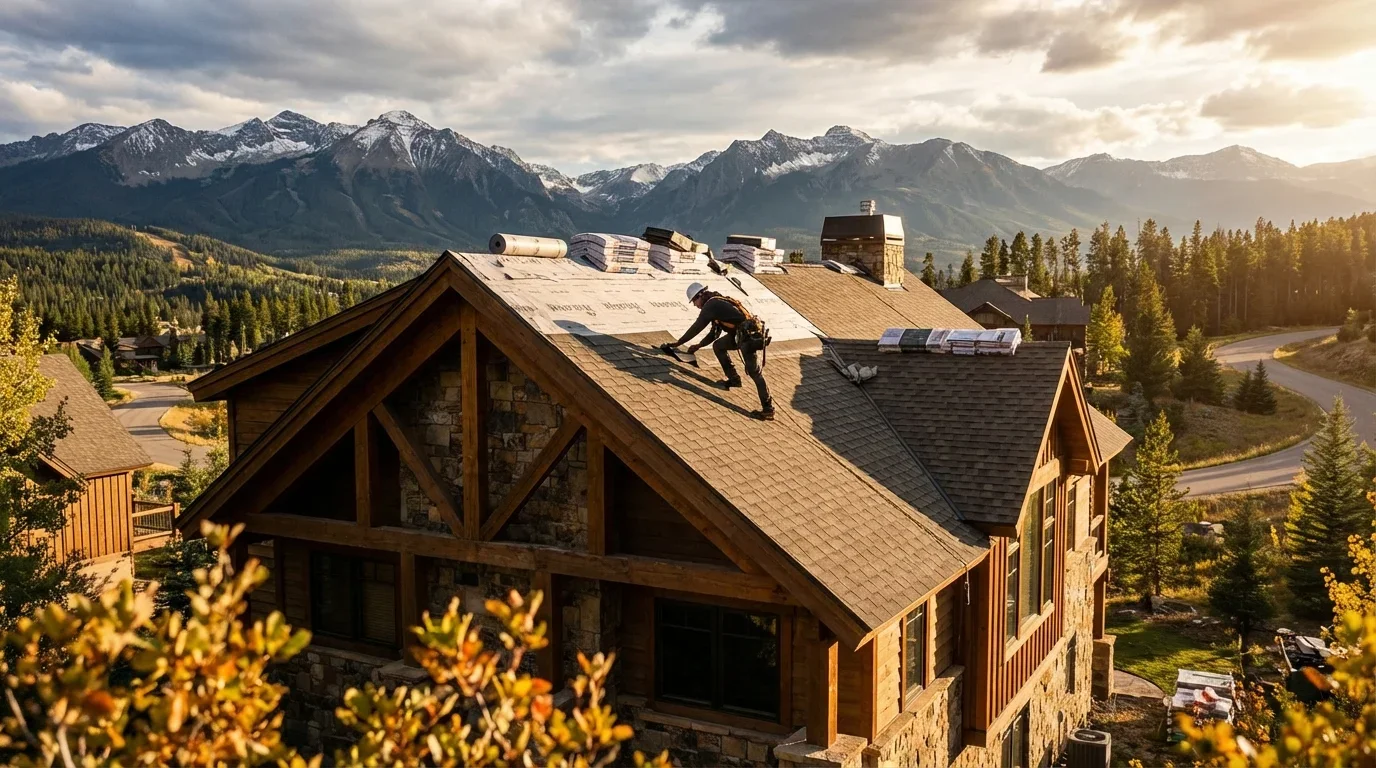
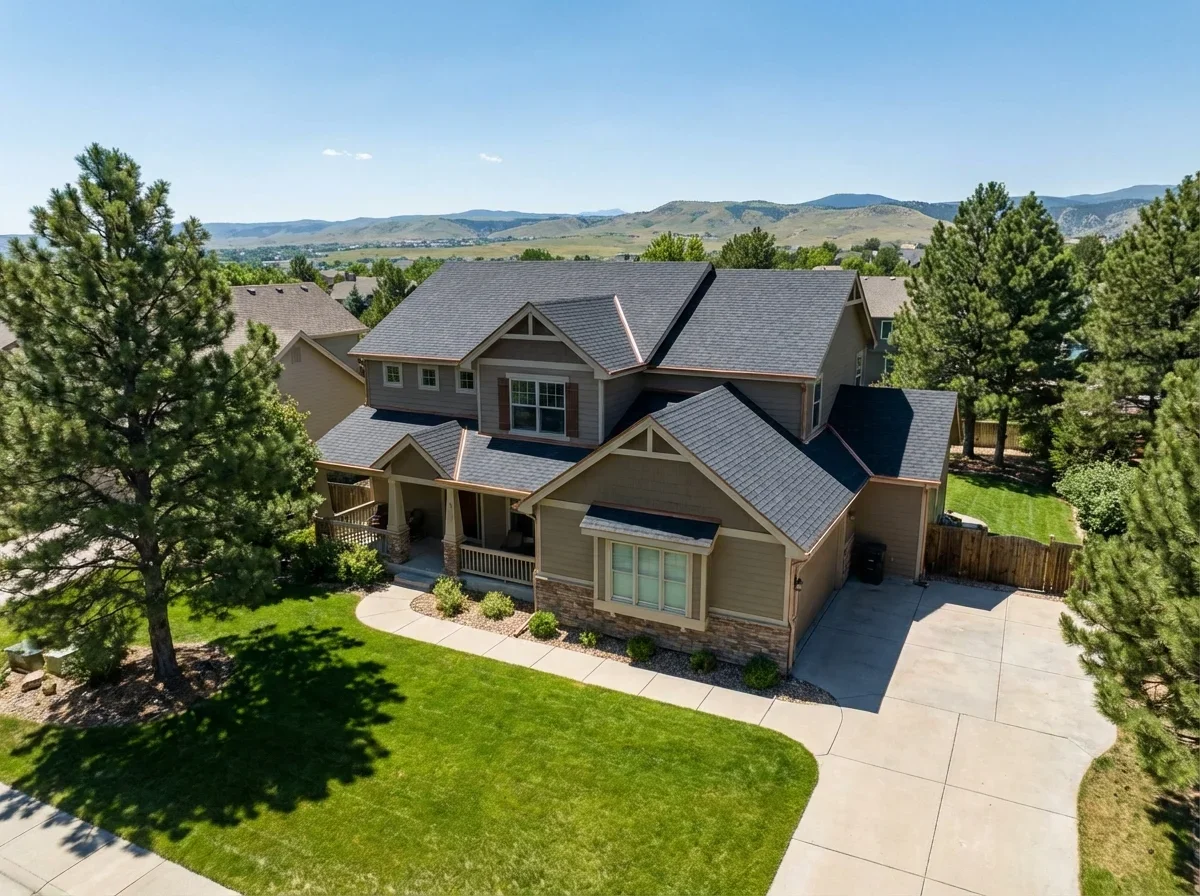
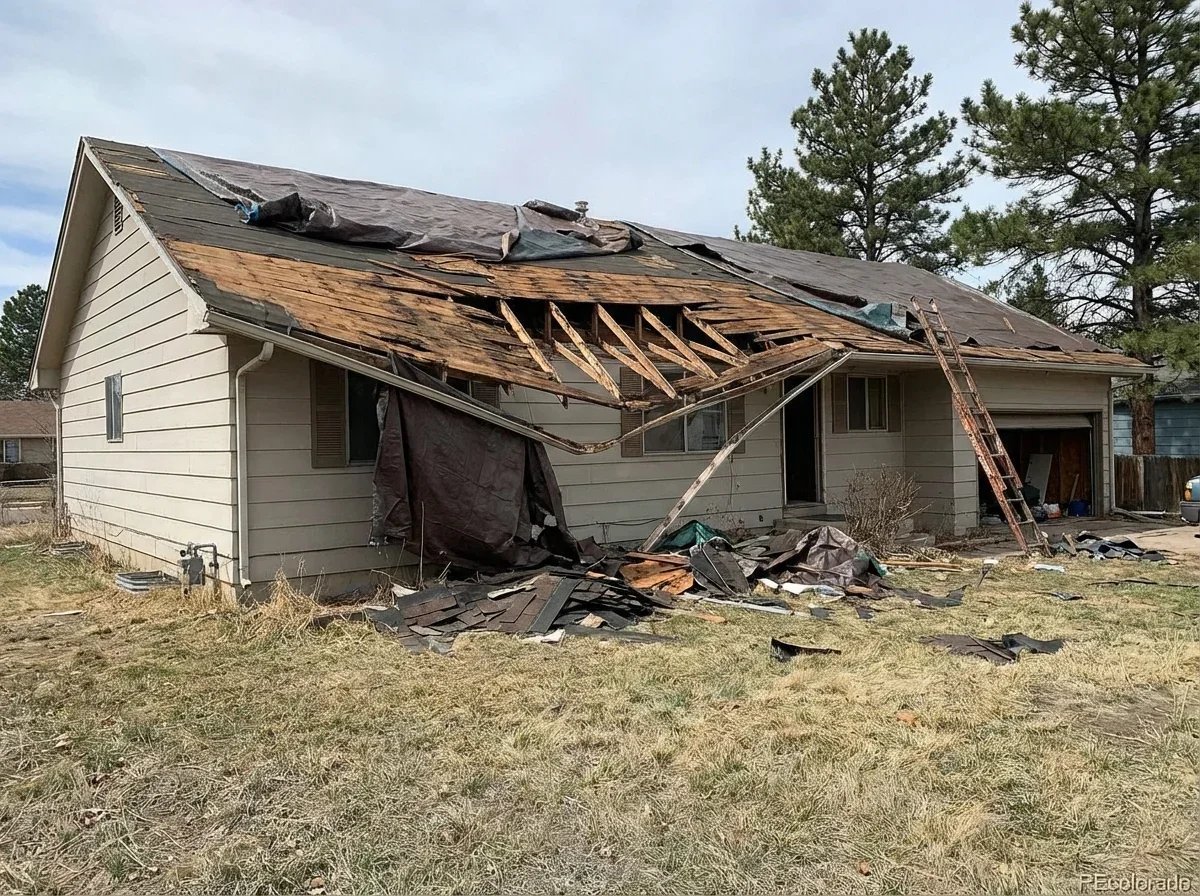
Roof replacement is a major investment that protects your Colorado home for decades while improving energy efficiency, curb appeal, and property value. Choosing the right materials, contractor, and timing ensures optimal performance in Colorado's demanding climate. Find reputable Colorado roof replacement contractors with proven track records, manufacturer certifications, and comprehensive warranties that cover both materials and workmanship.
Featured Contractors
View all →



When You Need a Full Roof Replacement
Your roof tells you when it's done. Losing granules faster than normal means UV protection is gone—in Colorado's high-altitude environment (50% more UV radiation than sea level), this accelerates rot and leaks.[1]
Watch for:
- Widespread granule loss across multiple slopes (not just in valleys)
- Curling or cupping shingles—common after 7+ major hail events along the Front Range
- Visible decking sag or bounce when walking the roof
- Multiple leak points in different zones (ceiling stains in Denver homes after spring snowmelt)
- Age beyond 18-20 years in hail-prone areas like Aurora or Thornton
Repair works when damage is localized—10 replaced shingles after a storm. Replacement is necessary when degradation is systemic across 30%+ of the roof surface.
At that point, patching just delays the inevitable while risking interior water damage.
Colorado's climate accelerates aging. Daily freeze-thaw cycles crack sealant bonds, and hailstorms strip granules in minutes—waiting too long turns a $12,000 replacement into an $18,000 project once decking starts rotting.
What Does Roof Replacement Cost in Colorado?
| Roof Type | Typical Cost Range |
|---|---|
| Asphalt shingles (standard 3-tab) | $8,000 - $14,000 |
| Architectural shingles | $11,000 - $18,000 |
| Class 4 impact-resistant | $13,000 - $21,000 |
| Metal roofing (standing seam) | $18,000 - $35,000 |
| Tile (concrete or clay) | $22,000 - $40,000 |
Based on 2,000 sq ft roof, single-story home, 6/12 pitch. Prices include tear-off, disposal, permits, and basic valley/chimney flashing.
Regional Cost Factors
Elevation and access drive labor premiums. A Lakewood ranch costs less to reroof than a two-story mountain home near Breckenridge. Steeper pitches, snow load engineering, and limited dumpster access add 15-25% to base pricing.
Waste disposal fees in metro Denver run $800-$1,200 for a full tear-off. Rural areas may pay $400-$600 if contractors haul to regional landfills.
Material upgrades matter in Colorado. Upgraded underlayment (synthetic vs. felt) adds $400-$800 but lasts twice as long under UV exposure. Ice dam barriers along eaves cost $2-$4 per linear foot. Essential in Longmont and north metro areas where January freeze-thaw cycles cause backup failures.
Insurance and ROI
Hail damage claims cover replacement cost minus deductible (typically $1,000-$2,500). Class 4 shingles earn premium discounts of 15-28% annually—a $15,000 roof upgrade pays for itself in 8-12 years through reduced insurance costs alone.
Homes with recent replacements (under 5 years old) sell 3-5% higher in competitive Denver and Boulder markets.
Financing through manufacturer programs (GAF, CertainTeed) typically offers 0% APR for 12-18 months on approved credit. Avoid contractors pushing long-term loans at 8-12% interest. That's a profit center disguised as convenience.
How Roof Replacement Works in Colorado
Pre-Installation: Inspection and Permits
A legitimate contractor walks your roof and attic to document decking condition, ventilation adequacy, and code compliance issues. In Denver, this triggers a building permit requirement ($150-$400) and contractor license verification.[3]
Mountain counties like those around Boulder add snow load engineering calculations. Your roof must handle up to 60 psf ground snow load depending on elevation.[1]
Tear-Off and Decking Preparation
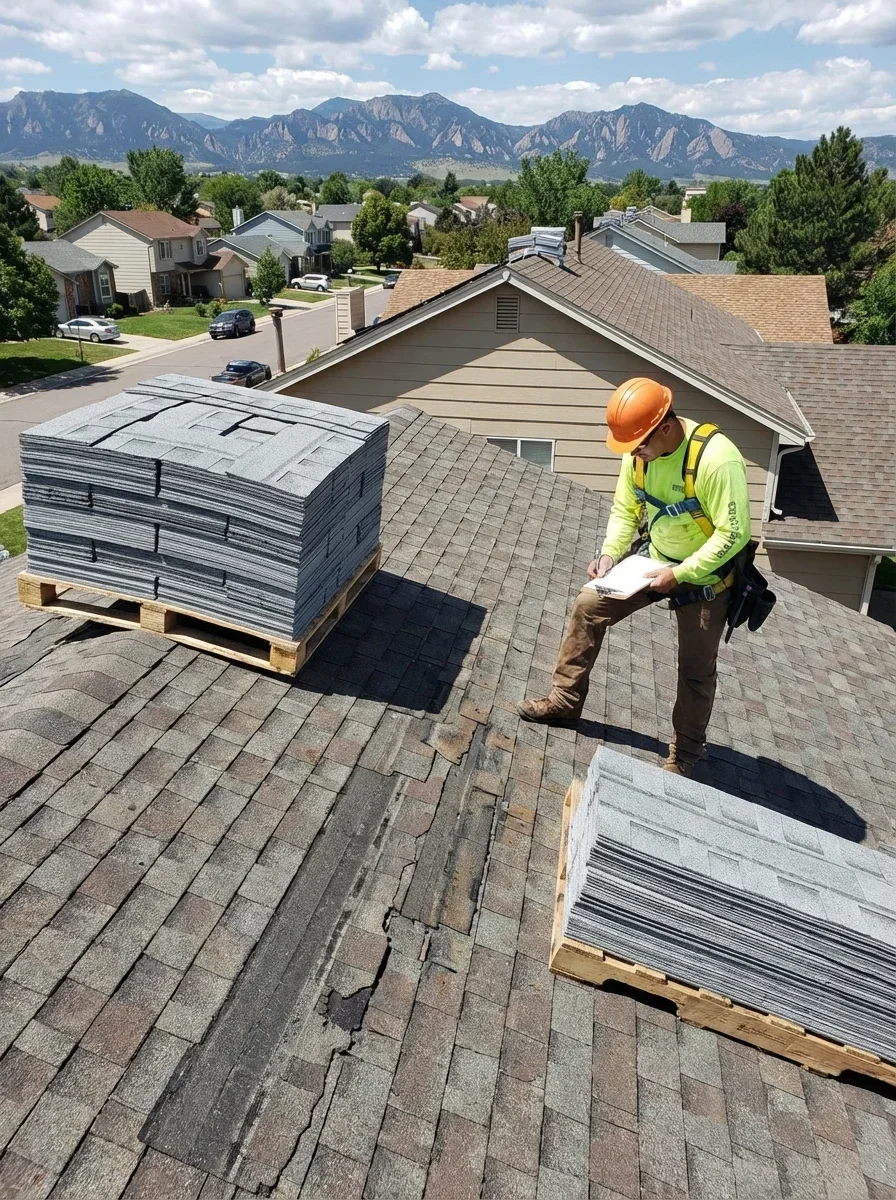
- Material delivery (1 day before start—pallets staged on driveway)
- Complete tear-off of existing shingles, underlayment, and flashings (6-10 hours for typical 2,000 sq ft home)
- Decking inspection and repair—replace any OSB or plywood with rot, typically 10-15% of boards in homes over 20 years old
- Drip edge and ice dam barrier installation along eaves (critical in Fort Collins and Greeley where ice dams form during January thaws)
Installation and Final Inspection
New underlayment goes down first. Synthetic products outperform felt in Colorado's temperature swings.
Shingles install per manufacturer specs (proper nail placement, starter course, hip/ridge caps). Class 4 impact-resistant shingles add $1,500-$3,000 to material cost but resist hail damage better than standard asphalt.[2]
| Project Phase | Timeline |
|---|---|
| Tear-off and decking prep | 1-2 days |
| Installation and cleanup | 2-3 days |
| Final inspection | Same week (scheduled with city) |
Most residential replacements finish in 3-5 days, weather permitting. Spring and fall projects in Colorado Springs or Pueblo may pause for afternoon storms. Crews stop work when wind exceeds 25 mph or temperatures drop below 40°F (adhesive won't seal properly).
How to Choose a Roof Replacement Contractor in Colorado
Questions to Ask Before Signing
- What's your Denver contractor license number? (Verify at denvergov.org for metro projects)[3]
- Do you carry $1M+ general liability and workers' comp insurance? (Get certificates, call insurer to confirm active coverage)
- Which manufacturer certifications do you hold? (GAF Master Elite, CertainTeed SELECT ShingleMaster—these require training and warranty authorization)
- What's included in your written estimate? (Tear-off, decking repair allowance, permit fees, cleanup, disposal—line-item everything)
- How do you handle permit inspections? (Contractor should schedule and attend city final inspection)
- What's your weather delay policy? (Spring projects in Arvada or Thornton may pause for storms—know who eats the cost)
Red Flags to Avoid
Requiring full payment upfront (standard is 10-20% deposit, balance on completion). No physical business address or local references in Colorado.
Pressure to sign same-day or "limited time" pricing. Legitimate contractors provide written estimates good for 30 days.
Offering to "eat your deductible" on insurance jobs is illegal in Colorado. Report violators to DORA.
Colorado Licensing and Insurance Requirements
No statewide roofing license exists, but Denver requires a Supervisor Certificate for all roofing contractors working in city limits. Mountain jurisdictions enforce their own rules—always verify local requirements.
Colorado Roofing Association (CRA) membership signals industry professionalism but isn't a legal requirement.
Senate Bill 38 mandates that residential contracts over $1,000 must list your insurance company contact info. This protects your claim rights if disputes arise during insurance-funded replacements.
Ready to compare qualified contractors? Browse verified Colorado roofers with licensing, insurance, and customer reviews in one place—filter by city, certification level, and material specialization to find the right match for your project.
Frequently Asked Questions
- International Code Council (adopted by Colorado). "2021 International Building Code." https://up.codes/viewer/colorado/ibc-2021. Accessed April 08, 2026.
- Colorado Department of Regulatory Agencies (DORA) - Contractor Recovery Account. "Roofing Contractor Requirements." https://cra.colorado.gov/licensing-requirements/roofing. Accessed April 08, 2026.
- City and County of Denver. "Building Codes and Standards." https://www.denvergov.org/Government/Agencies-Departments-Offices/Agencies-Departments-Offices-Directory/Community-Planning-and-Development/Denver-Community-Planning-and-Development-Permits/Building-Permits/Roofing-Permits. Accessed April 08, 2026.
Related Articles
Need Help With Your Project?
Join 500+ homeowners we've helped