
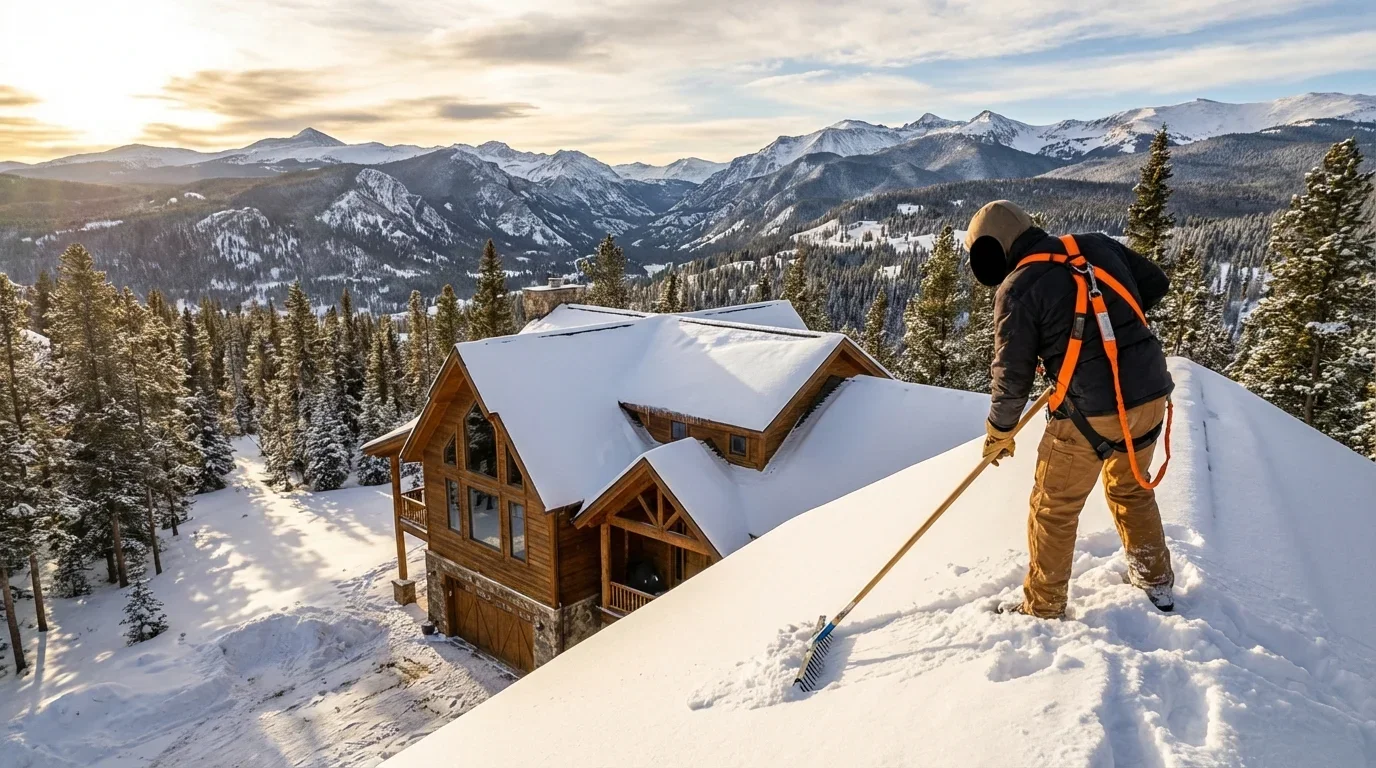
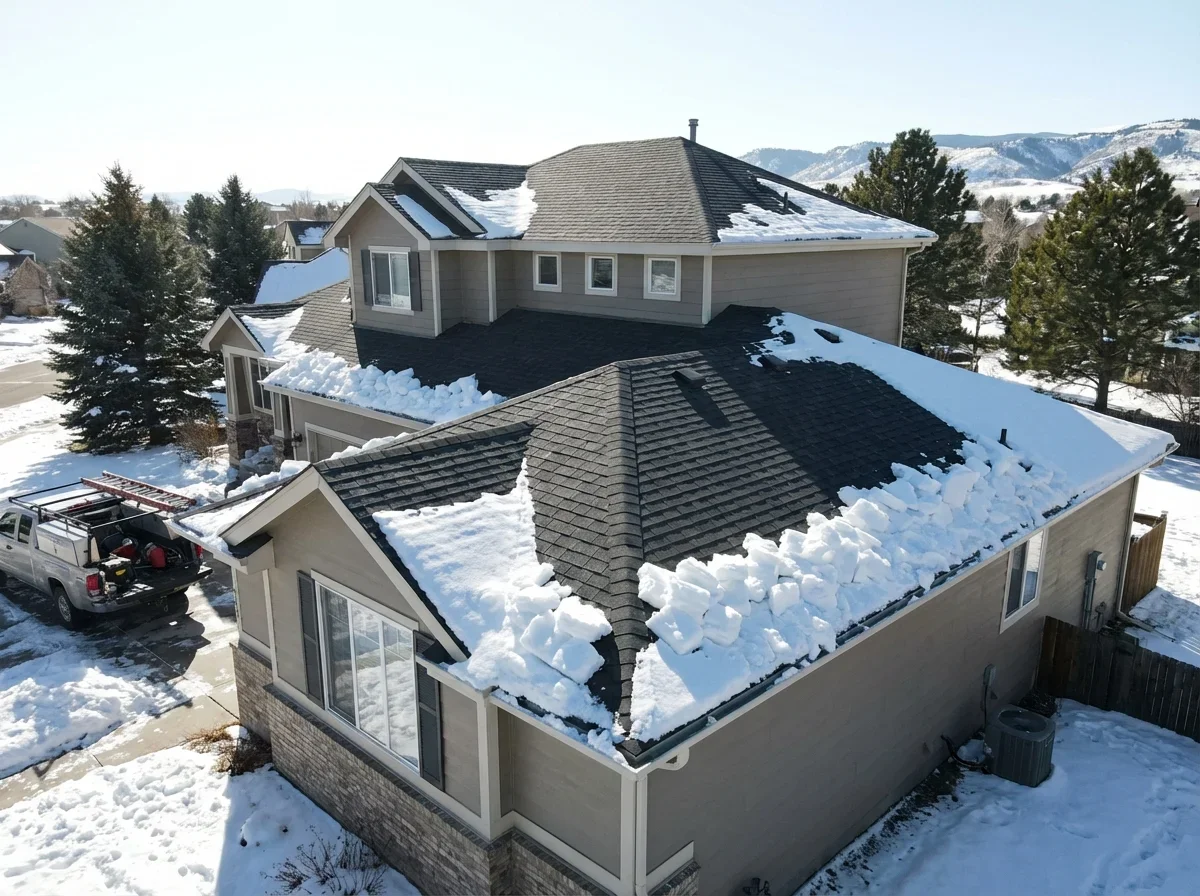
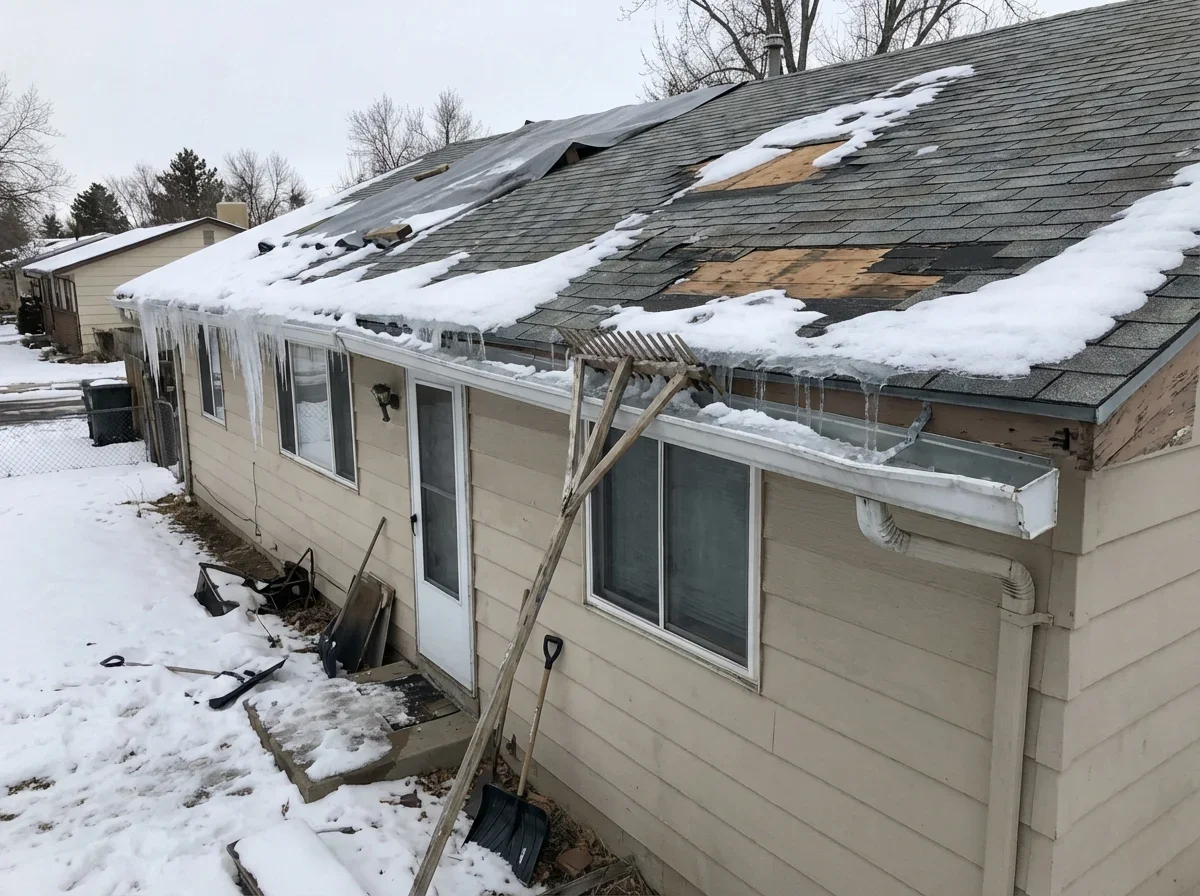
Heavy snow accumulation on Colorado roofs can lead to structural stress, ice dam formation, and sudden roof collapse in extreme cases. Professional roof snow removal protects your home while avoiding the dangers of working on icy, pitched roofs at altitude. Connect with Colorado roofing contractors who offer safe, efficient snow removal services and can assess your roof's structural integrity during heavy snowfall events.
Featured Contractors
View all →
When Do You Need Roof Snow Removal in Colorado?
Colorado's freeze-thaw patterns create a narrow window between "manageable snowpack" and "structural emergency." Most Front Range residential roofs are designed for 15-25 psf ground snow loads[1] — but wet, compacted snow from repeat storms can exceed that threshold in 48-72 hours.
Warning Signs of Dangerous Snow Load
You don't need an engineering degree to spot trouble. Watch for:
- Visible roof sagging — especially at ridge lines or between rafters
- Cracking or popping sounds from the attic or ceiling
- Doors or windows suddenly sticking (frame distortion under load)
- Interior cracks appearing near exterior walls
- Snow depth exceeding 12 inches (wet snow) or 18 inches (powder)
In Boulder and Fort Collins, north-facing roof sections accumulate snow faster and hold it longer due to reduced sun exposure. That uneven loading stresses trusses designed for uniform distribution.
Snow Accumulation Thresholds by Elevation
Elevation drives both snowfall intensity and structural design requirements. Lower Front Range cities like Denver, Aurora, and Lakewood typically see design loads around 20-25 psf.[2] Mountain communities and higher-elevation areas face design loads of 60-100+ psf. Even those roofs can be overwhelmed by prolonged storms or ice dam formations that trap additional weight.
12 inches of wet snow creates approximately 10-15 psf of load. Two back-to-back storms without melting can push many residential roofs near their limit.
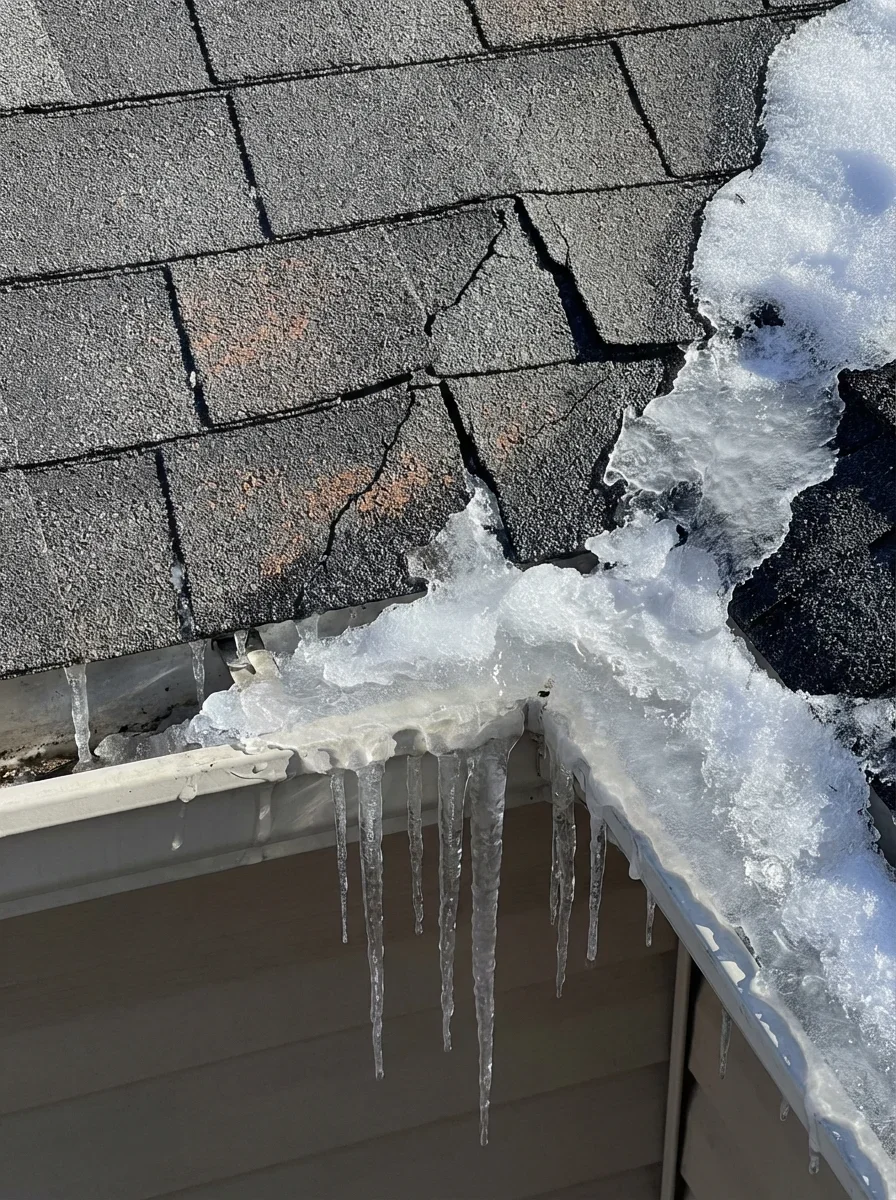
Ice dams compound the problem. When heat escapes through your attic in Thornton or Greeley, it melts the bottom layer of snow. That melt refreezes at eaves, creating a dam that traps water and more weight on your roof deck.
What Does Roof Snow Removal Cost in Colorado?
Expect to pay $200-$800 per visit for residential snow removal in Colorado. That range reflects enormous variability in roof size, pitch, snow depth, and accessibility.
Pricing Factors: Size, Pitch, and Accessibility
| Property Type | Typical Cost Range | Key Variables |
|---|---|---|
| Single-story ranch (1,200-1,800 sq ft) | $200-$400 | Ground-based raking often sufficient |
| Two-story or steep pitch (2,000-3,000 sq ft) | $400-$650 | Requires roof access, fall protection setup |
| Complex/multi-level (3,000+ sq ft) | $650-$1,200+ | Multiple access points, valleys, steep sections |
Pitch matters more than square footage. A 1,500 sq ft 8:12 pitch roof in Colorado Springs costs more to clear than a 2,500 sq ft 4:12 in Longmont. The steeper roof requires harness systems and slower, more dangerous work.
Accessibility drives emergency premiums. Second-story condos in Denver with no ground access and HOA clearance delays can add $150-$300 to base rates.
Emergency vs. Scheduled Service Rates
Storm-chasing contractors charge 40-60% premiums during active weather events. Book ahead when forecast models show 10+ inch accumulations and you'll pay standard rates while guaranteeing a spot in the queue.
Ice dam removal costs $300-$600 as a standalone service, depending on dam size and whether interior damage is already occurring. Many contractors bundle it with snow removal for $100-$200 less than separate visits.
Insurance rarely covers removal as a preventive measure. But it will cover structural damage from collapse or ice dam intrusion.
A $400 removal visit beats a $15,000 emergency roof repair claim and the premium increase that follows.
The Roof Snow Removal Process
Professional removal isn't just shoveling. It's a calculated safety operation. Colorado contractors work at altitude with steep pitches and ice-slicked surfaces that kill DIY attempts every winter.
Safety Assessment and Access Planning
Every job starts with a visual inspection from ground level:
- Load evaluation — identifying areas of heaviest accumulation and stress indicators
- Ice dam mapping — locating where melt has refrozen and created weight concentrations
- Access strategy — determining whether ground-based raking, ladder work, or roof access is safest
- Power line clearance — critical in Arvada and Pueblo neighborhoods with overhead utilities
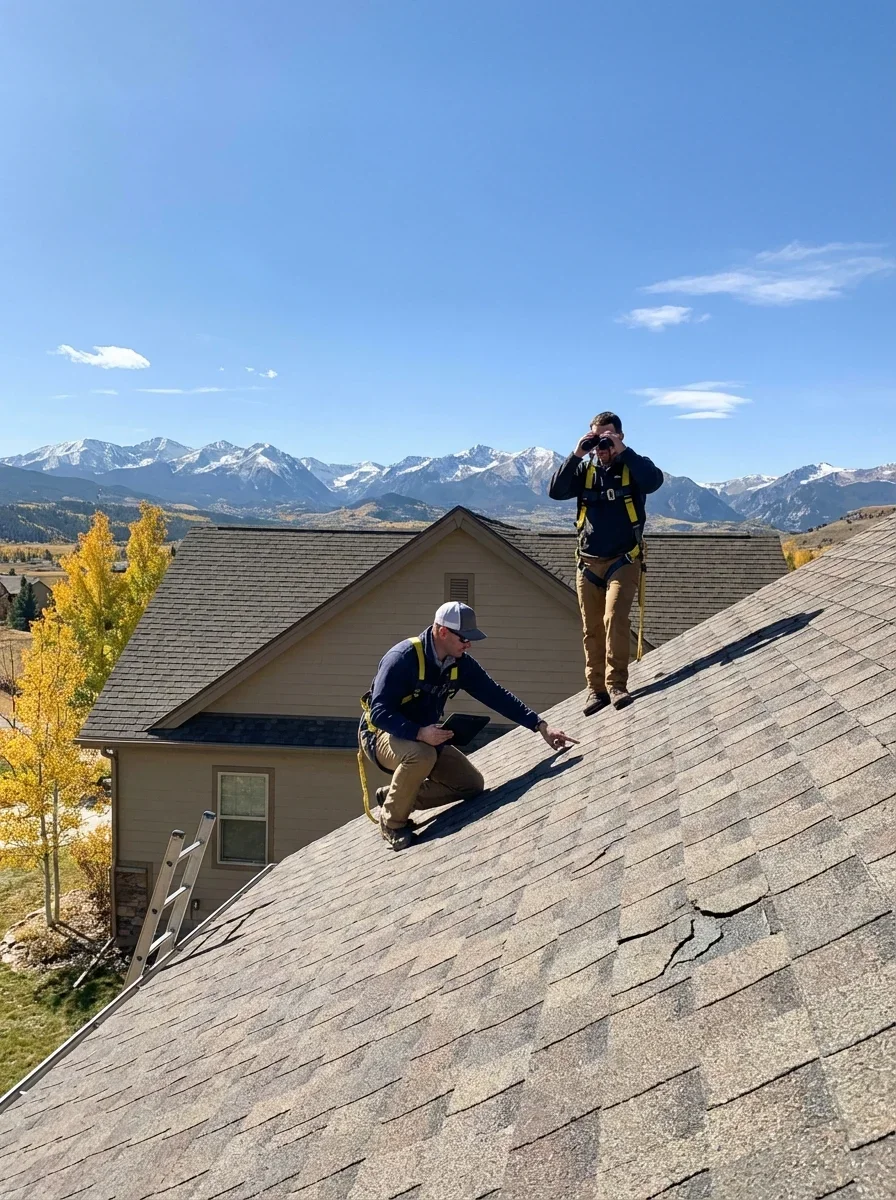
Contractors certified by the Colorado Roofing Association (CRA) follow fall protection protocols even for single-story work. Harnesses, roof anchors, and spotter systems are standard on any pitch above 4:12.
Removal Techniques and Equipment
| Method | Best For | Typical Cost Addition |
|---|---|---|
| Roof rake (ground) | Single-story, accessible eaves, powder snow | Base rate |
| Manual removal (on-roof) | Steep pitches, compacted snow, complex layouts | +30-50% |
| Steam ice dam removal | Active ice dams, gutter damage prevention | +$200-$400 |
Professionals leave 1-2 inches of snow on the roof surface to avoid shingle damage from metal tools. They clear valleys and drainage paths first. That's where ice dam formation starts.
Ice Dam Treatment and Prevention
If water is already intruding, contractors use low-pressure steam to cut channels through the ice dam without damaging shingles. Chemical de-icers destroy asphalt granules and void warranties. Legitimate Colorado contractors won't use them.
Long-term prevention involves attic insulation upgrades and ventilation improvements. Many removal contractors partner with roof maintenance programs that include seasonal snow guard installation and ventilation audits.
How to Choose a Roof Snow Removal Contractor
Colorado has no state roofing license. Municipal requirements vary, and winter emergency work attracts uninsured operators with pickup trucks and ladders.
Verify before they touch your roof.
Insurance and Liability Requirements
Ask these questions before hiring:
- "Show me your current general liability certificate — minimum $1M coverage." Call the insurer to verify it's active.
- "Do you carry workers' comp?" If they're injured on your property without it, you're liable.
- "Are you a Colorado Roofing Association (CRA) member?" CRA membership signals industry credibility in the absence of state licensing.
- "What's your fall protection protocol?" Look for specific equipment mentions (harnesses, anchors), not vague "safety measures."
- "Do you guarantee no shingle damage?" Legitimate pros leave a protective snow layer and won't scrape down to bare shingles.
Experience with Colorado Snow Conditions
Front Range powder behaves differently than wet cement snow at 9,000 feet. Contractors experienced in your elevation zone understand:
- When to use steam vs. manual methods for ice dam removal
- How daily temperature swings (60°F+ in winter) accelerate refreeze cycles
- Valley and dormer drainage patterns specific to Colorado tract home designs
Ask for references from the past two winters in your city. Pueblo's snow patterns differ radically from Grand Junction's.
Red Flags That Signal Trouble
- Quotes given over the phone without seeing your roof
- "We'll shovel it all off" (damages shingles and often voids warranties)
- No fall protection equipment visible on their truck
- Cash-only pricing or pressure to "decide now before the next storm"
Compare at least three licensed contractors. The lowest bid often comes from underinsured operators who disappear when something goes wrong.
For ongoing protection, consider contractors offering seasonal roof maintenance plans that include priority emergency response and pre-storm inspections.
Frequently Asked Questions
- International Code Council (adopted by Colorado Building Codes). "Snow Load Design Data for Colorado." https://up.codes/viewer/colorado/ibc-2018/chapter/16/structural-design#16. Accessed April 08, 2026.
- Structural Engineers Association of Colorado (SEAOC). "Roof Snow Loads for Colorado: A Revision of 1977 TR-20B." https://www.colorado.gov/pacific/sites/default/files/atoms/files/roof-snow-loads-for-colorado.pdf. Accessed April 08, 2026.
Related Articles
Need Help With Your Project?
Join 500+ homeowners we've helped