
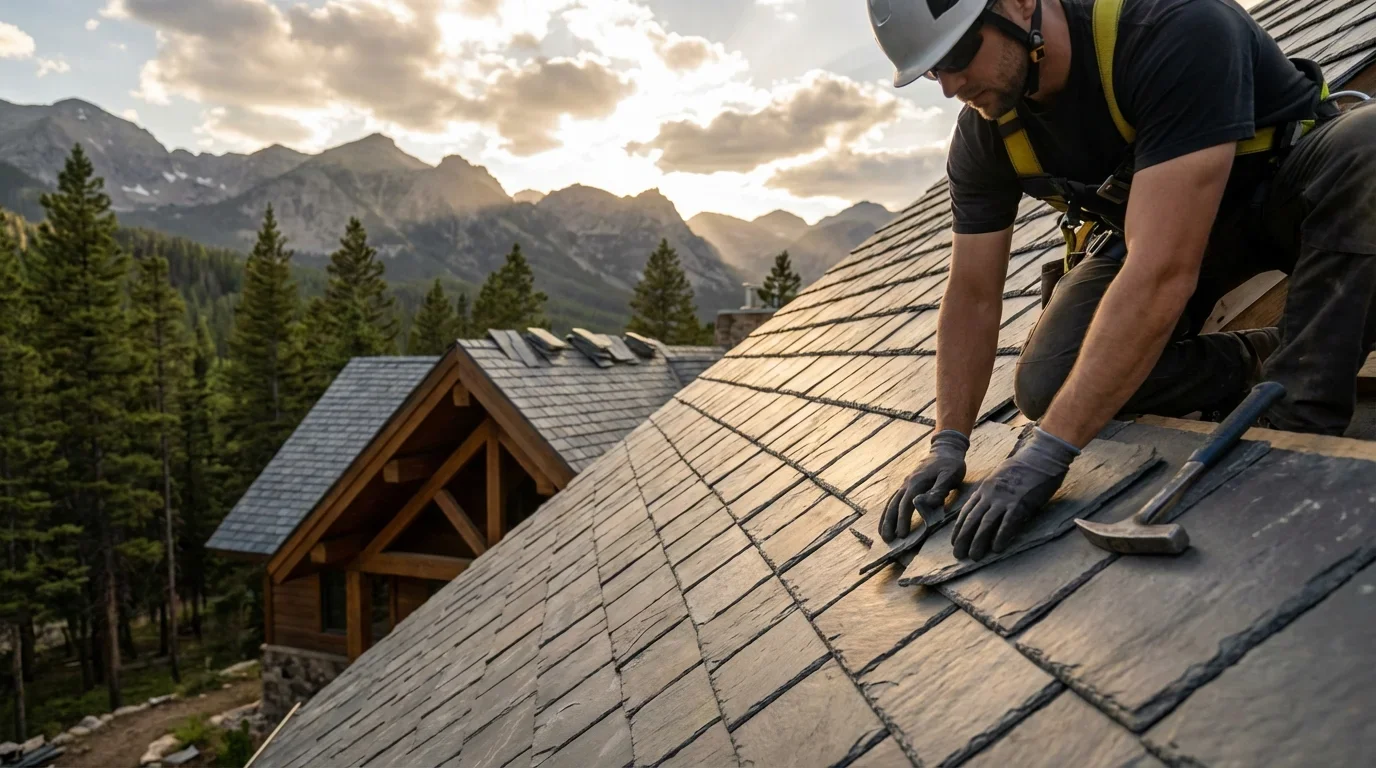
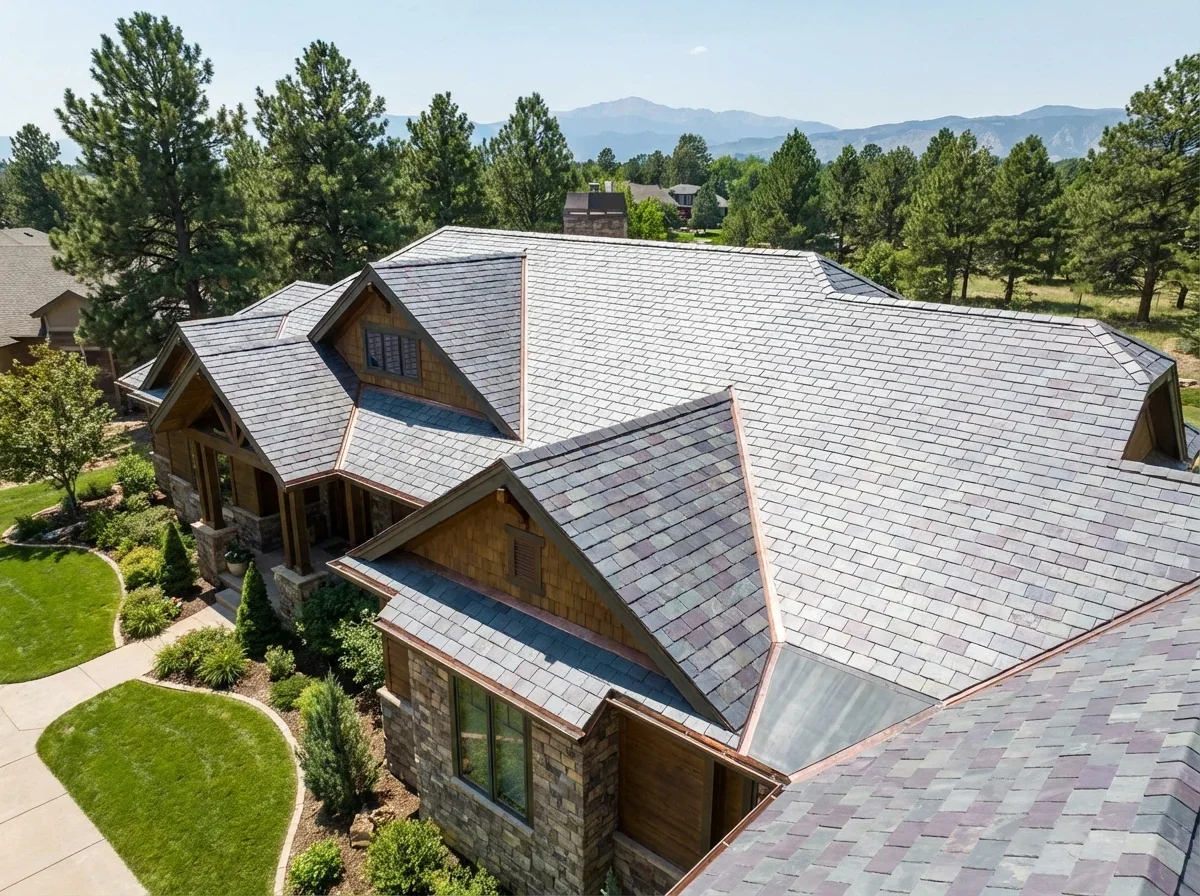
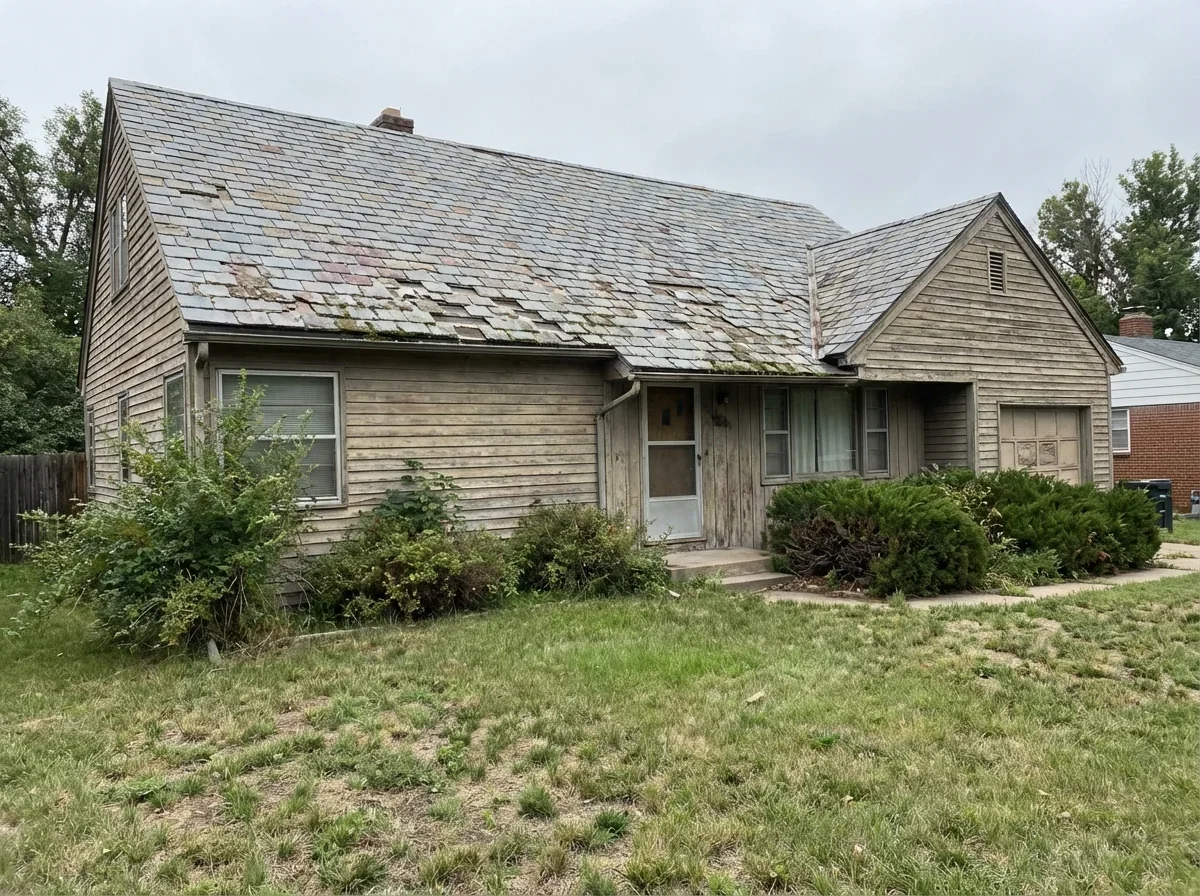
Slate roofing represents the pinnacle of longevity and elegance, with properly installed slate roofs lasting over a century in Colorado's climate. Natural slate offers unmatched durability, fire resistance, and beauty, though installation requires specialized expertise due to weight and technique requirements. Connect with experienced Colorado slate roofing contractors who understand proper installation methods and can source quality slate suitable for high-altitude conditions.
Featured Contractors
View all →



Signs Your Slate Roof Needs Expert Attention
Slate itself rarely fails. It's the installation details and supporting structure that degrade.
Look for individual tiles that have slipped out of position, exposing gaps in the roofline. Colorado's 60°F daily temperature swings cause expansion-contraction cycles that stress improperly fastened slates, working them loose over decades.
Check flashing around chimneys, valleys, and skylights for rust or separation. Original installations often used steel nails that corrode in Colorado's low-humidity, high-UV environment. You'll see orange streaks where fasteners have failed. In Denver and Boulder historic districts, many century-old slate roofs still perform beautifully because they used copper nails and proper lapping techniques.
Structural sagging indicates a more serious problem.
Slate weighs 800-1,500 pounds per square (100 sqft). If your home wasn't engineered for this load, you'll notice ridge lines dipping or rafters deflecting. This requires immediate assessment before the next heavy snow event, especially above 7,000 feet where design snow loads reach 70 psf.
Slate longevity depends entirely on proper installation. A $250,000 slate roof installed with wrong fasteners or inadequate structural support will fail in 20-30 years instead of lasting a century.
What Does Slate Roofing Cost in Colorado?
Expect $1,500-$3,000 per square installed for standard Vermont or Pennsylvania slate on straightforward roof geometries. Premium varieties, complex architectural details, or structural reinforcement push costs to $4,000+ per square. A 2,500 sqft roof runs $37,500-$100,000 total.
Material Cost Breakdown by Slate Type
| Slate Variety | Material Cost/Square | Installed Cost/Square | Expected Lifespan |
|---|---|---|---|
| Pennsylvania Black | $800-$1,200 | $1,500-$2,400 | 75-100 years |
| Vermont Unfading Green/Gray | $1,100-$1,600 | $2,000-$2,800 | 100-150 years |
| Spanish Red/Multi-Color | $1,400-$2,200 | $2,600-$3,800 | 75-125 years |
| Reclaimed Antique Slate | $1,800-$2,800 | $3,200-$4,500 | 50-75 remaining years |
Synthetic slate (fiber-cement or polymer composites) costs $800-$1,200 per square less but carries only 30-50 year warranties. The appearance difference becomes obvious within 5-10 years as synthetics fade and natural stone weathers gracefully. For more budget-conscious options with authentic appearance, see our tile roofing comparison.
Installation and Structural Considerations
Beyond materials and labor, factor in:
- Structural engineering assessment: $1,200-$2,500 (required for homes built before 1990)
- Framing reinforcement: $6,000-$22,000 depending on existing structure
- Copper flashing and valleys: $45-$75/linear foot versus $12-$18 for aluminum
- Specialty fasteners: Copper nails add $400-$800 per square over steel
- Tear-off and disposal: $150-$250/square for existing roofing (slate removal requires specialized equipment)
Long-Term Value and ROI
Slate delivers the lowest cost-per-year of any roofing material.
A $75,000 slate roof lasting 100 years costs $750 annually. Three asphalt shingle replacements over the same period total $90,000-$120,000 at today's prices, and that's before factoring in disposal costs and installation disruption.
Premium properties in Arvada, Lakewood, and Pueblo see 15-25% higher resale values with authentic slate versus composition roofing. Appraisers recognize the material's durability and the structural investment it represents. Historic home buyers specifically seek properties with original or properly restored slate roofing.
Insurance premiums drop 5-12% with Class A fire-rated slate in wildfire-risk zones along the Front Range. Unlike cedar shake roofing which faces outright bans in some mountain communities, slate qualifies for the highest fire resistance rating while delivering superior hail resistance. Colorado sees 7+ major hail events annually, making this protection substantial.
How Slate Roofing Installation Actually Works
Structural Assessment and Preparation
Before a single slate goes up, qualified contractors perform load calculations. Your roof framing must support 12-15 pounds per square foot for slate versus 2-3 for asphalt shingles.[1]
Many Fort Collins and Colorado Springs homes built after 1980 with engineered trusses need reinforcement. This adds $8,000-$18,000 to project costs but prevents catastrophic failure under snow loads.
Underlayment standards exceed typical roofing. NRCA specifications require two layers of #30 felt with specific lapping patterns, creating a waterproof membrane that must outlast 75+ years.[2] Ice and water shield extends 6 feet from eaves in Colorado applications to handle freeze-thaw cycling.
Installation Methodology
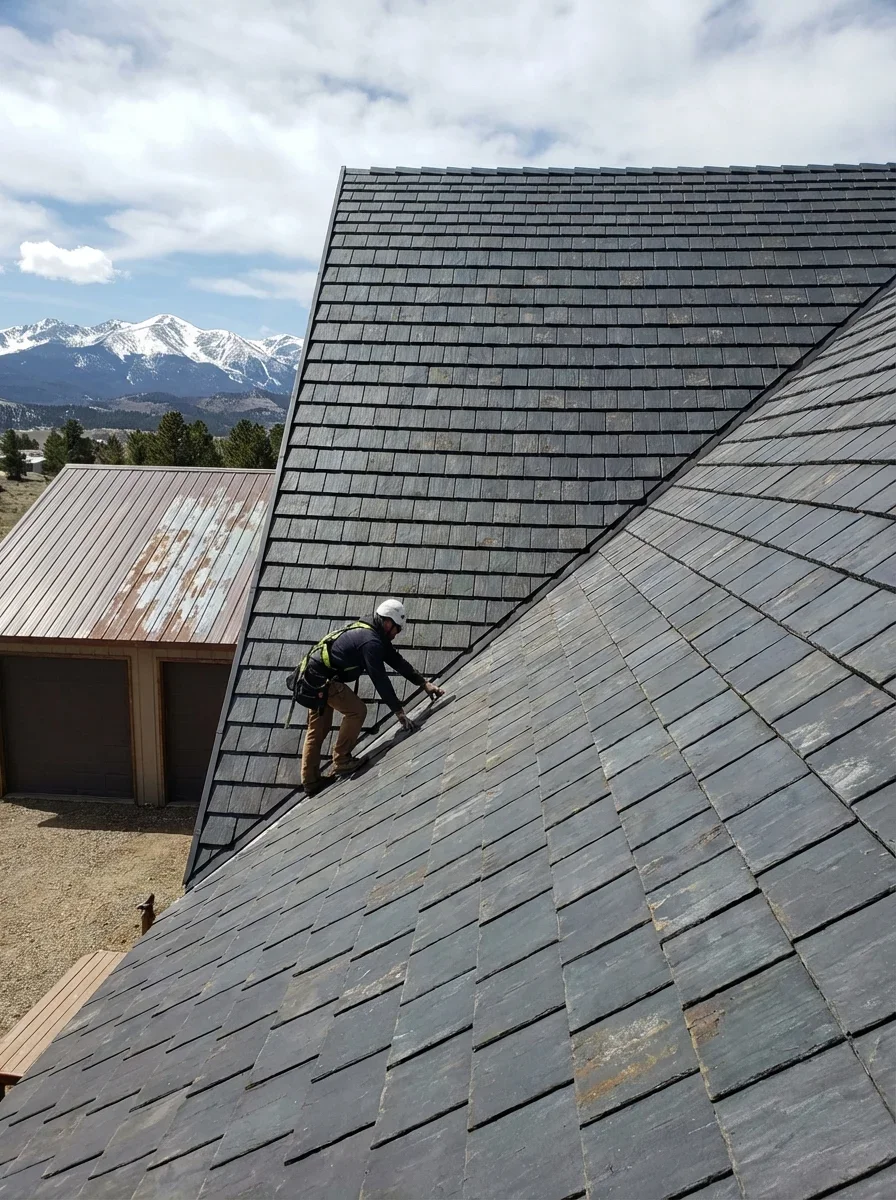
Each slate tile gets individually hand-nailed with copper or stainless steel fasteners. Never pneumatic guns that crack the stone.
Experienced installers pre-drill holes to prevent splitting, then nail just below the exposure line so the slate above covers the fastener. This hand-nailing process averages 2-3 squares (200-300 sqft) per day for a skilled crew, making labor the dominant cost factor.
Valley and ridge details require custom copper flashing work. Standard pre-formed aluminum flashing corrodes quickly at Colorado's altitude where UV radiation runs 50% higher than sea-level installations. Proper copper work adds $45-$75 per linear foot but prevents the water infiltration that destroys roof decking.
Timeline expectations: 2,500 sqft slate roof takes 12-18 working days, weather permitting. Complex rooflines with dormers, turrets, or multiple valleys extend this to 20-25 days. Schedule between May and September. Installing slate in freezing temperatures risks cracking and prevents proper sealant adhesion.
How to Choose a Slate Roofing Contractor in Colorado
The price difference between qualified slate installers and general roofers attempting specialty work is negligible compared to the cost of premature failure.
Most Colorado roofing contractors lack the training and tools for proper slate installation. Verify credentials before signing contracts.
Essential Qualifications and Experience
- Documented slate-specific training through NRCA, Slate Roofing Contractors Association, or manufacturer certification programs (not just general roofing licenses)
- Structural engineering coordination experience (they should partner with licensed engineers for load calculations, not guess at framing adequacy)
- Portfolio of completed slate projects with verifiable references (ask for addresses in Longmont, Thornton, or Grand Junction to inspect from the street)
- Minimum $2M general liability and workers' compensation insurance (slate installation height and material weight create higher risk exposure)
- Colorado Roofing Association (CRA) membership demonstrating industry engagement beyond individual projects
Questions to Ask Before Hiring
- "What fasteners do you use and why?" (Correct answer: copper or stainless steel, never galvanized steel or aluminum)
- "How do you handle structural assessment?" (Should involve engineering review, not visual inspection)
- "What's your slate breakage rate during installation?" (Experienced crews run 3-5%; 10%+ indicates poor technique)
- "Can I see your copper flashing detail work on past projects?" (Request photos of valleys, chimneys, and penetrations)
- "What warranties cover the installation versus the materials?" (Slate itself carries 75+ year warranties; installation labor should guarantee 20-25 years minimum)
Red Flags to Avoid
- Contractors suggesting synthetic slate "performs identically" to natural stone at half the cost
- Bids that don't separately itemize structural assessment and reinforcement (suggests they're skipping this critical step)
- Pneumatic nail gun installation instead of hand-nailing with pre-drilled holes
- Standard roofing felt instead of NRCA-specified double underlayment[2]
- Unwillingness to provide detailed material specifications (slate grade, thickness, country of origin)
Colorado doesn't require state-level roofing licenses, making due diligence your responsibility.
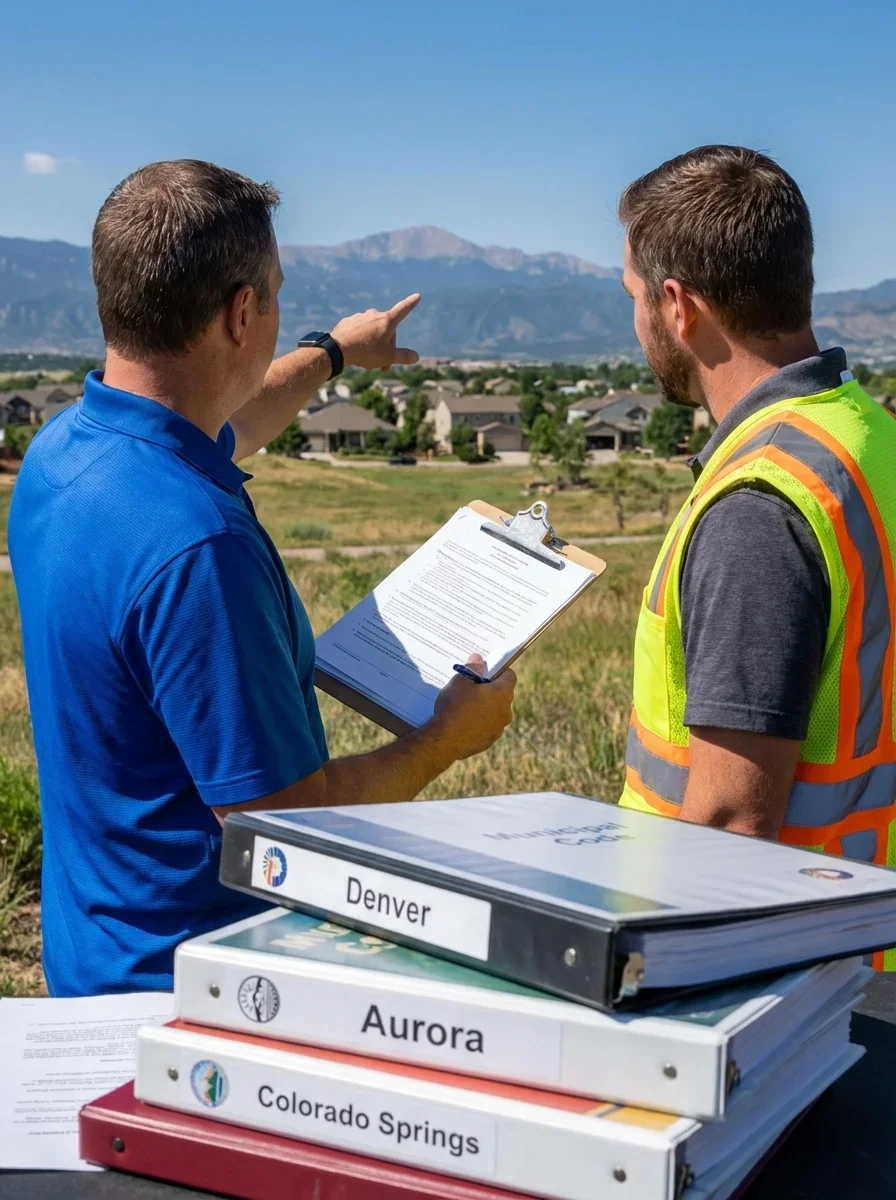
Verify municipal permits and contractor registration through local building departments. For help distinguishing qualified installers from general contractors, see our guide on how to verify Colorado roofing contractors.
Start comparing vetted slate roofing specialists in your area. Our directory highlights contractors with documented specialty credentials and completed high-value installations across Colorado's diverse climate zones.
Frequently Asked Questions
- International Code Council (ICC). "Roofing Standards." https://codes.iccsafe.org/content/IRC2021P2/chapter-9-roof-assemblies#IRC2021P2_Pt03_Ch09_SecR905.2.7. Accessed April 08, 2026.
- National Roofing Contractors Association (NRCA). "NRCA Roofing Manual: Steep-slope Roof Systems 2022." https://www.nrca.net/resources/steep-slope-roof-systems. Accessed April 08, 2026.
Related Articles
Need Help With Your Project?
Join 500+ homeowners we've helped